



CycleGen: A Collaborative Framework for Knowledge Management in the Age of AI
CycleGen: Revolutionizing Knowledge Management in the AI Era
In July 2026, Rashiku Corp, based in Tokyo and led by CEO Junya Sato, announced their latest innovation: CycleGen, a collaborative framework designed to enhance productivity by merging human expertise with AI capabilities. CycleGen was made available as an open-source tool on GitHub, aiming to redefine how organizations manage knowledge and collaborate efficiently in the modern workplace (see GitHub). In August, user-friendly documentation was published on cyclegen.ai to assist users in implementing this framework seamlessly, catering to non-developers as well.
The Collaborative Power of CycleGen
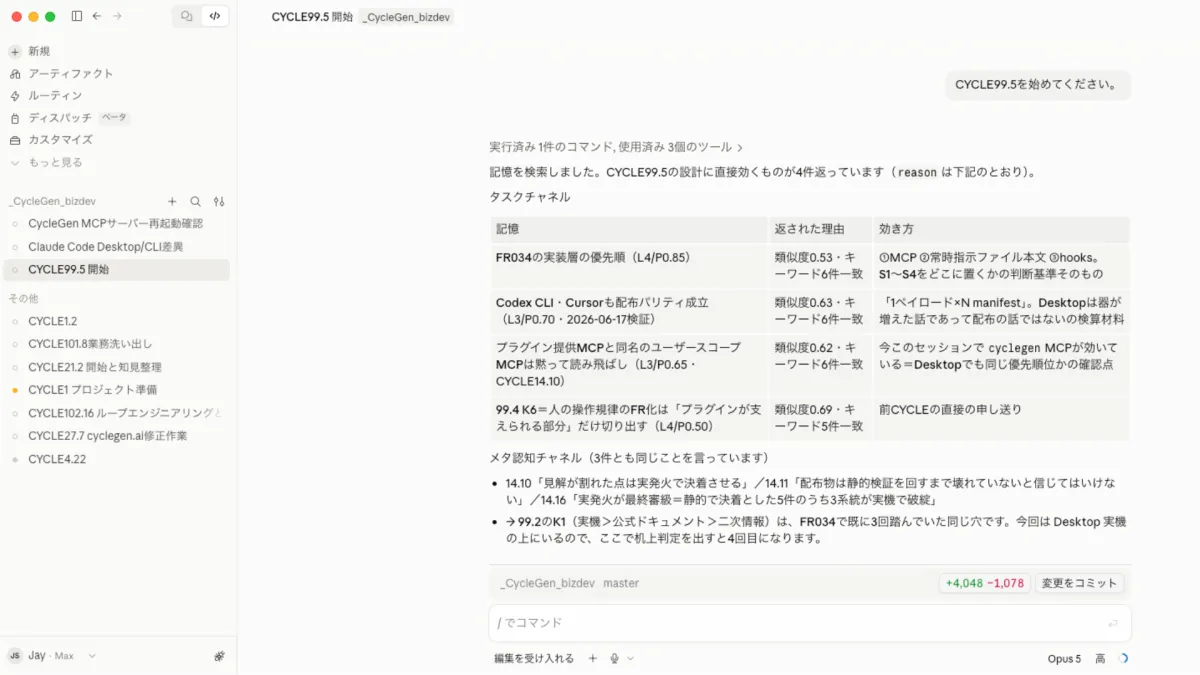
CycleGen offers a unique approach to working alongside AI agents, such as Claude Code and Codex. This framework allows users to input a single sentence to initiate a task, while the AI agent autonomously guides the process from confirming requirements to execution. Currently compatible with Claude Code and Codex, Rashiku intends to expand compatibility with additional AI agents in the future.
Rashiku’s CEO Junya Sato emphasizes that the true value emerges not from pure automation but from the synergy of human and AI collaboration. He states, “New value is birthed not from delegating tasks to AI for automation but through the shared contexts that humans and AI can develop together.”
Why Choose a Collaborative Framework Now?
In traditional AI chat interfaces, users often find themselves rewriting their requests, losing valuable context between tasks. Since the advent of agent-like AIs in 2026, this model has begun to evolve. No longer are exchanges limited to a question-and-answer format; these advanced AI agents can process continuous work with a single command, thus lengthening the intervals at which human judgment is necessary.
In predictable environments like factories, traditional methods may work well, but for exploratory tasks—such as business development, research, or marketing—defining success in advance is tricky. With AI now more capable, humans must decide when and how they engage. CycleGen’s approach optimally balances these responsibilities. By moving towards a model where AI handles writing and humans make judgments, organizations can explore new avenues for productivity.
Knowledge Management Transformed
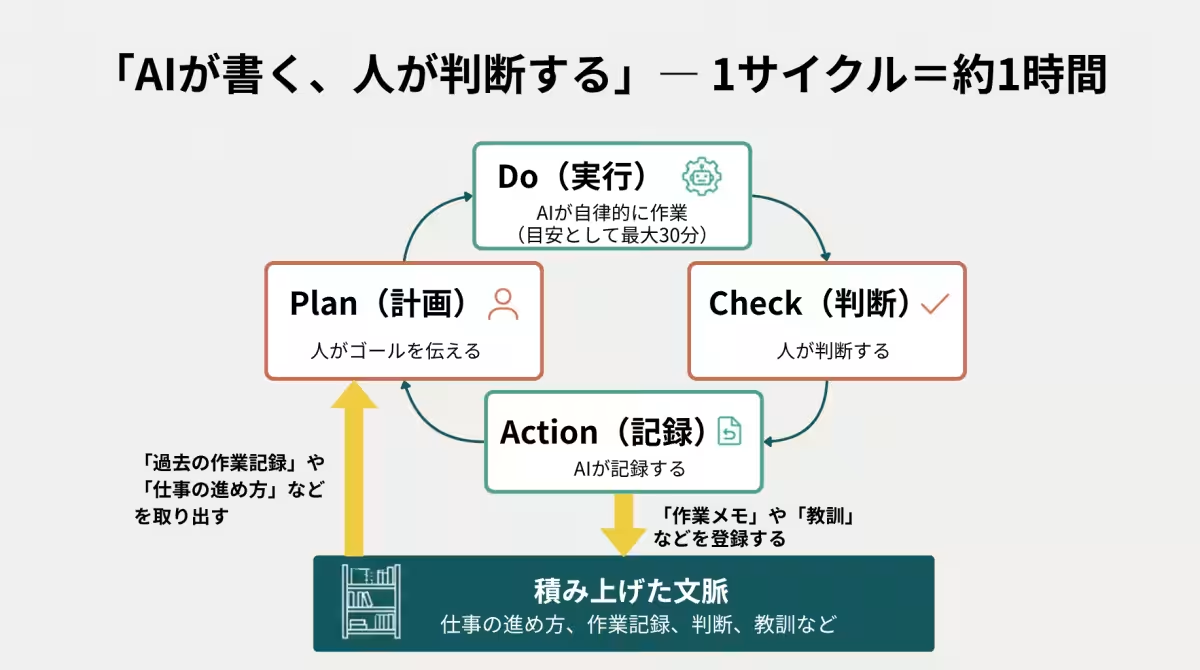
CycleGen stands as a structured model for knowledge work akin to established production methods in factories. Initiating tasks with AI raises the question of whether one merely uses AI as a tool or integrates it into the core working processes. CycleGen advocates for the latter, where AI drafts proposals, and humans refine them, leading to an evolution of work practices rather than a simple delegation of tasks.
Among the core tenets of CycleGen are:
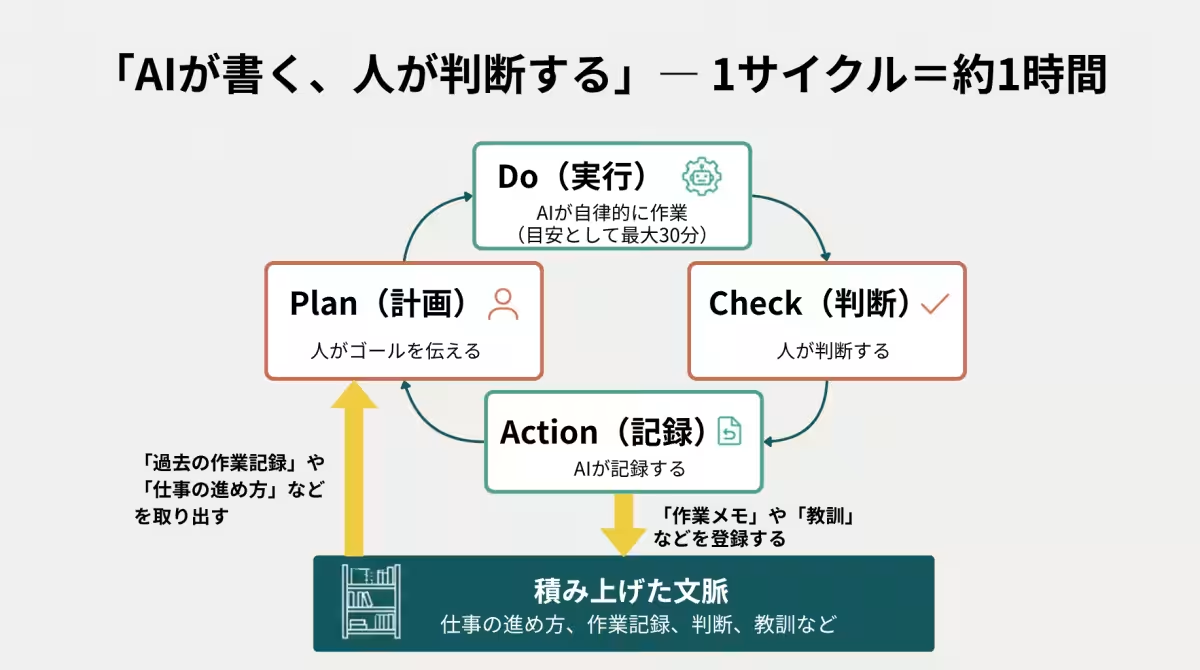
1. Time-Based Roles: Determining when human judgment occurs. CycleGen defines a cycle lasting around an hour, where the AI works autonomously for up to 30 minutes, followed by human review or direction adjustment.
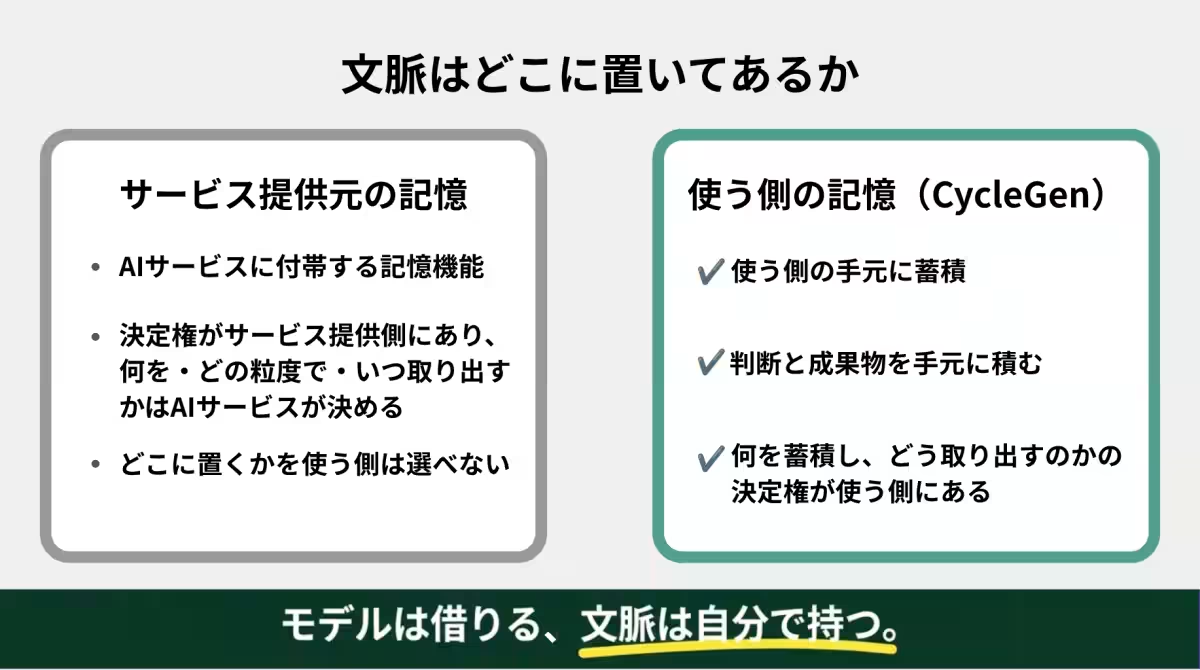
2. Context Preservation: The AI itself does not retain previous interactions, meaning vital context often resides externally. CycleGen allows users to keep essential knowledge at hand while leveraging AI for processing tasks, significantly enhancing continuity and creative output.
Real-world Impact of CycleGen
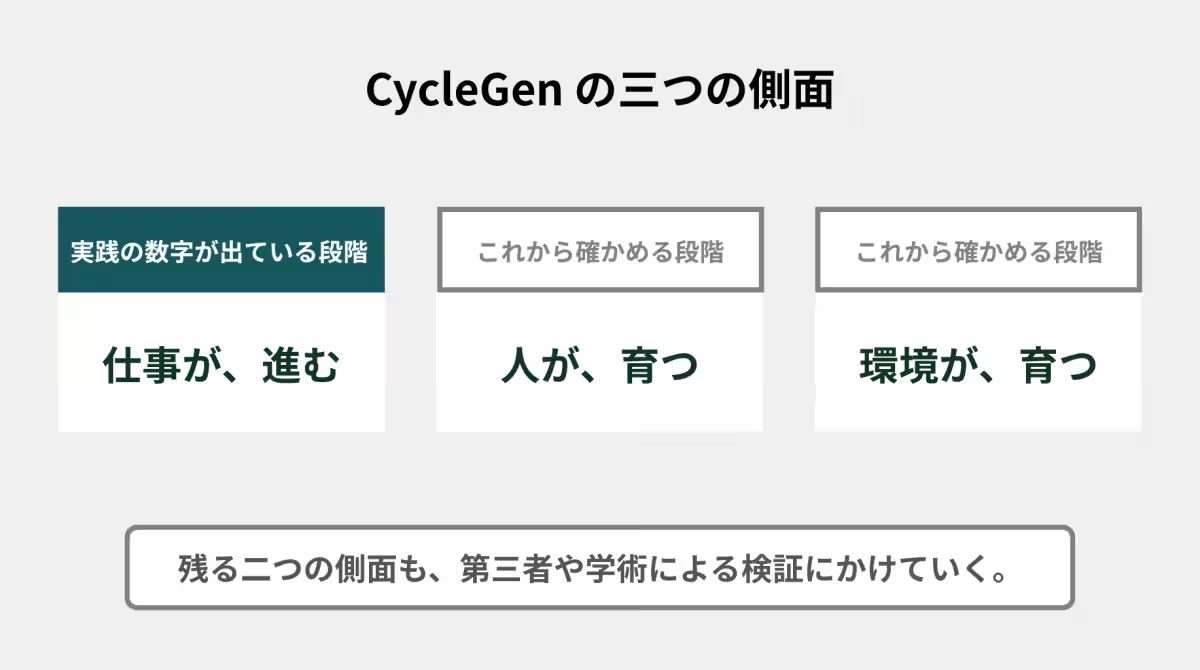
Implementing CycleGen leads to substantial improvements on three fronts: task progression, human skill development, and organizational growth. Initially, users notice significant time-saving advantages, negating the need to reiterate prior contexts when resuming projects, thus streamlining workflow.
As organizations adopt CycleGen, they report tangible results. For example, Rashiku’s director Shiroki utilized CycleGen in over 500 hours of collaboration, transitioning routine tasks such as information organization and report generation to AI. This shift freed up 10 hours weekly for strategy formulation and high-level decision-making.
Outside Rashiku, collaborating organizations began implementing CycleGen under similar parameters, showcasing the flexibility and scalability of this innovative tool.
Start Using CycleGen Today
Whether you're an individual interested in testing the framework or an organization considering broader implementation, CycleGen is accessible and ready for deployment. For individual users, simply install CycleGen atop existing AI services like Claude Code or Codex, and begin with any task you choose to see immediate benefits.
For organizations already using Claude Code or Codex, Rashiku offers collaborative experimental design and support for departmental integrations. Options for knowledge sharing, security measures, and strategic framework development are available to enhance collective knowledge.
In a world where AI continues to evolve, the absence of structured knowledge work has long been felt. CycleGen encompasses over 30 years of inquiry into elevating office productivity, aiming to establish a solid foundation for collaborative future efforts between humans and AI.
Topics Business Technology)
【About Using Articles】
You can freely use the title and article content by linking to the page where the article is posted.
※ Images cannot be used.
【About Links】
Links are free to use.