



A Comprehensive Overview of Clinical Organizational Science's 30-Release Series and Invitation for Independent Verification
Comprehensive Overview of Clinical Organizational Science (COS)
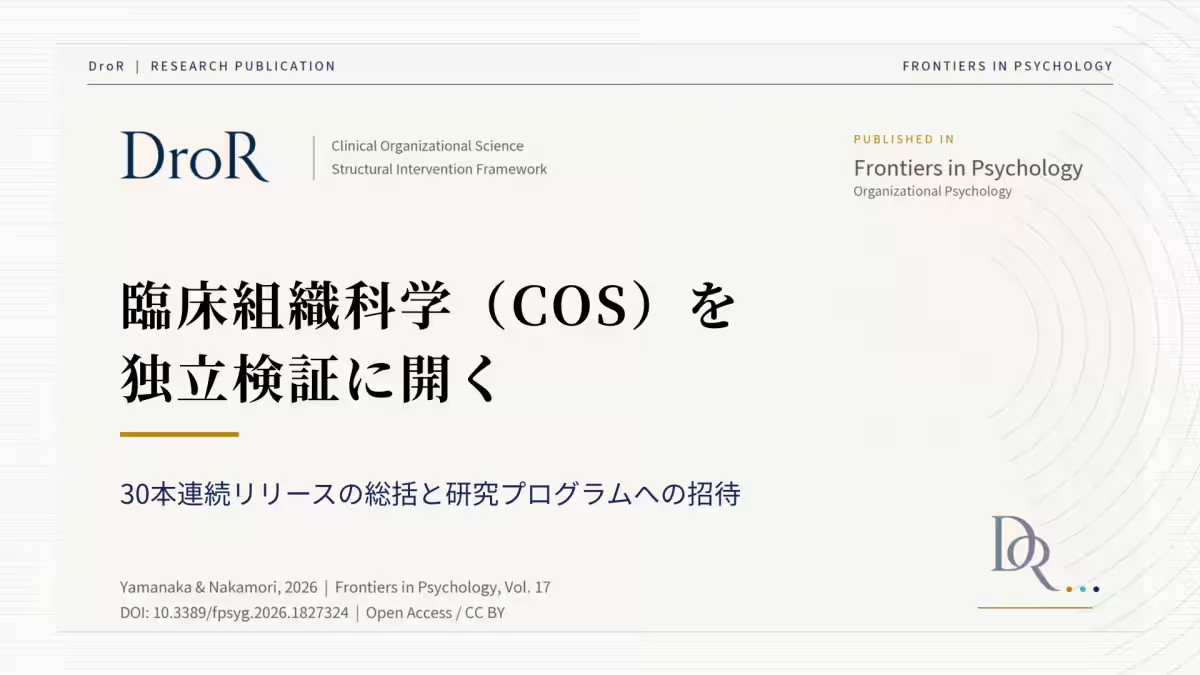
In a groundbreaking initiative, Clinical Organizational Science (COS) recently concluded its series of 30 releases, providing critical insights into its framework and inviting further exploration from scholars and practitioners. These insights were showcased through a sequence of articles published from May 7 to June 5, 2026, culminating in a significant paper by DroR, a research practice firm based in Shibuya, Tokyo, led by CEO Makoto Yamanaka, titled "Clinical Organizational Science: An Integrative Framework for Structural Intervention in Complex Organizations," in the journal Frontiers in Psychology.
COS Defined
COS emerges from the integration of complex systems science, neuroscience, organizational psychology, and behavioral science, theorizing the interaction structures that actively reproduce an organization's stability. Rather than viewing organizational change purely as individual behavior change, COS identifies it as transitions in the organizational attractor. It introduces core methodologies like Field Gradient Theory, Loop Conversion Design, and Neural Base Design, along with the concept of the "emergence bridge," which serves to connect individual habitual actions to organizational routines and transitions.
Aiming for International Outreach and Japanese Expansion
This release series sought to systematically disseminate COS's definition, theoretical background, connections to existing theories, verifiable propositions, boundary conditions, and a call for independent verification in both English and Japanese. Initially, COS was communicated through EurekAlert!, framing the approach as a view of organizational change as a structural issue rather than just behavioral. In later interactions, the context was broadened to emphasize structural over mindset issues in Phys.org.
For the Japanese audience, COS was approached concerning organizational transformation, psychological safety, human capital management, and organizational culture through a continuous PR TIMES release.
This dual-language dissemination aims not only to educate but also to cultivate discussions around the complexities of organizational behavior and structure.
Deliverables from the 30 Releases
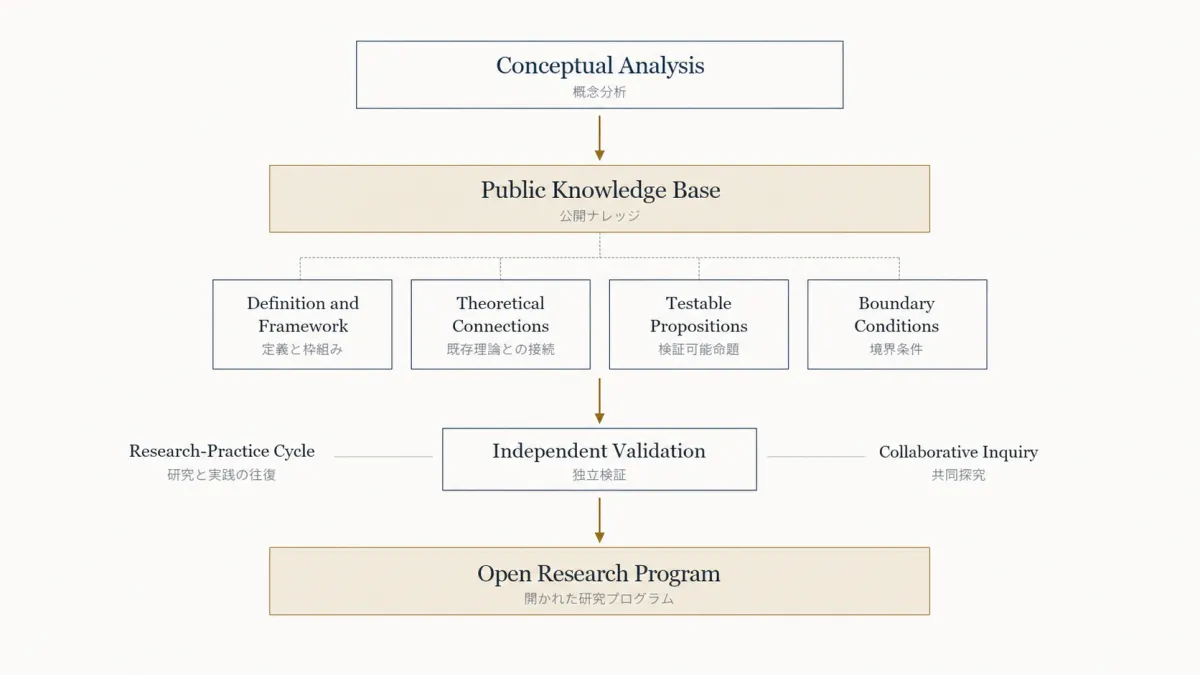
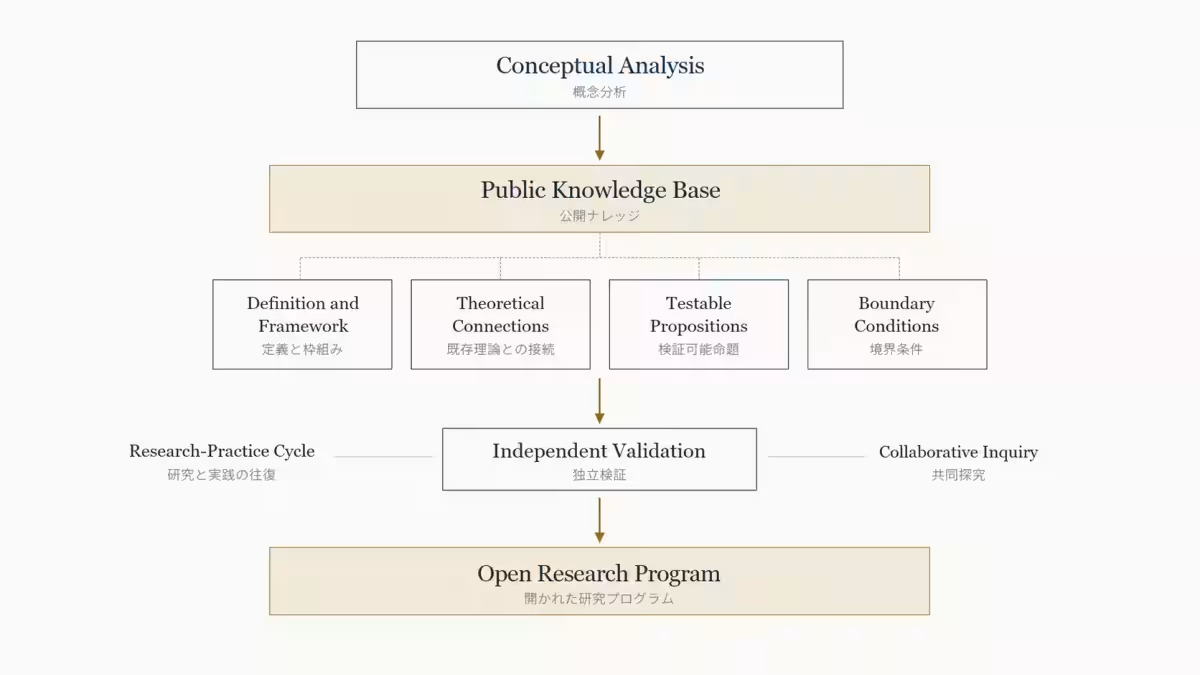
The releases, which began on May 7 and concluded on June 5, presented a clear sequence of knowledge articles rather than isolated announcements, detailing the COS framework for researchers, practitioners, and media as consolidated knowledge.
The series comprises different segments, focusing initially on COS definitions, techniques, ethical principles, and then restructuring the relationship with existing theories including psychological safety, organizational routines, and complexity theory. Furthermore, it provides verifiable propositions, boundary conditions, and emphasizes the necessity for independent verification.
The Open Invitation for Collaborative Validation
COS is not a closed method confined to DroR alone. For it to gain long-term significance, it necessitates independent researchers, academics, practitioners, and fellows from the Clinical Organizational Science Research Group to engage critically through verification and challenge.
Currently, COS remains a conceptual analysis rather than a definitive theorem, allowing for future empirical research that can substantiate or contest its premises.
Continuous Feedback Loop Between Research and Practice
COS addresses the observable interaction challenges within organizations, returning them to practical queries for ongoing examination. DroR's strategic positioning allows for iterative engagement, observing structural issues through the lenses of various scientific domains, including complex systems science, neuroscience, organizational psychology, and behavioral science. This back-and-forth cycle is crucial for avoiding the pitfalls of a static method, ensuring COS evolves through scholarly critique and practical application.
Future Developments
Moving forward, DroR and the Clinical Organizational Science Research Group plan to pursue multiple avenues, including:
- - Establishing official information pages detailing definitions, research ethics, and a glossary related to COS.
- - Publishing a research agenda based on verifiable propositions.
- - Exploring collaborations with independent researchers, universities, and practitioners.
- - Developing a fellowship program aimed at nurturing the next generation of researchers and practitioners.
- - Planning for subsequent research program iterations to expand the framework further.
Concluding Thoughts and Welcome for Challenges
The series of 30 releases was not merely an effort to increase information volume. It represented a transparent exploration of the new theoretical framework encompassing definitions, techniques, existing theory relationships, ethical dimensions, verifiable propositions, and boundary conditions. COS seeks to revolutionize perceptions of organizational change by framing it not just as a problem of changing individuals but as one involving systematic structural intervention.
DroR invites scrutiny and validation, welcoming both affirmation and criticism from the research community. This collective evolution in understanding is essential as we navigate the complex landscape of organizational transformation.
Paper Details and Publishing Context
The paper outlining COS has been published in the peer-reviewed journal Frontiers in Psychology, within the Organizational Psychology section, and serves as a conceptual analysis rather than a claim of completed effect verification. The journal embraces research in psychology, cognitive science, and organizational psychology, ensuring a broad disciplinary reach and open access to its content for continued discourse.
For more information regarding COS, including access to releases, critical related research articles, and details on constructing the institutional application of COS, please refer to applicable resources available on DroR's channels.
- ---
Topics People & Culture)
【About Using Articles】
You can freely use the title and article content by linking to the page where the article is posted.
※ Images cannot be used.
【About Links】
Links are free to use.