



Hitachi Launches AI-Driven Simulation Technology for Local Government Policy Support
Introduction
In an era where local governments face increasingly complex social issues, Hitachi has taken a significant step forward by implementing AI-driven future simulation technology to aid policy formulation. Today marks the official launch of this innovative initiative aimed at enabling municipalities to tackle challenges such as aging populations and environmental concerns effectively.
Methodology
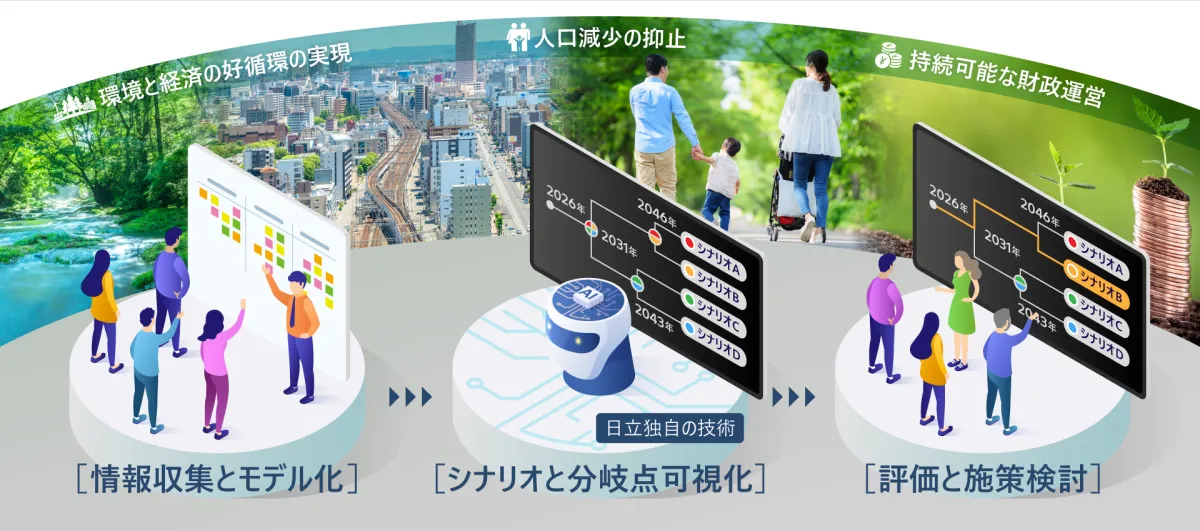
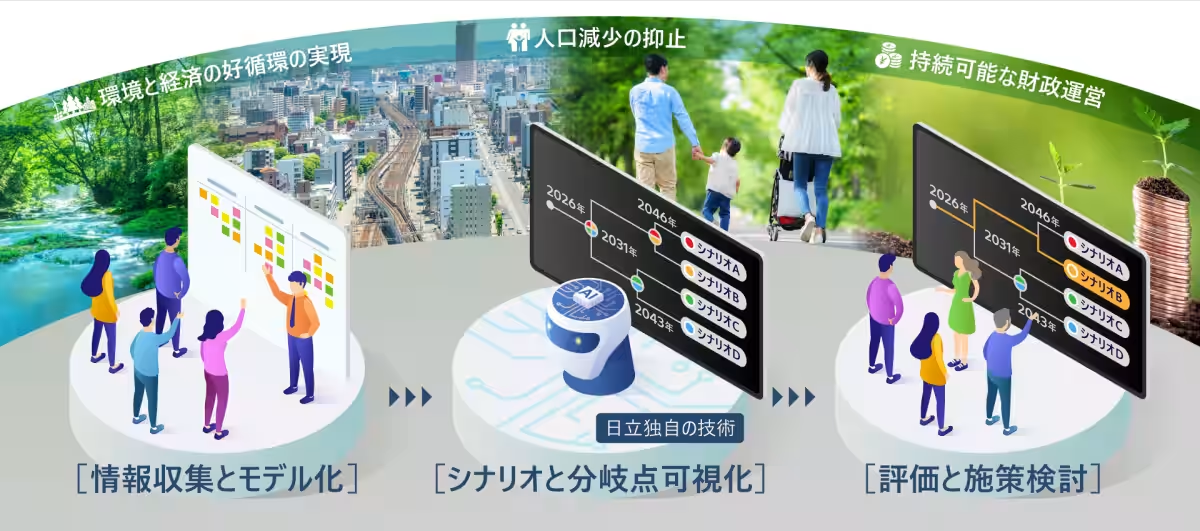
Hitachi's approach begins with gathering key indicators related to specific municipal policies—such as demographics, tax revenue, environmental factors, and welfare statistics. This data is complemented by historical performance indicators and citizen and employee surveys. By leveraging these data sets, Hitachi creates a Causal Relationship Model that identifies the connections between these indicators. Once established, this model facilitates approximately 20,000 simulations envisioned through Hitachi’s proprietary simulation technology.
The simulations explore various policy combinations—like prioritizing child-rearing support versus industrial promotion—and utilize AI to analyze and visualize how these factors might influence the future of a community. Furthermore, Hitachi can point out critical turning points, such as landmark events projected for 2030, giving municipalities clear foresight into potential outcomes.
Benefits of the Initiative
Local governments can analyze and compare these visualized future scenarios to inform comprehensive planning and specific policy decisions. Importantly, this technology can also be utilized to reassess ongoing policies, reducing the burden on municipalities by allowing for model revisions rather than complete overhauls when new data is available.
Engaging with Local Officials
Hitachi emphasizes collaboration by conducting workshops where municipal employees actively participate in selecting indicators and constructing the Causal Relationship Model. By engaging local staff in interpreting simulation results, the initiative cultivates a comprehensive understanding of the data and strengthens decision-making processes. Together with consulting partners focused on supporting digital transformation in public administration, Hitachi aims to facilitate policy implementation and build consensus within municipal organizations. This initiative aims not only to promote effective policy discussions but also to foster an environment where employees can clearly recognize and address community challenges.
Responding to Social Needs
Recent trends, including declining birth rates and increased fiscal pressure, have heightened public demand for effective policy-making. Local governments are tasked with navigating these interconnected challenges while ensuring accountability in their decision-making processes. As part of this effort, municipalities increasingly seek objective, data-driven forecasts and analyses to support future planning—a demand that Hitachi’s simulation technology is perfectly positioned to meet.
Workshop-Driven Policy Input
To ensure policy development is comprehensive and efficient, it is crucial for various departments within municipalities to collaborate rather than work in isolation. Workshops organized by Hitachi encourage cross-departmental dialogue and involvement from residents on themes central to community issues. While drawing on Hitachi's extensive experience in promoting digital transformation, these sessions empower municipal staff to select the most relevant indicators and co-create Causal Relationship Models. This entryway into policy formulation also allows employees to prioritize actions based on the simulations, thus making the process more inclusive and informed.
Adapting Ongoing Policies
Beyond crafting new policies, Hitachi’s methodologies assist municipalities in revising existing strategies. This initiative allows local governments to regularly perform simulations to check the accuracy of their predictions about future societal conditions. For instance, whether intended policies will achieve anticipated outcomes or if unforeseen variables emerge can now be continually reassessed, enhancing policy agility and responsiveness.
Example: The City of Iki in Nagasaki Prefecture recently embraced this technology in collaboration with KPMG Consulting. The city seeks to counteract anticipated population decline by applying data-driven insights to shape its policies accordingly. The initiative successfully mapped out the effects of existing strategies on population stabilization while identifying pivotal factors that will influence future community outcomes.
The Road Ahead
Moving forward, Hitachi plans to expand the application of this simulation technology to various municipalities. By providing support in domains such as comprehensive planning, environmental policy, and industrial development strategies, Hitachi aims to foster robust discussions surrounding significant societal challenges while assisting local authorities in achieving lasting enhancements in public service.
To learn more about Hitachi's municipal sector initiatives, visit Hitachi Local Government.
Conclusion
Hitachi’s forward-thinking approach harnesses the power of AI to transform local governance, ensuring that decision-makers are equipped to face 21st-century challenges head-on. This innovative technology not only enhances predictive capabilities but also fosters community involvement, ultimately paving the way for smarter, more sustainable urban development.
Topics Business Technology)
【About Using Articles】
You can freely use the title and article content by linking to the page where the article is posted.
※ Images cannot be used.
【About Links】
Links are free to use.