



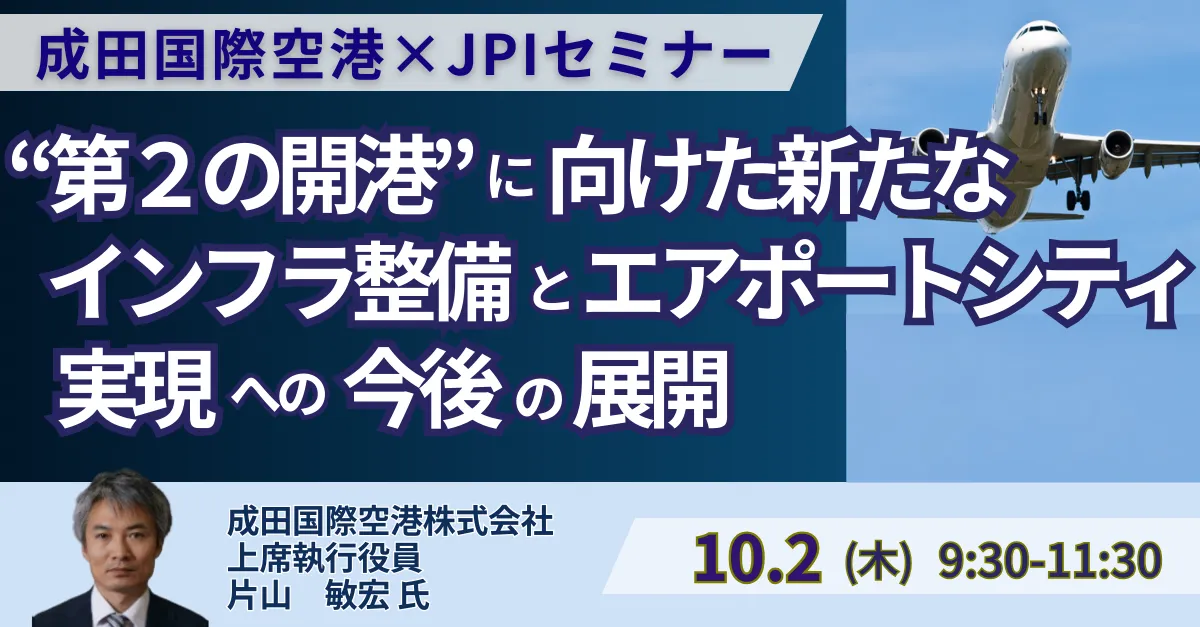
NARITA International Airport Project Seminar on Infrastructure Development for a Second Opening
Expanding Narita International Airport: A Seminar Overview
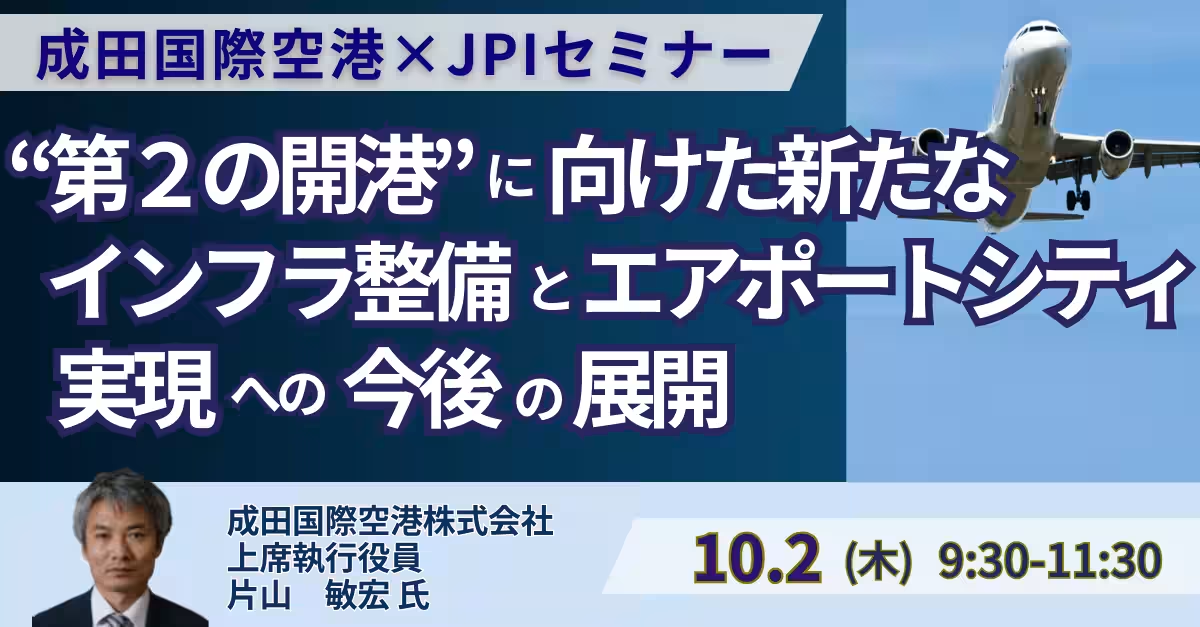
On October 2, 2025, the Japan Planning Institute (JPI) will host a significant seminar featuring Toshihiro Katayama, the Senior Executive Officer of Narita International Airport Corporation. The seminar, titled "A New Infrastructure Development for the 'Second Opening' and Future Developments towards Airport City," aims to shed light on the ambitious plans that are in the pipeline at Narita Airport.
Narita Airport has successfully navigated three major challenges: the construction opposition movement, the difficulties surrounding the second runway, and the internationalization of Haneda Airport. Today, it serves as a crucial international hub, accommodating approximately one-third of all foreign visitors to Japan. The government’s aim to reach 60 million inbound tourists is inspiring new initiatives at the airport, including the construction of a new C runway and the recruitment and training of ground handling personnel.
Key Lecture Topics
1. The History of Narita Airport
- - Background of Airport Construction and Opposition: The history of Narita Airport is marked by significant resistance dating back to its inception. This section will provide insights into the social and political dynamics that shaped its construction.
- - From Conflict to Dialogue: Understanding how the airport transitioned from the Narita Struggle to a more collaborative approach post-opening.
- - Political and Social Impact Post-Opening: Analyze the ramifications of the airport's opening on local and national policies and communities.
2. Overcoming Major Challenges
- - The Struggles with the Second Runway: Discuss the difficulties faced in constructing the second runway and the adaptive measures taken.
- - Increased Competition from Haneda: Explore the impact of Haneda's internationalization and how Narita adjusted its strategy to maintain competitiveness.
- - New Role amid Rising Inbound Tourism: Narita's evolving position as a critical node for international travelers.
3. Current Role and Scale of Narita Airport
- - Inbound Passenger Statistics: Insights into how Narita currently receives about one-third of the nation's international visitors.
- - Position as a Cargo and Passenger Hub: Analysis of Narita's role in the global cargo and passenger transport networks.
- - Expanding Domestic and International Networks: Updates on the growth of both domestic and international routes.
4. Overview of the C Runway Development Plan
- - Specifications of the New Runway: Discuss its location, size, and intended purpose.
- - Collaboration for Local Consensus: Detail the processes involved in gaining local community agreement on the runway plans.
- - Addressing Environmental and Resident Concerns: The framework to address noise and environmental issues.
5. Staffing and Workforce Development
- - Increasing Ground Handler Numbers: The goal to expand from 40,000 to 70,000 personnel.
- - Challenges in Recruiting the Young Generation (Gen Z): Strategies to attract younger workers and adapt to their needs.
- - Enhancing Living and Working Conditions: Focus on the improvements being made to attract talent to the area.
6. Urban Development and Airport City Concept
- - Improving Residential Conditions: Initiatives aimed at promoting residency in the Airport City.
- - Infrastructural Developments in Commercial, Educational, and Healthcare: Current progress in building the airport city framework.
- - Marketing Lifestyles to Gen Z: Strategies to resonate with the younger demographic.
7. Engaging the Gen Z Audience
- - Utilizing Social Media and Short Films: Efforts to communicate Narita's allure through modern channels.
- - Workshops as Collaborative Learning Models: Examples of participatory events that engage stakeholders.
8. Looking Ahead: Collaboration with Local Communities
- - Timeline for the New Runway Completion by 2029: An overview of the planning stages.
- - Fostering a Shared Vision between the Airport and Region: Discussing the future aspirations of both sectors.
9. Interactive Q&A Segment
Opportunity for attendees to engage directly with the speaker through Q&A sessions.
10. Networking and Exchange
Post-seminar networking sessions will provide attendees and speakers with a chance to cultivate connections and share business ideas.
Registration Details
Participants can join in person, via live streaming, or tap into archived sessions for two weeks post-event. The fees are 37,220 yen per participant, reduced to 32,220 yen for additional attendees from the same organization. Special rates for local government employees apply.
For more details and registration, visit JPI Seminar Registration.
Conclusion
This seminar represents an excellent opportunity for professionals and stakeholders interested in the future of Narita Airport and airport infrastructure development, alongside networking opportunities with fellow attendees. Further inquiries can be directed to the Japan Planning Institute.

Topics Business Technology)
【About Using Articles】
You can freely use the title and article content by linking to the page where the article is posted.
※ Images cannot be used.
【About Links】
Links are free to use.