


Automating Promotion Data Collection with AI: A Game Changer for Campaign Management
Automating Promotion Data Collection with AI: A Game Changer for Campaign Management
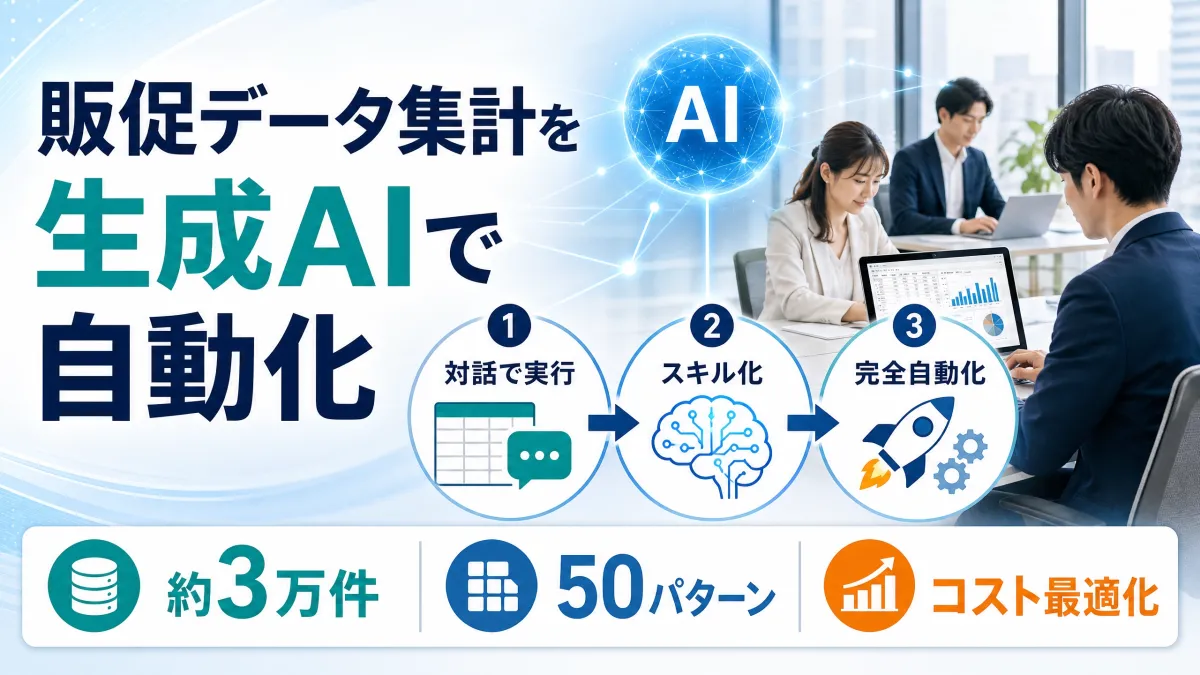
In a groundbreaking move, Komix Inc., headquartered in Shibuya, Tokyo, has started automating the data collection and report generation for promotional campaigns using Claude Code, an advanced generative AI tool. This innovative approach aims to streamline the cumbersome process that typically involves the analysis of approximately 30,000 data entries and 50 different reporting patterns every six months.
The Challenge
In the fast-paced world of marketing and advertising, data collection is essential for creating insightful campaign reports. However, the staggering increase in data volume due to the complexity of digital advertising and heightened demand for personalization has created a significant burden on human resources. The vast amounts of data being generated have rendered manual processing unfeasible, highlighting the urgent need for automation in data processing, analysis, and decision-making.
Within the client companies that Komix supports, several challenges have come to light:
- - Biannual data aggregation of around 30,000 campaign entries.
- - Over 50 diverse reporting patterns complicating the aggregation process.
- - Although the tasks are standardized, the volume necessitates considerable manpower.
The prevailing sentiment echoed among the workforce was, "The patterns are defined, yet manual time consumption is high." This statement underscored a perfect fit for automation through generative AI, emphasizing the need for efficiency in repetitive tasks where individual efforts are reaching their limits.
Our Solution
To address these challenges, Komix is implementing a phased approach to automate the reporting process. The initial step involved setting up the necessary development environment for the client, utilizing tools such as Git, Node.js, and Visual Studio Code. Following this, a demonstration was conducted to showcase how to automatically generate Google Apps Script-enabled spreadsheets through simple conversational instructions in Japanese.
The automation process also follows a clear trajectory:
- - Initial Execution via Interaction: Raw data is fed into the AI, which performs the aggregation and report generation, with the output being fine-tuned as necessary.
- - Skill Development: Successful processes are remembered by Claude Code as "skills," enabling the team to simply pass data for future reports without starting from scratch every time.
- - Full Automation: The ultimate goal is to achieve complete automation, where data placed in a designated folder is processed automatically, followed by notifications sent via Slack.
Unique Strengths
The approach taken by Komix is designed with several key features:
- - User-Friendly Design: Even those without programming knowledge can construct automation tools through conversational interactions in Japanese.
- - Knowledge Integration: Processes that demonstrate success are recorded by the AI, making them accessible and repeatable by anyone within the organization.
- - Gradual Automation Strategy: By starting small, organizations can gradually transition to complete automation without overwhelming changes.
- - Cost Optimization: Not only does automation enhance operational efficiency, but it also prompts a reevaluation of the overall tool-related expenses across the organization.
Target Audience and Use Cases
Potential Users
- - Executive Management
- - Marketing and Promotion Department Managers
- - Information Systems and Administrative Staff
Use Cases
- - Indirect Operations: Automating the repetitive tasks of data aggregation, report generation, and preparation of materials.
- - On-Site Operations: Analyzing campaign results and organizing data for the next strategic initiatives.
- - Organizational Strengthening: Clarifying the strengths of different generative AIs as personas (e.g., Claude as the "Command Center" for structured design, ChatGPT as the "Assistant" for phrasing and inquiries, Gemini for images and videos).
Future Perspectives
The true value of generative AI lies not only in one-off efficiencies but in its ability to "remember skills for repeated use." Standardized tasks are where AI shines, and Komix aims to empower teams to autonomously build their automation frameworks while optimizing fixed costs. The focus will initially be on solidifying the success of the data collection effort, gradually inspiring company-wide adoption of AI utilization. Rather than ending at implementation, ongoing support will include operational design and personnel development, aiming to transform efficiency gains into substantial business impact.
For inquiries regarding AI utilization support, please reach out through our contact page.
Topics Business Technology)

【About Using Articles】
You can freely use the title and article content by linking to the page where the article is posted.
※ Images cannot be used.
【About Links】
Links are free to use.