



New Program Launched to Create Impact Solutions for Agricultural Rural Areas
Launching the Impact Solutions Program for Agricultural Rural Areas
In a bid to address the pressing challenges faced by agricultural rural areas in Japan, the Ministry of Agriculture, Forestry and Fisheries (MAFF) has announced the launch of a new initiative named the "Impact Solutions Program for Agricultural Rural Areas." This program, which will run from May 20 to June 23, aims to gather high-quality solutions that can generate significant social and environmental impact through resolution of rural issues. Approximately ten projects will be selected as official "Impact Solutions" and will be unveiled at the upcoming symposium in mid-July.
Purpose of the Program
The primary goal of the program is to solicit innovative ideas from across Japan that can effectively tackle various issues within agricultural rural communities. Selected initiatives will undergo a matching process with local governments and support from MAFF to facilitate the implementation of these solutions on the ground.
Key Phases of the Implementation
1. Solution Selection: The program will initially focus on identifying around ten promising solutions capable of addressing rural challenges. These solutions will be showcased at the second symposium of the "Economic and Living Environment Revitalization Platform for Agricultural Rural Areas."
2. Matching with Local Governments: Once solutions are identified, MAFF will seek to connect the selected solutions with local governments that are eager to tackle their own challenges. This process includes a thorough assessment of the hurdles faced by these communities and the introduction of compatible solution providers.
3. Support for Implementation: The program also provides ongoing assistance, helping local governments and solution providers understand one another better. This support extends to proposing methods for securing funding and talent, which are crucial for transforming these solutions into actionable projects.
4. Ongoing Program Goals: Throughout the support period, which extends until the end of fiscal 2027, the program aims to achieve matching between each selected solution and three different regions, ensuring a collaborative approach to rural revitalization. Achieving mutual goals and forming consensus among stakeholders will be vital during this phase.
Criteria for Participation
Organizations looking to participate must meet several requirements, including:
- - Development of initiatives that can address challenges in agricultural rural areas.
- - Demonstrated experience or interest in collaboration with local governments.
- - Capacity to establish a framework for continuous engagement throughout the project duration.
- - Possession of legal entity status.
Timeline for the Program
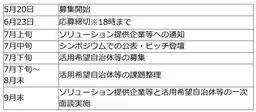
- - May 20: Application period opens.
- - June 23: Deadline for submission by 6 PM.
- - Mid-July: Announcement of selected Impact Solutions during the symposium.
Selection Process
The proposals will be evaluated by a committee comprising experts from various fields. Criteria for selection will take into account overall performance across different areas, but particularly high-quality initiatives that demonstrate a deep understanding of various challenges may be chosen as "Challenge Projects," regardless of feasibility or prior achievements.
The Importance of Addressing Rural Issues
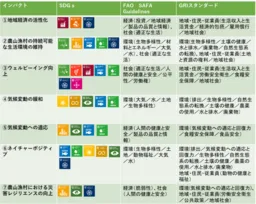
Agricultural rural areas play a crucial role not only in food security but also in disaster prevention, biodiversity conservation, and fostering community vibrancy. The challenges arising from population decline in these areas can significantly impact urban centers, making this a relevant concern not only for rural communities but for society as a whole. In fiscal year 2024, MAFF will categorize and analyze these challenges into seven distinct impacts, creating a framework for guidance and clear visualization of potential solutions.
Upcoming Symposium Details
A symposium is scheduled to announce the Impact Solutions. Here are the details:
- - Date: Mid-July, 1 PM to 5:30 PM.
- - Location: MAFF Auditorium, 7th Floor, 1-2-1 Kasumigaseki, Chiyoda, Tokyo (Virtual participation available).
For further information, please refer to the links provided for more details about the program and the guidance document: Impact Solutions Program and Impact Visualization Guidance.
Topics Other)




【About Using Articles】
You can freely use the title and article content by linking to the page where the article is posted.
※ Images cannot be used.
【About Links】
Links are free to use.