



Fuji Micro Corporation's Achievements in Microfilm Digitalization and Preservation for the National Diet Library
Fuji Micro Corporation's Success in Microfilm Digitalization
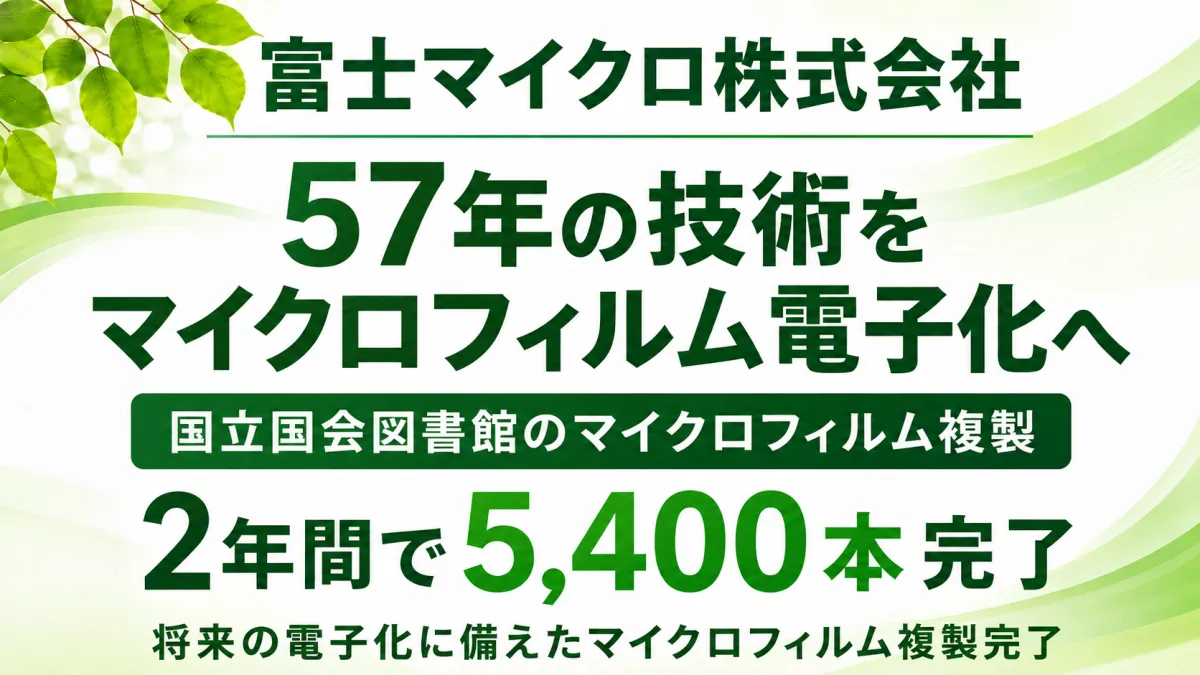
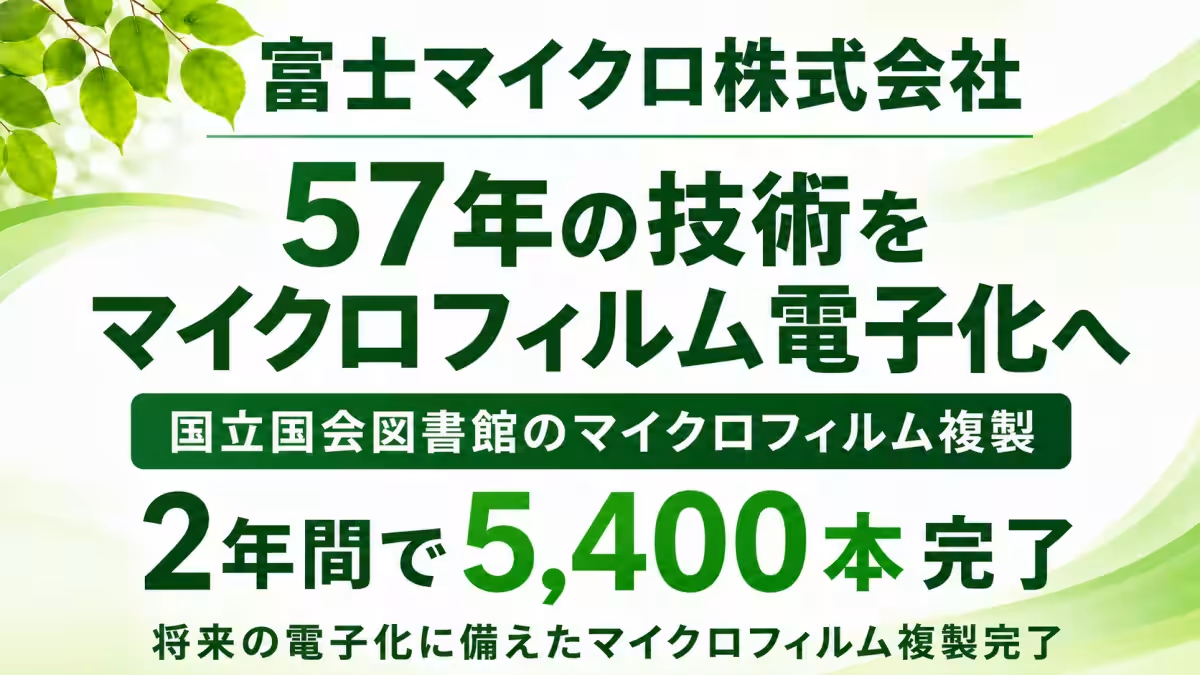
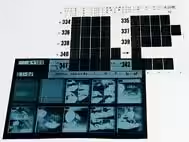
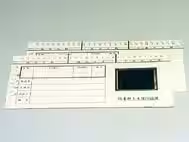
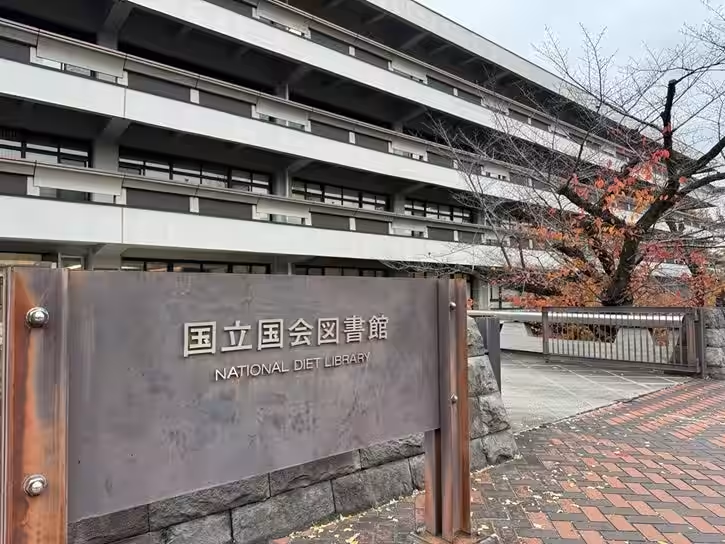
Fuji Micro Corporation, headquartered in Kumamoto, has recently completed an impressive project involving the replication of 5,400 microfilms for the National Diet Library of Japan. This endeavor, carried out over two years from 2024 to 2026, not only highlights the company’s expertise in microfilm digitalization but also underscores its commitment to preserving valuable historical documents.
Founded in 1968, Fuji Micro has built a solid reputation over 57 years in the field of microfilm services. The recent project is a testament to the advanced technology and know-how accumulated by the company. As digitalization continues to gain traction, the significance of preserving microfilms—a traditional medium for long-term storage of crucial records—has never been more pertinent. This transition is particularly crucial as the production and sale of microfilm and processing chemicals are set to cease by December 2025.
The Challenges Facing Organizations with Microfilm
Organizations that maintain microfilms, including businesses, municipalities, and other entities, now face increasing challenges in preserving these materials. Issues arise when the films deteriorate, as reproducing them becomes increasingly complex without specialized knowledge. Currently, many organizations grapple with questions such as:
- - How can we effectively digitize existing microfilms?
- - Is it safe to scan damaged or distorted films?
- - Where can we find a reputable specialist to handle replication and digitalization?
With more than 9 million microfilm items in its collection, the National Diet Library has stringent standards for preservation and replication. Fuji Micro successfully met the library's high-quality criteria, which include:
- - Resolution standards of 100 lines/mm for 35mm film and 80 lines/mm for 16mm film.
- - An acceptance rate of less than 0.50% for defects in random sampling.
- - Strict climate control in fire-resistant storage facilities with 21°C and 45% relative humidity.
- - Comprehensive security measures throughout the storage and transport process to prevent loss or damage.
- - Staff qualifications that include senior certified document information managers overseeing replication, development, and quality control.
This rigorous quality management is a hallmark of Fuji Micro’s services, not just for special contracts, but as a standard practice in all its microfilm digitization operations.
Project Overview
Project Name:
Replication of Microfilms for the 7th and 8th Year of the Reiwa Era
Scope:
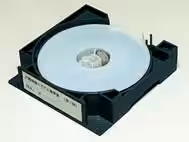
Replicating 35mm positive films into 35mm negative films.
Deliverables:
- - Year 7: 2,400 films completed by March 2026.
- - Year 8: 3,000 films completed by July 2026.
Total:
5,400 films successfully replicated.
Operational Details
Fuji Micro’s meticulous approach involved several steps:
1. Film Transport and Storage: The microfilms were transported from the Tokyo library to Kumamoto. A controlled environment was maintained throughout the transport and storage.
2. Condition Review and Cleaning: Each film was inspected for damage or degradation prior to replication, and cleaning was performed as necessary.
3. Film Replication: Utilizing ISO 18906 compliant polyester-based films, replication was conducted under rigorous density control according to JIS standards.
4. Quality Inspection: Each replicated film was thoroughly checked for clarity, focus, and any defects, ensuring the highest quality output.
5. Storage and Delivery: The finished products were stored appropriately before being delivered back to the National Diet Library in Tokyo.
Invitation to Consult With Fuji Micro
If your organization is grappling with microfilm digitization, consider reaching out to Fuji Micro. Leveraging proven replication techniques and quality management systems, the company offers a comprehensive service that spans all aspects of digitization, including scanning, AI-OCR, and digital archiving. Their team of experts knows how to preserve essential records for future generations.
President’s Statement
Kōzō Hisanaga, President of Fuji Micro, reflects on this opportunity: “The microfilm replication tasks for the National Diet Library showcase the culmination of our 57 years of expertise. As we navigate this pivotal moment when microfilm production ceases, we take great pride in our role in preserving valuable national assets.” Hisanaga emphasizes that this challenge is shared by organizations nationwide, and Fuji Micro is committed to promoting the next generation of microfilm digitization to faithfully carry forward cultural and corporate legacies.
About Fuji Micro Corporation
Founded on the mission of connecting people and the past with the future, Fuji Micro Corporation has been a key player in the preservation of vital records. Through its expertise, the company safeguards necessary historical documents, including family registers and ancient writings held by local governments.
As a recognized company in the field of digital archiving and filing, Fuji Micro continues to deliver high-security electronic services across various sectors.
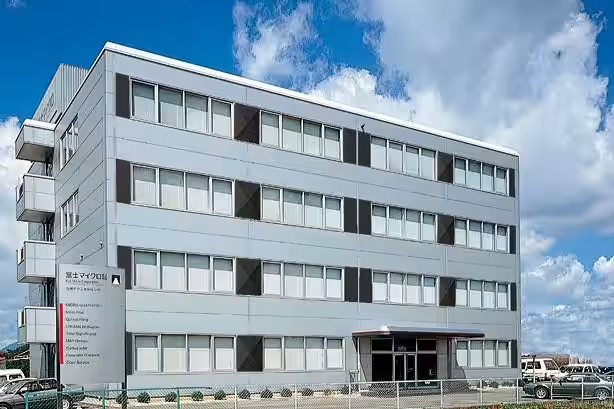
With certifications including ISO 9001, JIS Q 15001, and ISO 27001, Fuji Micro is well-equipped to manage sensitive materials in its state-of-the-art, fire-resistant storage facilities located in Kumamoto.
The company focuses on evolving beyond traditional storage by integrating cutting-edge technologies like AI and GIS into its service offerings, thus transforming mere preservation into actionable information assets.
Fuji Micro Corporation aims to continue serving as a trustworthy partner for its customers and society as a whole, ensuring the integrity of information asset management while embracing technological advancements for the future.






Topics Consumer Technology)
【About Using Articles】
You can freely use the title and article content by linking to the page where the article is posted.
※ Images cannot be used.
【About Links】
Links are free to use.