



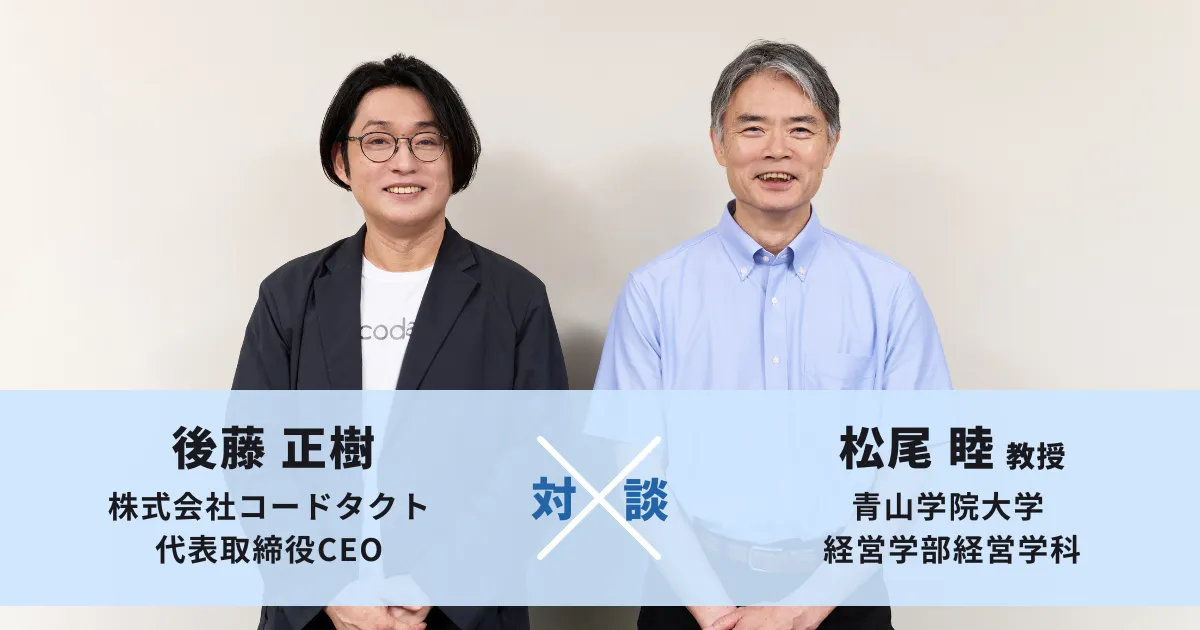
A Conversation on Realizing Autonomous Organizations by Experts from Aoyama Gakuin University and Code Tact
Realizing Autonomous Organizations: A Dialogue on Experience Learning and Reflection Management
Introduction
A recent discussion between Professor Mutsuo Matsuo from Aoyama Gakuin University and Masaki Goto, CEO of Code Tact, sparked vital insights into how organizations can evolve into autonomous entities. As more companies pursue this transformation, challenges such as excessive burdens on managers and ineffective training initiatives persist, often resulting in inadequate learning outcomes despite employing practices like one-on-one meetings and on-the-job training.
Background of the Dialogue
The growing interest in autonomous organizations has highlighted a significant concern: the absence of systems that facilitate learning from experiences within these organizations. This important conversation focused on the innovative theories of experience learning proposed by Professor Matsuo and the technology-driven approaches for enhancing reflection by Mr. Goto. Together, they explored strategies to create a culture of learning from experience that can foster true autonomy in organizations.
Key Topics Discussed
1. Experience Learning
Professor Matsuo emphasizes that for organizations to leverage individual experiences effectively, they must instill a systemic approach to learning from those experiences. This means moving beyond traditional methods of training and incorporating reflective practices that encourage employees to analyze their experiences critically and learn from them.
2. Role of Technology in Reflection Management
Mr. Goto discussed how Code Tact harnesses technology, particularly AI, to develop a robust reflection management system named ‘Team Takt’. This system combines reflection methods with a platform that promotes collaborative learning, aimed at resolving previous issues associated with communication and reporting.
3. Challenges in Current Practices
Both experts noted the often superficial application of managerial practices intended to cultivate learning, such as one-on-one sessions and OJT programs. While these can provide initial structure, if not coupled with a genuine reflective process, they may lead to stagnation rather than progress.
Team Takt: A Reflection Management System
Team Takt stands as a testament to the principles outlined in this dialogue. It operates on the idea of learning from reflection and consists of straightforward methods for individuals to assess their experiences, coupled with AI feedback to enhance these reflections. This breaks away from the one-sided reporting that typically characterizes such interactions, ensuring that both individual learnings and team creativity are prioritized.
By integrating human support such as onboarding and operational management, Code Tact is further enhancing the impact of reflection within organizations. Many companies aiming for ‘self-managing individuals and organizations’ have already begun implementing this system, leading to improved self-management skills and reduced turnover rates among employees.
Conclusion
As organizations strive to become more autonomous, the insights shared by Professor Matsuo and Mr. Goto provide essential guidance. Creating an environment that prioritizes experience learning and effective reflection management is crucial in fostering autonomy within teams. With innovative systems like Team Takt, businesses can make significant strides towards realizing true organizational independence and resilience.
For more insights from this discussion, you can read the full article on HR Pro.


Topics Business Technology)

【About Using Articles】
You can freely use the title and article content by linking to the page where the article is posted.
※ Images cannot be used.
【About Links】
Links are free to use.