



Transforming Cross-Border Payments with Connectivity and AI: UnionPay's Vision at Davos 2026
Transforming Cross-Border Payments with Connectivity and AI
In a changing world marked by geopolitical uncertainties and intensified global trade pressures, UnionPay emerges as a pioneer in reshaping cross-border payments. At the 2026 World Economic Forum (WEF) in Davos, the organization emphasizes the significance of fostering effective and resilient flows of people, goods, and capital, aligning with the overarching theme of the conference, A Spirit of Dialogue.
As leaders from around the globe convene, the challenges posed by the International Monetary Fund's warnings of slowed economic growth in 2026 become apparent. Amid structural roadblocks faced by advanced economies and the financial hurdles confronting emerging markets, the necessity for efficient payment capabilities has never been more crucial. UnionPay, one of the world's foremost card payment organizations, positions itself at the forefront, advocating for a more inclusive international payment ecosystem characterized by collaboration, interoperability, and shared values.
UnionPay's ongoing efforts have enabled its card products to reach 84 countries and regions, while its acceptance network spans 183 countries. Through partnerships with over 2,600 financial institutions and payment entities globally, UnionPay successfully tailors its digital payment solutions to cater to local market needs. This bespoke approach not only fosters trade but also enhances consumption across diverse sectors.
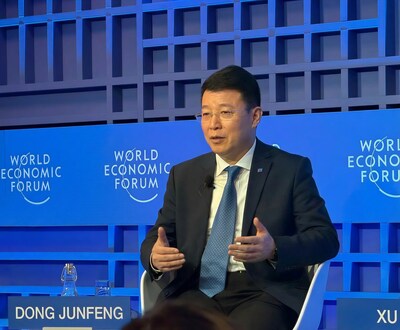
At the WEF roundtable discussions, Dong Junfeng, Chairman of China UnionPay and UnionPay International, articulated how UnionPay's two-decade journey mirrors broader trends within the Chinese economy—one characterized by resilience and openness on the global stage. Amidst a complex international landscape, UnionPay remains steadfast in its international strategy, promoting high-quality payment development while advancing collaborative frameworks rooted in equality and mutual benefits.
A New Quadrilateral Model for Emerging Markets
Addressing the complexities of cross-border payment scalability necessitates more than mere technical integration. UnionPay's innovative New Quadrilateral Model emphasizes strong and replicable collaboration frameworks. By expanding beyond traditional four-corner payment models, this new approach integrates diverse stakeholders across the ecosystem—incorporating digital wallets and mobile device manufacturers alongside payment service providers and SaaS platforms.
This model promotes resource pooling, reduces cross-border collaboration costs, and accelerates network expansion. UnionPay implements this strategy throughout Southeast Asia, Central Asia, the Middle East, Africa, and Latin America—crucial emerging markets where it enhances interoperability within cross-border QR payment networks. Rather than displacing local payment systems, this model adheres to existing regulatory frameworks, advocating for mutual recognition of standards and coordinated network development. The outcome is broader access for millions of micro, small, and medium enterprises to UnionPay's inclusive global network, facilitating better access to international consumers and cross-border trade opportunities.
Responsible AI in Payments: A Practical Application of Innovation
The discussions at Davos also spotlighted the transformative potential of artificial intelligence (AI). In the payments sector, known for its strict compliance and security requirements, UnionPay is committed to leveraging AI while effectively managing associated risks. By prioritizing innovative applications tailored for the financial sector, UnionPay envisions AI as a new catalyst for productivity and modernization.
Rather than isolating AI applications, UnionPay builds collaborative ecosystems with technology companies, research institutions, and universities. This approach supports the sustainable and high-quality implementation of AI in financial scenarios. For instance, UnionPay has developed an intelligent risk control system significantly enhancing transaction protection speed and effectiveness, achieving an 85% accuracy rate for AI-generated risk rules.
Additionally, UnionPay leads the industry in agentic-based payment solutions, providing a seamless payment experience from request to transaction completion. As China advances its visa-free travel policy, UnionPay rolls out AI-powered services for visitors, exemplified by its digital platform, the Nihao China app, launched in December 2025.
From Dialogue to Cooperation: Unlocking Long-Term Value in Cross-Border Payments
At the core of UnionPay's practices lies the spirit of dialogue, a vital theme at Davos. By collaborating with local payment systems in various markets, UnionPay does not impose a singular model or standard. Instead, it seeks common ground amid diversity, creatively building an open and inclusive global payment ecosystem.
In its efforts to enhance cross-border payment efficiency and lower transaction costs, UnionPay effectively supports regional economic circulation while broadening participation from small and medium enterprises, particularly in emerging markets. This approach embodies the collaborative ethos emphasized at the World Economic Forum, highlighting the pressing need for mutual benefits in uncertain times.
Moving forward, UnionPay is determined to harness connectivity as a lever to deepen multilateral partnerships and to foster a more open, inclusive, and sustainable international payment ecosystem, embodying its vision of Trusted Relationships, Shared Success.
Topics Financial Services & Investing)
【About Using Articles】
You can freely use the title and article content by linking to the page where the article is posted.
※ Images cannot be used.
【About Links】
Links are free to use.