



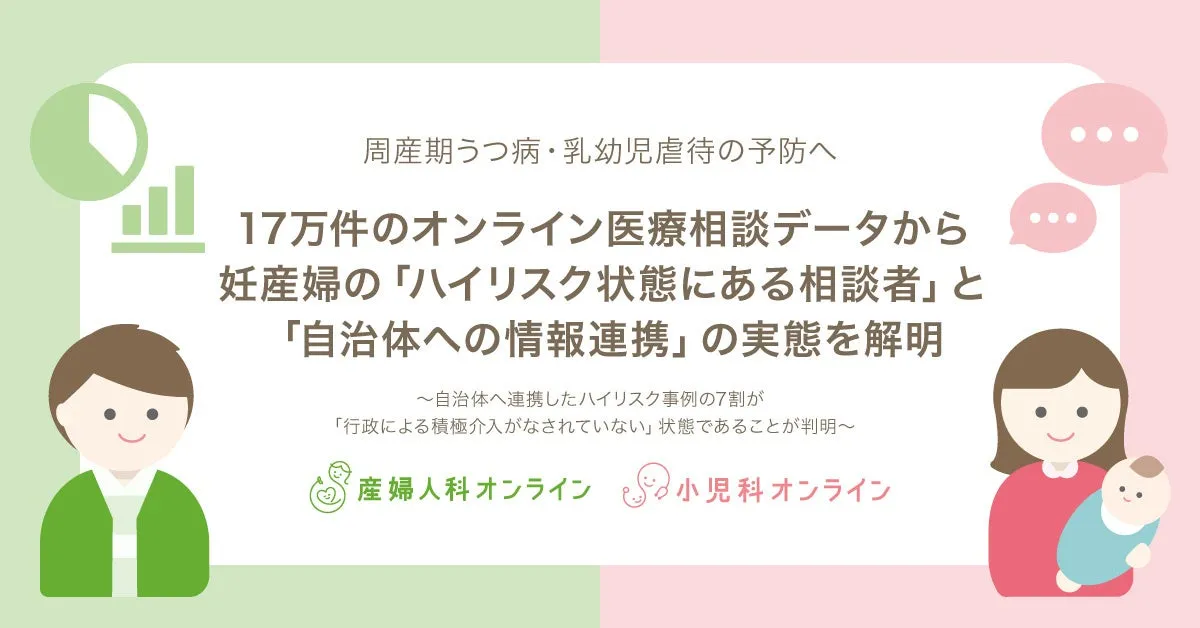
Online Medical Consultation Analysis Reveals High-Risk Conditions in Expecting and New Mothers
Understanding High-Risk Conditions in Expecting and New Mothers
In an extensive study conducted by Kids Public in collaboration with Japan Medical University Hospital's obstetrics department, over 176,000 online medical consultations over four years were analyzed to reveal concerning trends among expecting and new mothers. This in-depth analysis identifies high-risk conditions for perinatal depression and infant abuse, including the pressing need for local government collaboration.
Overview of Findings
From the analyzed data, about 1% of the users showed signs of high-risk conditions that warrant local government involvement, including suspicions of perinatal depression or child abuse. Alarmingly, only 30% of cases that required local government collaboration actually received timely intervention. This highlights the vital role online consultations play as a safety net for detecting hidden SOS signals from mothers who may be struggling in isolation.
This research was presented at the 78th Annual Meeting of the Japan Society of Obstetrics and Gynecology on May 17, 2026, by Daisuke Shigemi, a representative from the online obstetrics platform. The use of real-world data demonstrated the effectiveness of integrated support systems for early detection of high-risk groups post six months postpartum, offering crucial insights into preventing perinatal depression and infant maltreatment.
Societal Needs and Background
With the rise of nuclear families and a weakening of community ties, many expecting mothers face increased anxiety and burdens due to a lack of support systems. Compounding the issue is the inconsistency in receiving proper medical care during pregnancy, often due to financial constraints or lack of awareness. Postpartum healthcare typically ends a month after childbirth, leaving a gap in essential follow-up care that communities struggle to fill. Consequently, rising instances of postpartum depression and infant abuse are becoming significant societal problems that necessitate a seamless support system for the mental and physical health of mothers.
Accessing expert support through online health consultations has emerged as a powerful safety net for these vulnerable women. However, there has been little previous documentation outlining how these online consultations coincide with local government actions and interventions.
Innovative Aspects and Novelty of the Research
The retrospective analysis explored consultation records from April 2021 to March 2025, focusing on 176,966 inquiries from 37,722 users. Notably, about 0.88% of these consultations involved mothers considered in need of government intervention, with 99 cases leading to actual referrals, constituting 0.26% of the total.
The majority of the mothers requiring intervention (over 80%) were in a postpartum phase, often struggling with mental health challenges. Alarmingly, approximately 40% of these high-risk individuals showed signs of perinatal depression, while about 10% raised concerns regarding infant abuse. Furthermore, nearly half of the cases that were referred to local authorities occurred six months after childbirth, underscoring the importance of sustained support beyond immediate postpartum care.
Key Triggers and Patterns
Interestingly, seven out of ten mothers needing collaboration with local governments first consulted midwives, indicating a potential perception that midwives might be more approachable than medical doctors when discussing sensitive issues such as mental health. The findings also revealed that 70% of the referred cases had not previously received any proactive intervention from local authorities, illustrating the critical role online health consultations can play in identifying distress signals from mothers who might otherwise go unnoticed.
Significance of Combined Supports
Following referrals to local governments, 86% of the mothers continued to utilize online health consultations, suggesting a synergistic effectiveness of combined online and face-to-face support. This continuity of care emphasizes the importance of integrating various assistance formats to ensure that mothers do not feel abandoned as they navigate postpartum challenges.
Future Perspectives and Societal Impact
The results from this study affirm the capability of online health consultations to act as a robust safety net for mothers during and after pregnancy. By providing continuous support in a period that is often neglected, especially beyond the six-month postpartum mark, online services has the potential to play a critical role in ensuring maternal and child health.
Kids Public actively monitors risks of perinatal depression and infant abuse during daily consultations. Prompt communication with local governments allows for timely interventional measures tailored to the severity and urgency of each case. Since its inception, Kids Public aims to be a cornerstone in public health infrastructure, providing services to numerous local governments and organizations in Japan. The collaborative expertise of obstetricians, pediatricians, and midwives ensures that effective strategies are continually developed to address high-risk conditions in community members.
In conclusion, with established evidence showing reductions in postpartum depression risks due to ongoing online support, the future for Kids Public involves enhancing this unique collaboration between local health professionals and community resources to safeguard the well-being of parenting families throughout Japan.
Topics Health)
【About Using Articles】
You can freely use the title and article content by linking to the page where the article is posted.
※ Images cannot be used.
【About Links】
Links are free to use.