



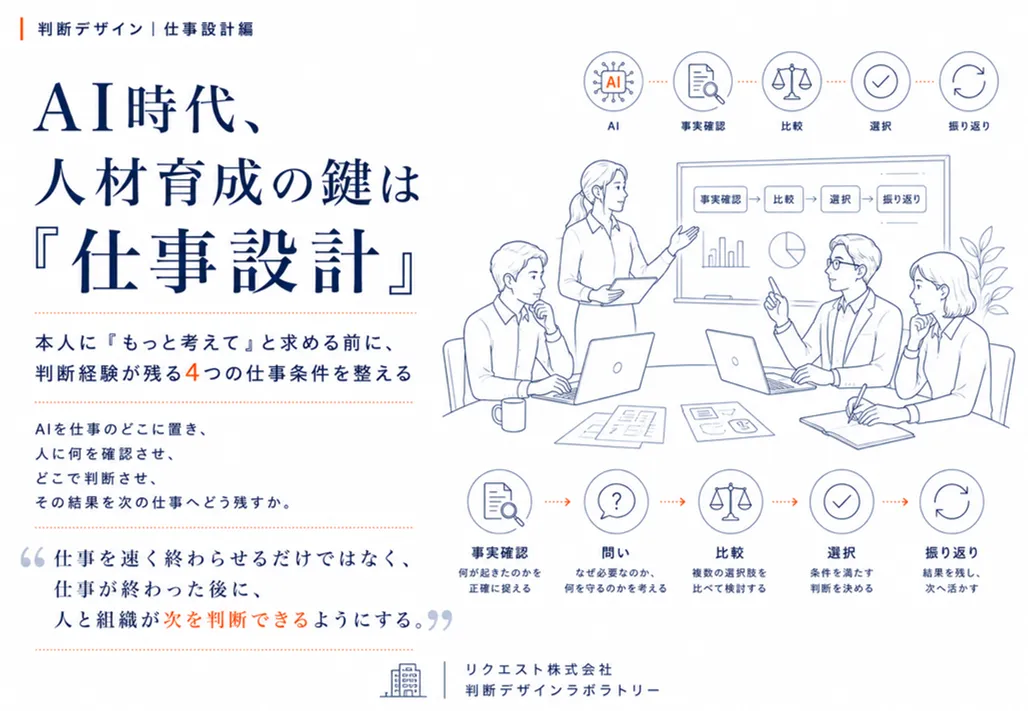
The Key to Workforce Development in the AI Era: Job Design Framework
Understanding Job Design in the AI Era
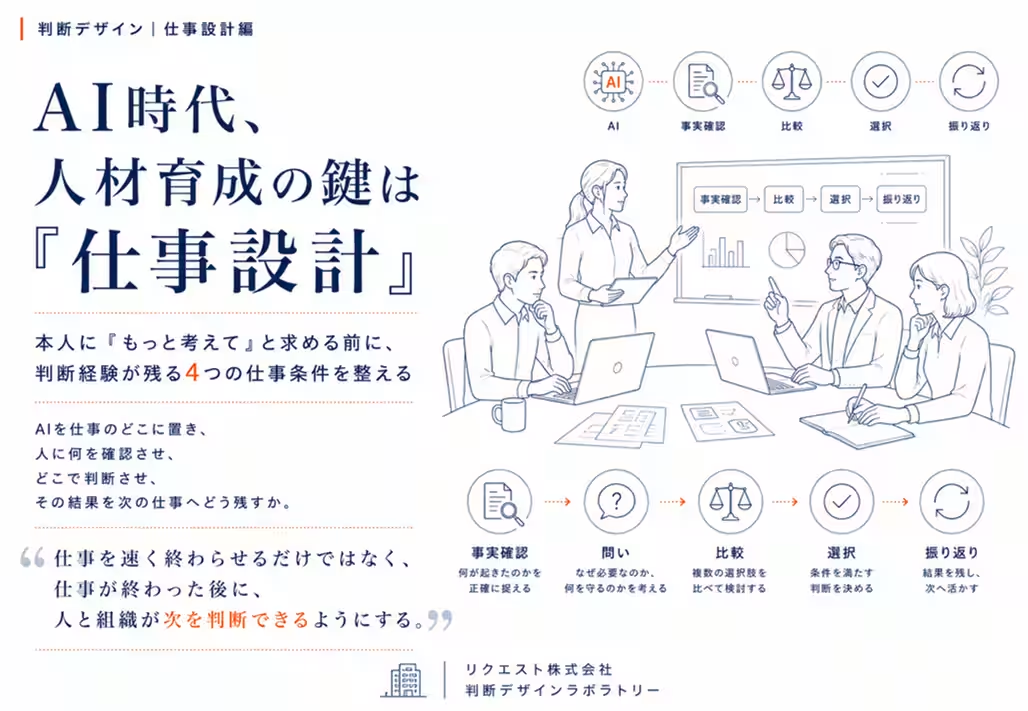
In today's rapidly evolving AI landscape, workforce development strategies must pivot towards innovative job design methods that enhance an employee's decision-making experiences. The Japanese organization, Request Co., Ltd., has taken a significant step in this direction through their newly released framework, named "Judgment Design | Job Design Edition." This five-page document serves as a guideline for integrating AI into job workflows while ensuring that individuals and organizations retain crucial judgment experiences necessary for future decision-making.
The Concept of Job Design
It's important to clarify that this new focus on job design does not merely entail a meticulous breakdown of work processes. Instead, it emphasizes several vital questions:
- - Where should AI be positioned within the job function?
- - Which facts should employees verify independently?
- - At what points are individuals required to make decisions?
- - How should the decisions and their outcomes inform future tasks?
The essence of job design, therefore, lies in seamlessly crafting these elements within a singular job role. The recently published guidelines were not merely a summary of prior research released on August 31, 2026. Rather, this document synthesizes insights from the research, aiding companies in assessing and implementing job design principles to better facilitate judgment experiences alongside clear delineations of roles for AI and human workers.
The Relationship Between Speed and Learning
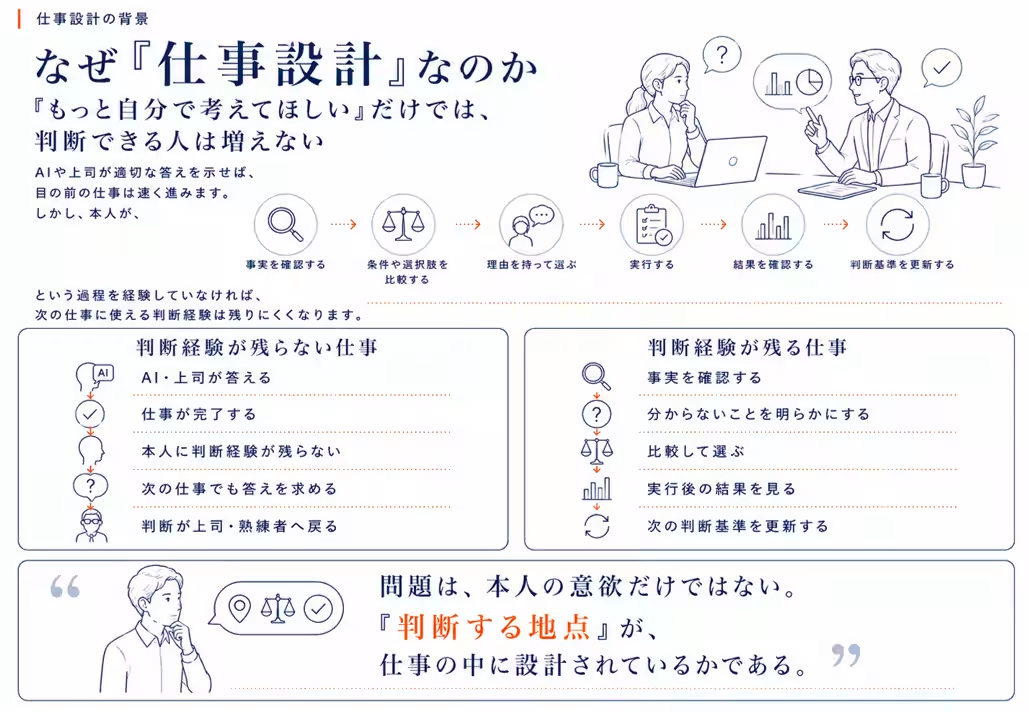
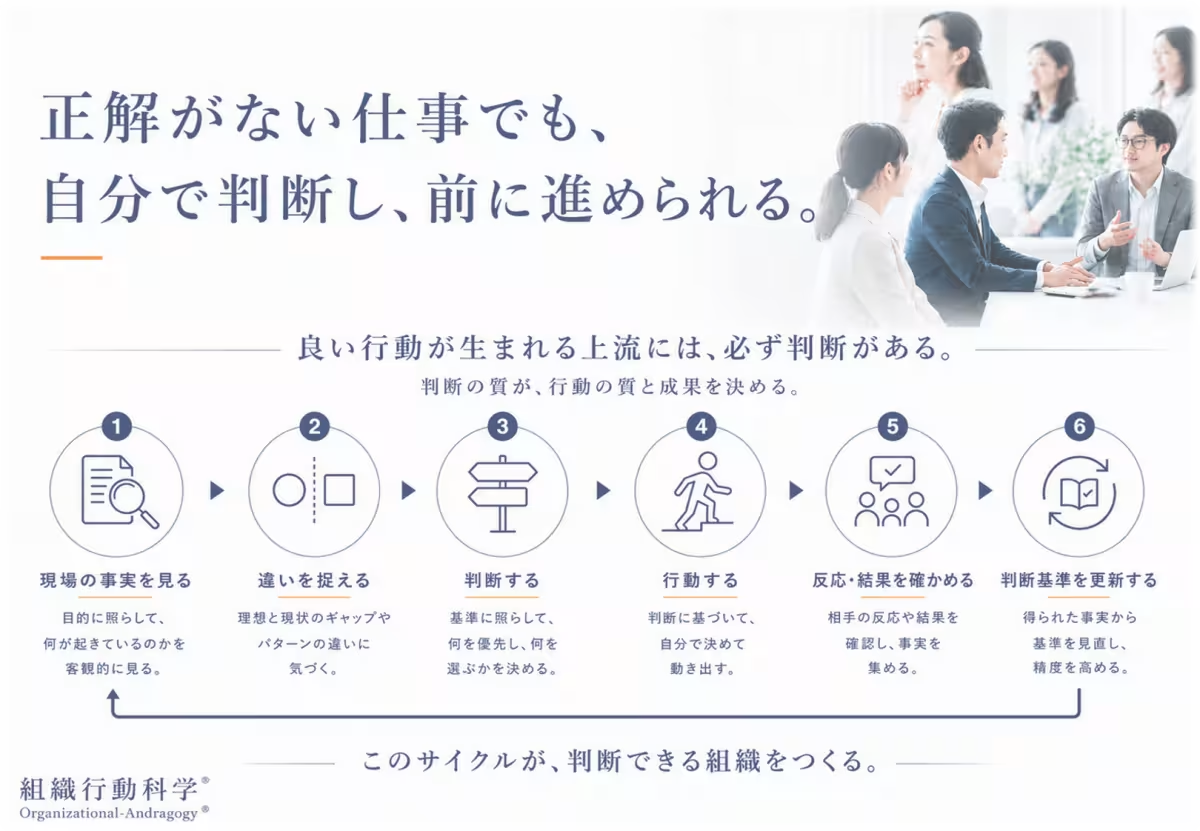
While we often associate AI and efficient responses from superiors with quicker task completion, this does not equate to developing the capability for individuals to make sound judgments in similar situations in the future. Simply executing tasks is insufficient; employees must engage in verifying facts, addressing uncertainties, weighing alternatives, and updating their decision-making frameworks based on outcomes. Thus, in the realm of workforce development in an AI-driven world, it's essential to consider not just how much an employee thinks, but whether there is a systematic way to convert their decision-making outputs into learning experiences.
Breaking the Cycle of Lack of Agency
When juniors and subordinates struggle with decision-making, organizations may hastily attribute this to a lack of initiative or desire for independent thought. However, it’s crucial to recognize that the inability to decide often stems from unclear guidelines on:
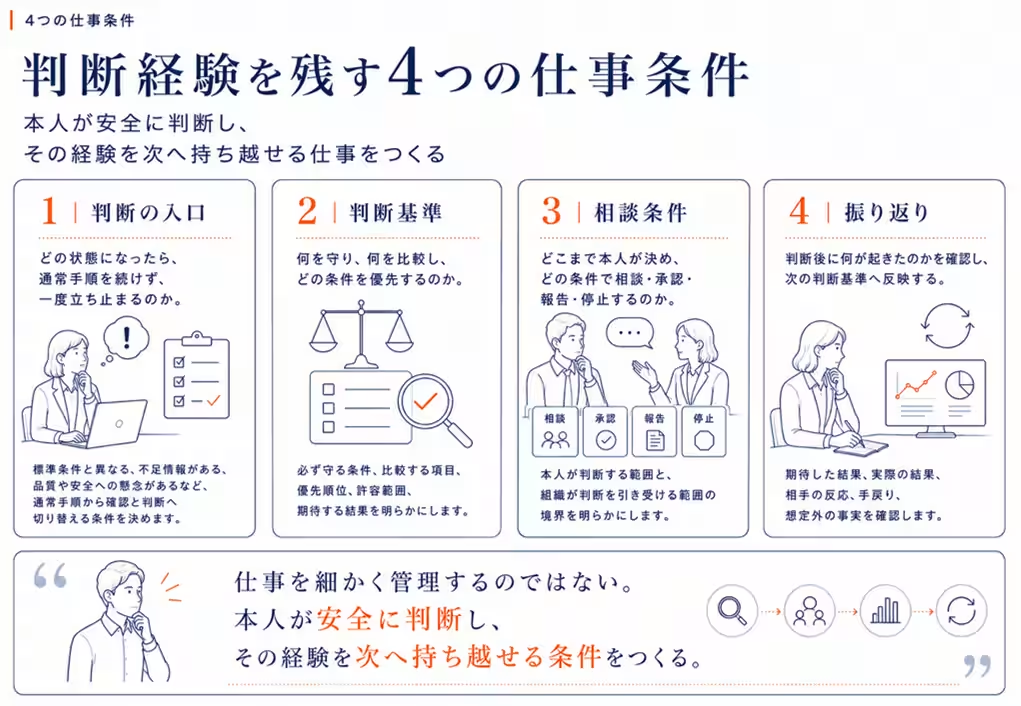
- - When to halt standard procedures
- - What criteria to use for comparisons
- - The extent of authority they possess to make decisions
- - When to seek guidance from their superiors
- - What to verify after implementation
If these elements are ambiguous, employees find it challenging to take actionable decisions. Handing down answers from the superiors may conclude work swiftly, but it does not empower individuals to gain decision-making experience in similar future scenarios. Organizations must assess whether their job roles are structured to encourage opportunities for judgment experience instead of perpetually reverting to senior members for decisions.
The Interconnectivity of Job Conditions
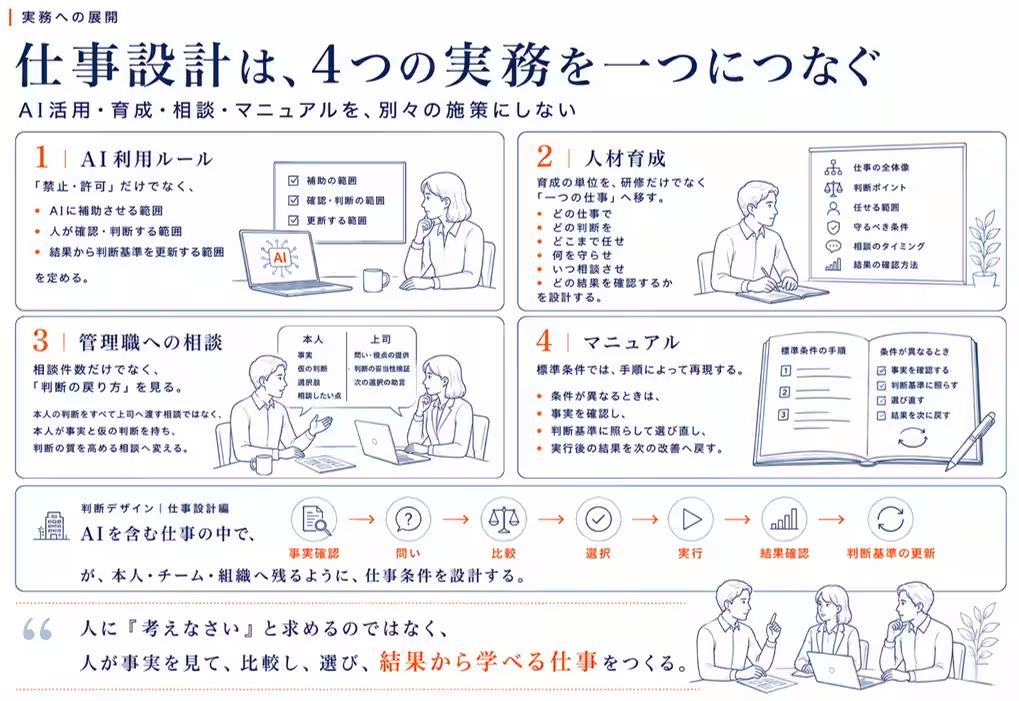
Request Co., Ltd. identifies four essential conditions that contribute to instilling judgment experience in the workspace. It is vital to understand that these conditions should not be treated as independent items, but rather as interconnected components of a comprehensive system. There needs to be a clear transition from standard procedures to judgment points, appropriate benchmarks for comparison, safe boundaries for independent decision-making, and a feedback loop guiding the next actions based on results. The synthesis of these elements ensures that an individual's actions transform from isolated tasks into foundational experiences that can be leveraged in subsequent job roles.
Beyond Task Divisions: The Human Element
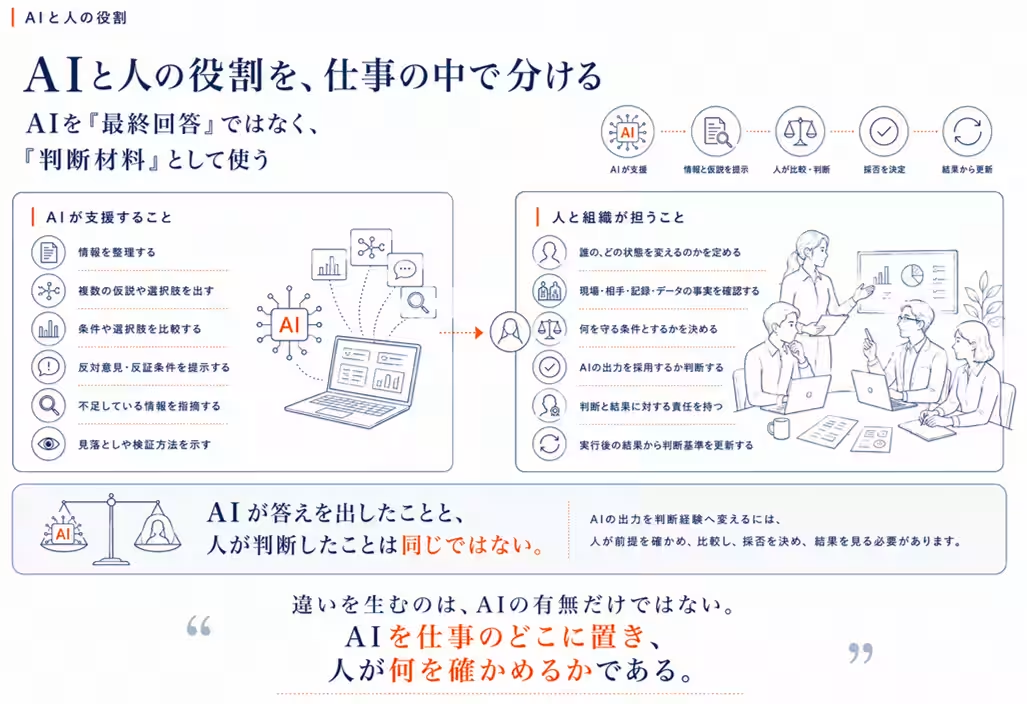
The distribution of tasks between AI and humans shouldn't focus exclusively on the operational aspects. To ensure meaningful judgment experiences remain, organizations must reflect not solely on what tasks AI performs, but on where employees verify facts, decide on actions, and learn from results. AI can assist significantly through data organization, hypothesis generation, comparisons, and addressing gaps in information. However, it is crucial for human participants to define objectives, verify first-hand data, set preservation conditions, and decide how to integrate AI outputs while taking responsibility for the results.
Approaching AI as a definitive answer reduces the human role to a passive one, while positioning AI as a tool for substantiated decisions enables individuals to engage, analyze, choose, and learn from outcomes dynamically.
A Holistic Approach to Workforce Development
Merely modifying workforce training protocols will not suffice in transforming workplace functionality. Rules regarding AI usage, workforce training, managerial consultations, and procedural enhancements are often handled across multiple departments. In practice, these elements intersect closely. Establishing clear boundaries for an individual's responsibilities related to AI does not inherently develop their judgment skills unless they are given active opportunities to experience decision-making in real scenarios.
Even with training, if work cultures remain where all decisions are referred back to superior levels, the opportunity for genuine judgment experience to be cultivated is diminished. Without clear guidance in manuals that acknowledge varying conditions, tasks straying from standardized processes revert back to seasoned professionals, stifling individual growth.
Initiating Change with Specific Job Roles
Implementing job design does not necessitate an immediate overhaul of entire organizational frameworks. It can begin with identifying specific tasks such as:
- - Routine questions being frequently referred back to superiors
- - Non-standard operations becoming concentrated among a few experienced staff
- - The use of AI speeding up processes without subsequent development of individual judgment skills
- - Training manuals lacking adaptability when conditions change
- - Variability in decision-making and results across individuals
- - Outcomes not feeding back effectively into forthcoming judgment criteria.
Instead of creating abstract corporate rules, targeting one specific job and dissecting its decision points, comparison grounds, permissive boundaries, and results verification yields more actionable insights into where judgment losses manifest.
Positioning the Judgment Design Framework
"Judgment Design" entails designing job conditions in a way that ensures processes such as fact-checking, questioning, comparisons, selections, operations, results checking, and updating judgment criteria remain intact for individuals, teams, and organizations while incorporating AI. The aim is not to revert to an entirely human-driven work environment but instead to streamline the process of delineating which tasks can be efficiently handled by AI while preserving essential decision-making pathways for human contributors.
This release, focusing on the "Job Design Edition," serves as a practical framework to apply these ideas to AI usage rules, workforce development, managerial consultations, and manual improvements.
Conclusion
It's imperative to view workforce training as interconnected with everyday operations, transforming workplaces into arenas where judgment experiences can be nurtured. The amalgamation of AI into work processes amplifies performance, but it’s equally critical to ask whether the structure allows individuals to retain valuable judgment experiences. In adapting to the AI age, organizations must strategically harness both AI and human capabilities to foster an environment conducive to learning and growth.


Topics Business Technology)
【About Using Articles】
You can freely use the title and article content by linking to the page where the article is posted.
※ Images cannot be used.
【About Links】
Links are free to use.