



The Growing Gap in AI Governance for Employees: Insights from Global Research
The Growing Gap in AI Governance for Employees
In recent times, the rapid incorporation of artificial intelligence (AI) into workplace dynamics has led to a significant challenge for many organizations. A survey conducted by Harvard Business Review Analytic Services, sponsored by Nexthink, a leading company in Digital Employee Experience (DEX) management software, found that 58% of organizations feel their IT departments are unable to keep up with the accelerating use of AI by employees. This stark revelation is central to understanding the current landscape of AI governance and its implications for the future of work.
Key Findings from the Survey
The research encompassed responses from 259 decision-makers within organizations actively utilizing AI in various capacities. The following findings highlight the disconnect between employee practices and IT governance:
- - Lack of Monitoring: A significant 63% of respondents acknowledged a need for improved visibility into informal AI usage among employees, with only 27% asserting they fully understand how such tools are being utilized.
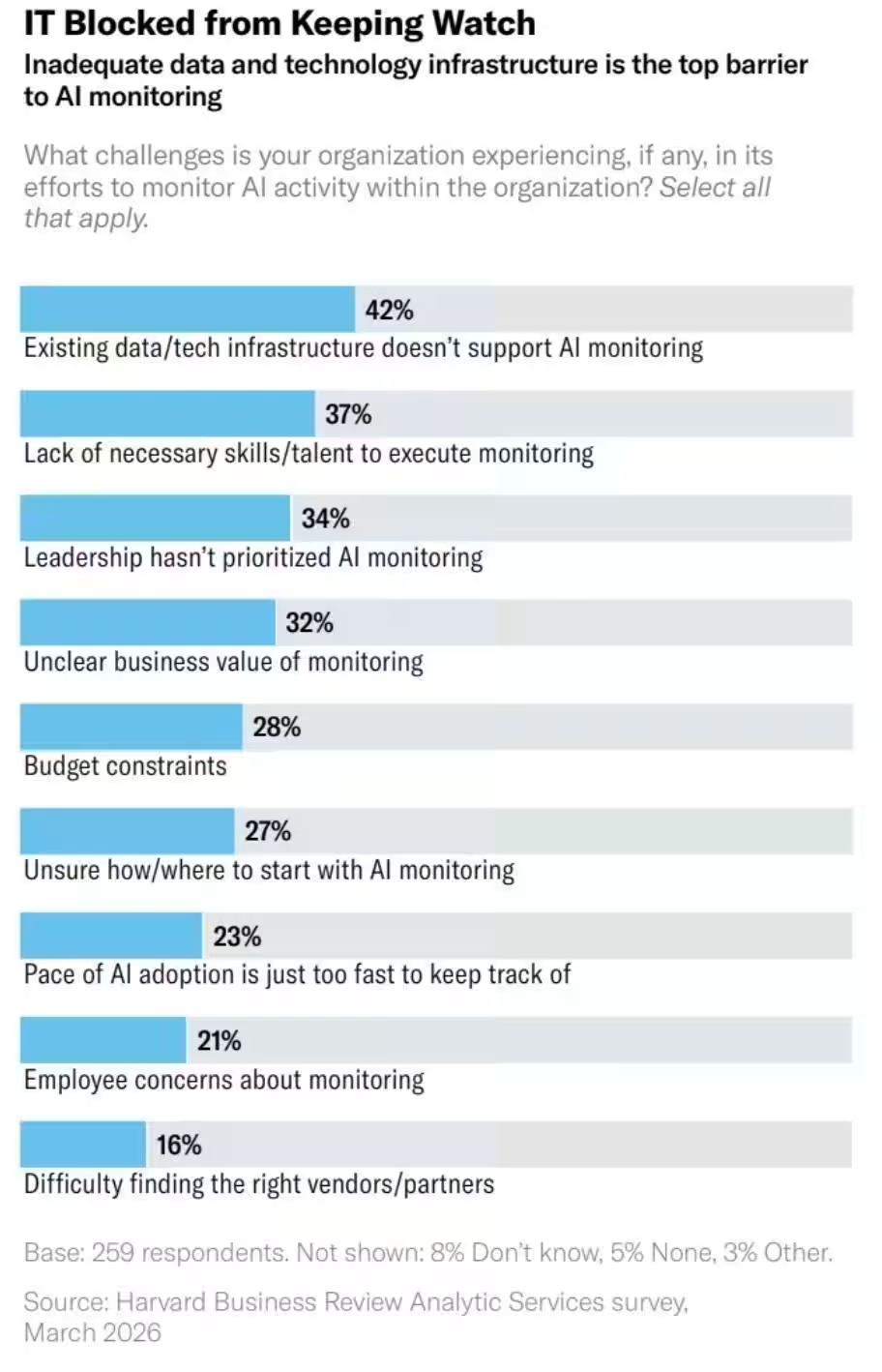
- - Infrastructure Inadequacies: 42% expressed that their existing data and technology infrastructure is insufficient for monitoring AI usage effectively.
- - Security Concerns: With the rise of employee-driven AI usage, 79% cited security and data exposure as substantial concerns.
These points strongly emphasize a growing gap in managing AI's proliferation within corporate environments, highlighting the urgent need for organizations to reassess their governance strategies in light of these rapid changes.
The Importance of Governance
Pedro Bados, CEO and co-founder of Nexthink, articulated the core issue at hand: many organizations have not established clear AI strategies before their employees have begun experimenting with AI tools. This situation often leads to IT departments struggling to implement effective governance as certain AI applications become ingrained in corporate practices. Bados noted that by the time IT units start addressing AI tool management and governance, employees may already have adapted to using specific AI tools in their daily tasks.
The findings indicate a concerning trend where 58% of participants feel IT's governance is not keeping pace with employee AI utilization. Furthermore, 45% expressed that the IT departments often lack a comprehensive view of how AI is being employed in day-to-day operations.
Monitoring Challenges
One of the main challenges organizations face is monitoring the usage of AI tools chosen by employees independently of corporate directives. While the understanding of officially implemented AI is relatively clear, with 46% of respondents feeling adequately informed, only 27% felt the same regarding employee-led AI initiatives. Moreover, 63% of participants believe that enhancing visibility into employee-selected AI tools is essential for effective management.
Companies that do not prioritize establishing clear guidelines and monitoring practices may inadvertently expose themselves to various risks, including breaches in data safety and compliance violations. The report underlines that without proper governance frameworks, organizations may struggle to harness the full potential of AI technologies.
Planned Initiatives for the Coming Year
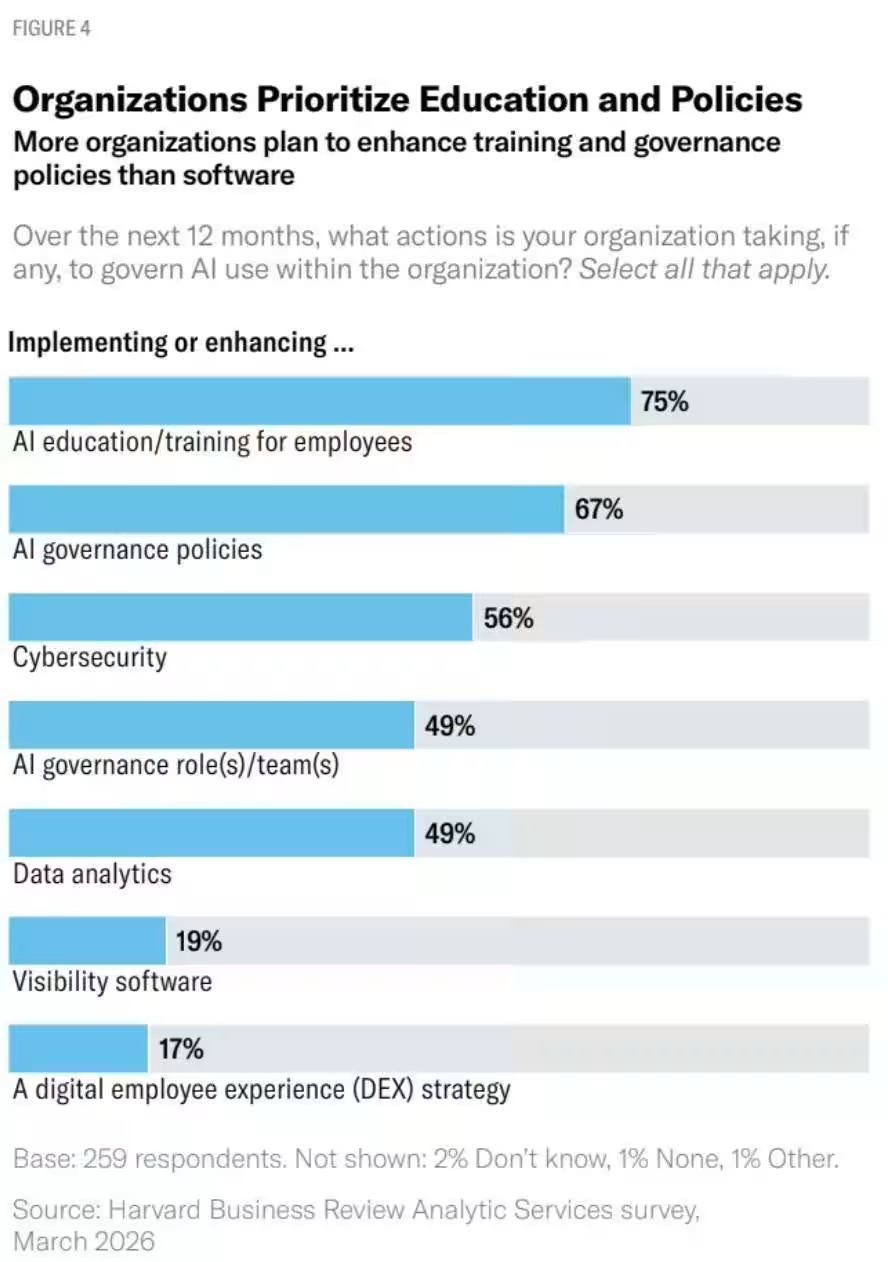
Looking ahead to the next twelve months, organizations are prioritizing specific measures to close the governance gap:
- - 75% plan to focus on training and education programs for employees regarding AI usage.
- - 67% aim to strengthen internal governance policies.
However, a mere 19% of organizations intend to invest in visual monitoring software that could enhance oversight of AI utilization. This imbalance suggests that while education and policy enhancements are important, organizations may be lagging in implementing the necessary tools to visualize and analyze AI applications in real-time.
Looking Forward
Bados emphasized the importance of combining effective governance with innovative practices, stating, "Visibility is as crucial as capability. To fully leverage AI's power, an in-depth understanding of governance, innovation, automation, and employee digital experiences is necessary." The rapid evolution of workplace technology demands this dual approach to successfully navigate the ongoing digital transformation.
This survey underscores a pivotal moment for organizations utilizing AI technologies. As AI becomes more integrated into daily business operations, it is imperative that businesses address the gaps in governance to mitigate risks and optimize their technological investments. Organizations looking to enhance their AI strategies should consult the complete report on addressing the governance challenges that surface with AI adoption as detailed in Nexthink's findings.
About Nexthink
Nexthink is a leader in Digital Employee Experience management software, which helps IT departments proactively identify and resolve issues before employees encounter them, covering a wide array of applications and network environments. With over 25 million employees impacted across thousands of global companies including major firms like Johnson & Johnson, Nestlé, and Toyota Motor Europe, Nexthink is positioned at the forefront of enhancing workplace experience in today's digital age.
Topics Business Technology)
【About Using Articles】
You can freely use the title and article content by linking to the page where the article is posted.
※ Images cannot be used.
【About Links】
Links are free to use.