


Understanding the Role of Oxygen Control in Enhancing Thermoelectric Materials
Unveiling the Importance of Oxygen Control in High-Performance Thermoelectric Materials
In the pursuit of sustainable energy solutions, thermoelectric materials have emerged as a key player capable of converting temperature differences directly into electric power. Recently, a research team from the National Institute of Advanced Industrial Science and Technology (AIST) has made significant strides in understanding how minute quantities of oxygen influence the performance of n-type bismuth telluride thermoelectric materials. This exciting discovery underscores the pivotal role of oxidation control within the manufacturing processes of thermoelectric devices.
The Significance of Controlled Oxidation
Thermoelectric materials facilitate the direct conversion of thermal energy into electricity, making them invaluable for applications like waste heat recovery from industrial processes and automotive systems. Among these materials, bismuth telluride (Bi2Te3) exhibits remarkable performance near room temperature, but the challenge has always been to maintain consistent quality and performance during production. In this research, the AIST team focused on the introduction of oxygen during the material manufacturing process, which they identified as a critical factor affecting thermoelectric properties.
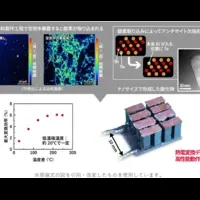
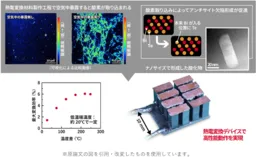
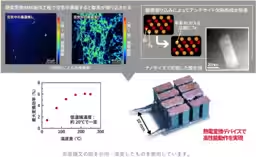
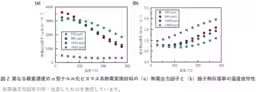
By meticulously controlling the exposure time of the material powder to the atmosphere, the researchers systematically varied the amount of oxygen absorbed. The findings showed a significant increase in oxygen concentration, peaking at 1580 ppm after just one day of exposure. This controlled approach allowed the team to delve into the spatial distribution and effects of oxygen within the material using advanced analysis techniques and computational methods.
Insights from Advanced Analytical Techniques
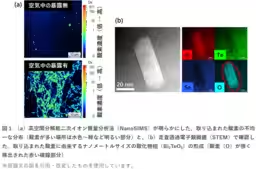
Through innovative methodologies like NanoSIMS and scanning transmission electron microscopy (STEM), the researchers characterized how the absorbed oxygen interacts within the thermoelectric matrix. They observed that rather than being uniformly distributed, oxygen tends to be absorbed unevenly, leading to the formation of nanoscale oxides like Bi2TeO5, which in turn affects the material's electrical conductivity and thermoelectric response.
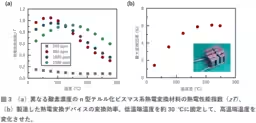
This uneven oxygen distribution highlights the delicate balance needed to optimize thermoelectric properties. The study demonstrated that variations in electrical conductivity were directly correlated with oxygen concentration levels, revealing that appropriate oxidation conditions could yield a significant enhancement in the thermoelectric figure of merit (ZT) from 0.12 to 1.1 at 75℃.
Demonstrating Practical Efficiency
The culmination of this research led to the development of a thermoelectric device that showcased an impressive conversion efficiency of 6.1% under a temperature differential of 220℃, with the low end peaking around 30℃ and the high end at 250℃. This accomplishment not only vindicated the framework laid down by the researchers regarding oxidation management but also demonstrated practical implications for heat recovery technologies.
Future Prospects and Applications
Looking ahead, the insights gained from this research will play a fundamental role in the future utilization of thermoelectric materials for various applications, including power generation from waste heat, high-efficiency local cooling solutions for electronic devices, and applications in space exploration technologies. The stable production of high-performance n-type bismuth telluride materials represents a significant leap forward in the field of energy management and sustainability.
In conclusion, AIST's pioneering research emphasizes the critical nature of oxidization processes in the material manufacturing spectrum, not only improving thermoelectric performance but also setting a pathway for embracing a future led by advanced energy technologies. This publication underlines the potential for contributing to the realization of energy-efficient systems and the broader goal of carbon neutrality.
The complete details of this groundbreaking research were published on November 6, 2026, in the academic journal Materials Today Physics and can be accessed via this link.
Topics Consumer Products & Retail)



【About Using Articles】
You can freely use the title and article content by linking to the page where the article is posted.
※ Images cannot be used.
【About Links】
Links are free to use.