



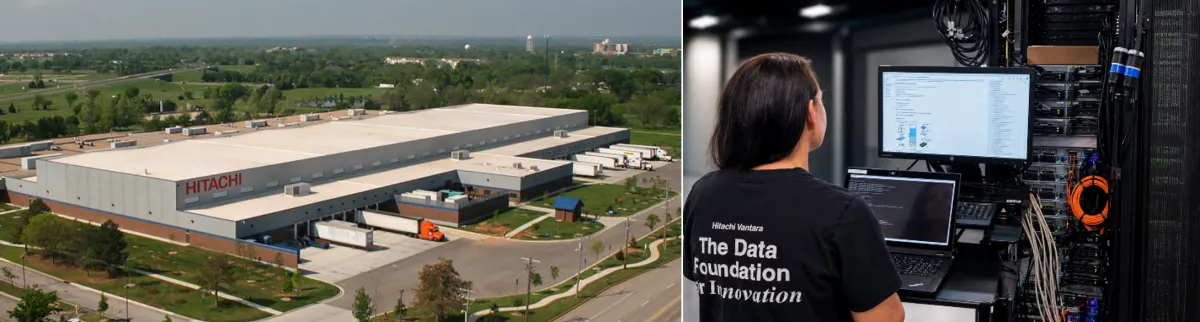
Hitachi Group's Advanced Storage Facility Recognized by WEF as a Lighthouse Facility
Exciting Recognition for Hitachi Group's Storage Facility in Norman
The Hitachi Group has achieved another remarkable milestone by having its advanced storage manufacturing facility in Norman, Oklahoma, recognized as a Lighthouse by the World Economic Forum (WEF). This designation marks the second site within the Hitachi Group to earn this esteemed recognition, showcasing its commitment to innovation in the age of the Fourth Industrial Revolution. The first was Hitachi's Omika Works, which received the honor back in 2020.
A Hub of AI-Driven Transformation
The Norman facility is a critical hub for AI-powered business transformation, manufacturing advanced data infrastructures that support comprehensive digital manufacturing and supply chains. Utilizing cutting-edge AI technologies, the facility has implemented comprehensive strategies that have resulted in remarkable operational improvements.
For example, by leveraging Agentic AI for global demand forecasting and inventory management, the Norman facility has slashed lead time from order to shipment by a staggering 77% while simultaneously reducing inventory by 50%. Such initiatives underline Hitachi’s commitment to fostering a resilient supply chain capable of responding to fluctuating customer demands. The facility's efforts in significantly lowering CO2 emissions underscore its dedication to sustainability, further enhancing its prospects for recognition by the WEF.
Advancing AI Technology with HMAX
Hitachi has positioned itself as a Customer Zero through its practices, continuously integrating the latest AI insights into its next-generation solutions branded as HMAX by Hitachi. This approach not only accelerates Hitachi's own transformations but also empowers its customers' AI transformations. Knowledge and expertise gained from the Norman facility will be disseminated to Hitachi's global production sites, including Hitachi Rail, allowing for a robust One Hitachi initiative to promote advancements in Operating Technology (OT) areas.
The aim is to create a continuous cycle of improvement, reinforcing HMAX with real-world use cases and proven technology to enhance its effectiveness in various sectors worldwide. Hitachi is committed to delivering innovations that drive sustainability, productivity, and resilience for its customers, contributing to sustainable business growth.
Background on the Global Lighthouse Network
The Global Lighthouse Network, spearheaded by the WEF, is dedicated to recognizing top-tier business sites and value chains demonstrating outstanding achievements in productivity, supply chain resilience, customer-centricity, sustainability, and talent management. Since the selection of Hitachi’s Omika Works as the first Lighthouse for a Japanese company in 2020, Hitachi has emphasized utilizing cutting-edge digital technologies cultivated on the factory floor, accelerating the global dissemination of these practices.
As the demand for substantial data infrastructure has surged in response to the rapid proliferation of AI technologies, the Norman facility plays a pivotal role by producing reliable storage products such as the Hitachi Virtual Storage Platform One (VSP One). The facility has adapted to the challenges posed by the growing complexity of over 3,000 product configurations by enhancing decision-making speed and resource allocation. This proactive approach led to a collaboration aimed at integrating state-of-the-art AI and digital technologies, transforming the end-to-end supply chain from order receipt to shipment.
Key Initiatives Implemented
The Norman facility's recognition is attributed to several strategic initiatives:
1. AI-Powered Demand Forecasting: By optimizing the continuum from customer interactions to backend planning through AI, the facility achieved a significant improvement in demand forecasting accuracy by about 19%.
2. Global Supply Chain Optimization: Establishing a Global Inventory Control Tower that aggregates inventory and supplier information across all global sites has successfully reduced inventory levels by 50%, alleviating stockout risks and enhancing cash flow.
3. Automating Manufacturing Operations: The facility has harnessed Agentic AI for autonomous operations, dramatically reducing the lead time for CTO (customer order-specific production) by 84%. The implementation of a Real-Time Work Navigator facilitates immediate detection and correction of work deviations, resulting in an 80% reduction in training time for new workers.
Comments from Industry Leaders
Kiva Allgood, Executive Director of WEF, emphasized the importance of integrating intelligence into operational frameworks to foster responsiveness and continual learning, delivering enhanced performance across the value chain.
Jyun Abe, Vice President of Digital Systems & Services at Hitachi, expressed pride in the new recognition and emphasized the transformative impact of applying AI in the manufacturing sector. Meanwhile, Akira Shimada, President and CEO of Hitachi Vantara, highlighted the critical role of robust data infrastructure in accelerating business thriving on innovation.
Hitachi aims to continue leveraging the insights gained at the Norman facility to elevate the resilience of the entire industry and contribute to sustainable growth across various sectors globally.
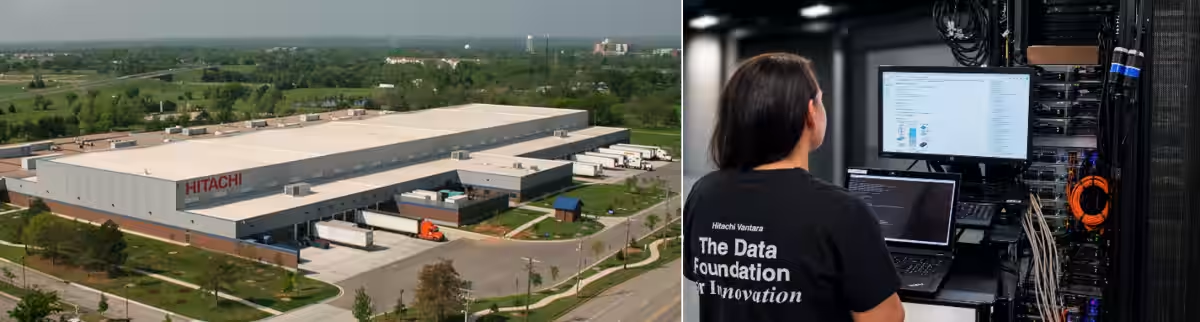
Topics Business Technology)
【About Using Articles】
You can freely use the title and article content by linking to the page where the article is posted.
※ Images cannot be used.
【About Links】
Links are free to use.