



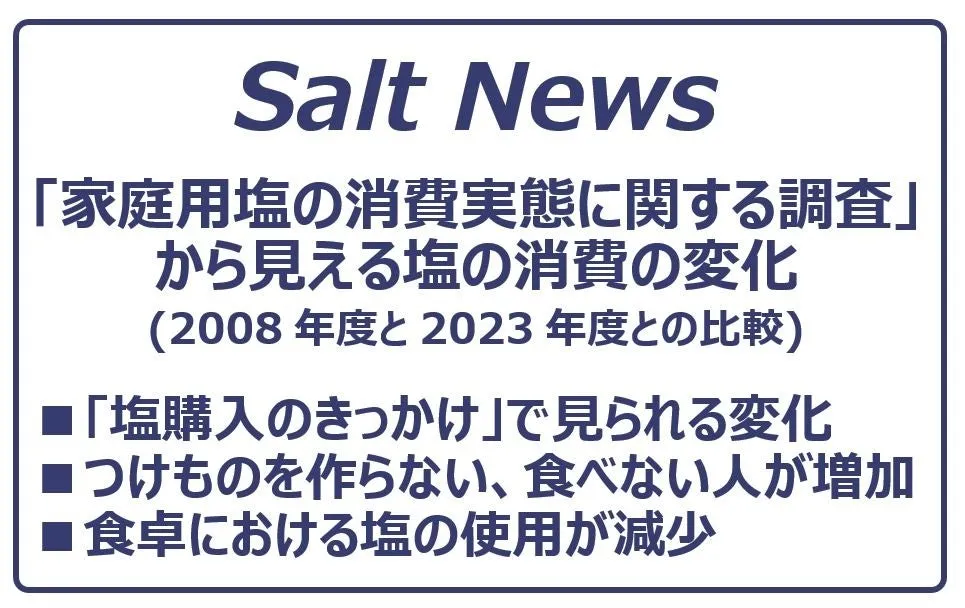
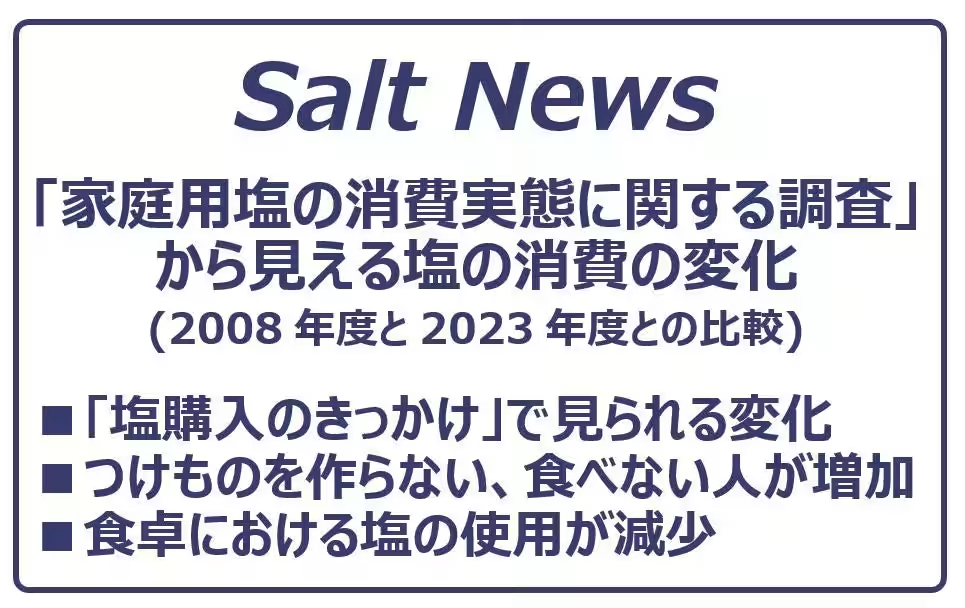
Examining Changes in Household Salt Consumption from 2008 to 2023
Changes in Household Salt Consumption: 2008 vs 2023
The Shio Jijyo Center, located in Shinagawa, Tokyo, recently published a newsletter comparing the results of its survey on household salt consumption from 2008 and 2023. This report emphasizes the significant changes in how families perceive and purchase salt over the last 15 years.
Every three years, the Shio Jijyo Center conducts a large-scale survey that examines household salt consumption patterns. The latest findings from the eighth iteration of this survey reveal insights that reflect broader trends in consumer behavior.
Key Findings from the Report
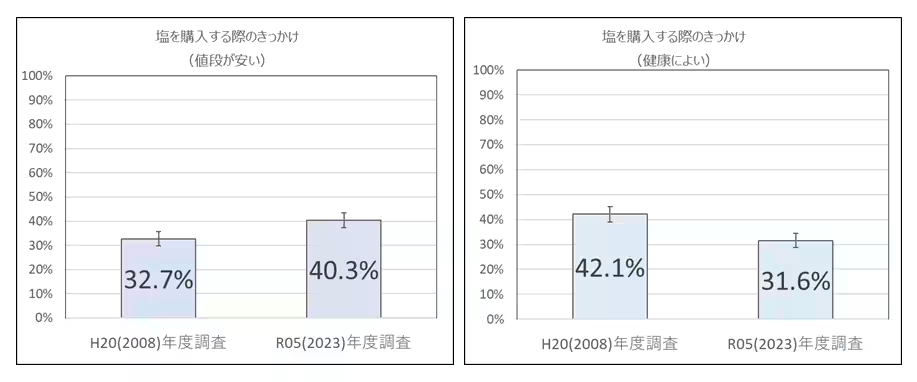
The newsletter highlights several key changes, particularly in the factors influencing consumers to purchase salt. One noteworthy finding is the increasing emphasis on price when buying salt. In the latest survey, a growing number of consumers cited "low price" as a critical factor in their purchasing decisions. This shift suggests a heightened price sensitivity among households, possibly linked to broader economic factors and consumer trends.
Conversely, the importance of health benefits associated with salt consumption has decreased. The report notes a decline in the number of respondents who consider health benefits as a reason for purchasing salt. This raises intriguing questions about evolving consumer attitudes towards health and nutrition, suggesting a possible shift in consumers' focus away from perceived health advantages of salt.
Understanding the Generational Shift
The comparison between the 2008 and 2023 surveys underlines more than just raw numbers; it reflects a generational change in the way people think about food and its ingredients. As society progresses and consumers become more informed, their priorities change. Budgeting and cost-effectiveness have taken center stage, hinting at a more pragmatic approach to food purchases in general.
Need for Further Research
The Shio Jijyo Center encourages ongoing research into aspects of salt consumption, as understanding these trends is critical for various stakeholders, including retailers, health professionals, and policy makers. The insights gleaned from this report can guide product development and marketing strategies, ensuring that they align with current consumer preferences.
For those interested in further details, the full newsletter can be found on the Shio Jijyo Center's official website. Previous survey results are also available for comparison, showcasing the evolution of consumer behavior over time.
As we delve deeper into these findings, it's clear that the landscape of salt consumption is adapting. The interplay between health considerations and economic factors will continue to shape how households approach this essential pantry staple.
Conclusion
This comparative study sheds light on the shifting dynamics of household salt consumption, marking important transitions in consumer behavior. With prices becoming a primary concern, the Shio Jijyo Center's findings underscore a compelling narrative about the future of food purchasing habits in Japan.
To stay updated on further developments and research, be sure to follow the Shio Jijyo Center and access their resources.
For more information, visit the official website: Shio Jijyo Center
Topics Consumer Products & Retail)
【About Using Articles】
You can freely use the title and article content by linking to the page where the article is posted.
※ Images cannot be used.
【About Links】
Links are free to use.