



Young Consumers Favor Daily Goods Apps: Survey Reveals Preference Trends
Engaging Young Consumers: The Rise of Daily Goods Apps
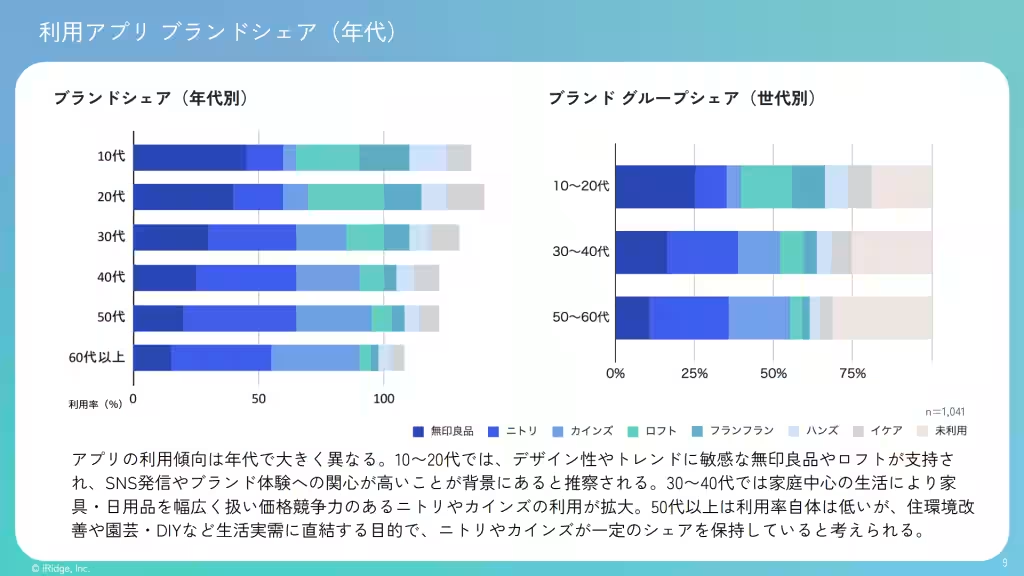
In a recent study conducted by iRidge, a leader in app-driven business solutions, significant insights have emerged regarding consumer preferences in the realm of daily goods and lifestyle products. Newly revealed data underscores that nearly 40% of the daily goods app user base comprises individuals in their teens to twenties, showcasing a striking trend of support from younger consumers.
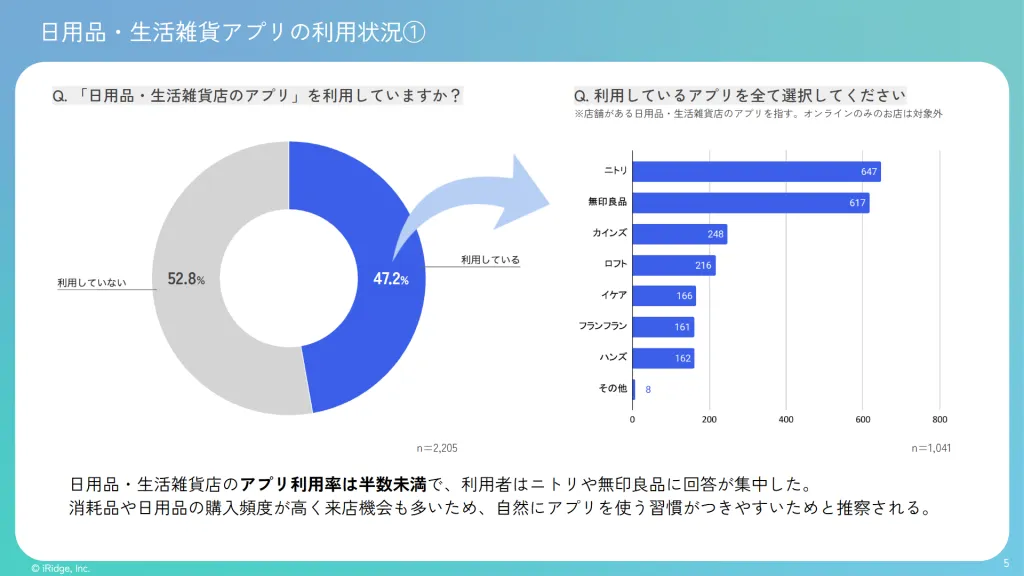
The survey, which included 2,205 respondents aged between 20 and 69, aimed to delineate the usage patterns and preferences related to daily goods apps. Out of these, 220 users actively engaged with specific apps for daily goods and lifestyle products. The results represent a critical understanding of the current digital marketplace.
Key Findings from the Survey:
- - Dominance of Popular Apps: An impressive 60% of the participants utilizing daily goods apps favored either Nitori or MUJI. This trend reflects the frequency of purchase behaviors among users accustomed to consumer habits related to daily necessities.
- - Young User Trends: For individuals in their teens and twenties, MUJI emerged as the most favored app, capturing around 40% of this demographic's app utilization. Following closely was Loft with significant usage statistics.
- - Generational Differences: Analysis revealed that while the younger segment emphasized brand identity and aesthetic appeal of these apps, older users exhibited a preference for practical applications such as Nitori and Cainz.
App Usability Scores:
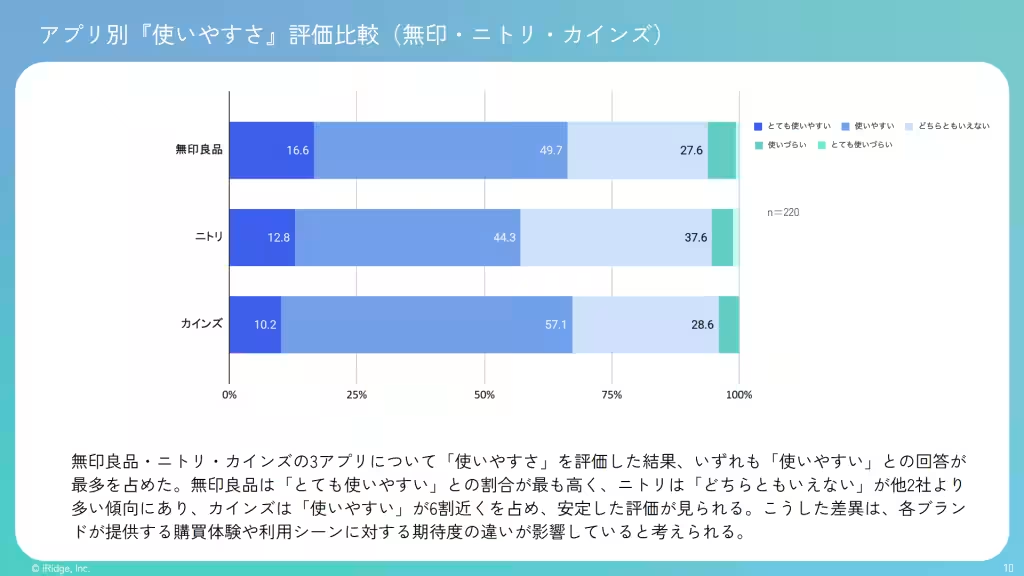
Interestingly, the survey also assessed the usability of the top three apps—MUJI, Nitori, and Cainz. All three apps received admirable ratings for their ease of use. Most users found MUJI to be particularly user-friendly, with the highest percentage of respondents indicating it was “very easy to use.”
Conversely, Nitori displayed a varied range of feedback, with an increased number of respondents selecting “neutral” regarding user experience, suggesting inconsistency in user satisfaction.
Cainz garnered solid support as well, with nearly 60% of users rating it as easy to navigate, indicating a well-rounded appeal to a broader audience.
Insights on User Engagement:
The findings illustrate a clear generational divide in terms of app utilization habits. Young users tend to gravitate towards brands that echo their lifestyle preferences, favoring those that integrate well into their daily lives while maintaining brand integrity. The growing trend of Online Merges with Offline (OMO) retail practices signifies a shift in consumer behavior where digital platforms are now complementing physical stores.
Future Outlook:
As consumer expectations evolve, there remains a pressing need for ongoing enhancements in user experience (UX) and functionality tailored to varying generational needs. Simplicity, ease of navigation, and a well-structured user interface (UI) are factors that evidently contribute to user engagement and app loyalty. Companies like iRidge are committed to driving app development and UI/UX support to enhance consumer engagement and support business growth.
In conclusion, the survey highlights the dynamic landscape of consumer preferences for daily goods apps and serves as a guide for companies aiming to capture and sustain the interest of the younger demographic. In this fast-changing digital age, understanding consumer behavior has never been more crucial for sustained success in the retail sector.

Topics Consumer Products & Retail)
【About Using Articles】
You can freely use the title and article content by linking to the page where the article is posted.
※ Images cannot be used.
【About Links】
Links are free to use.