



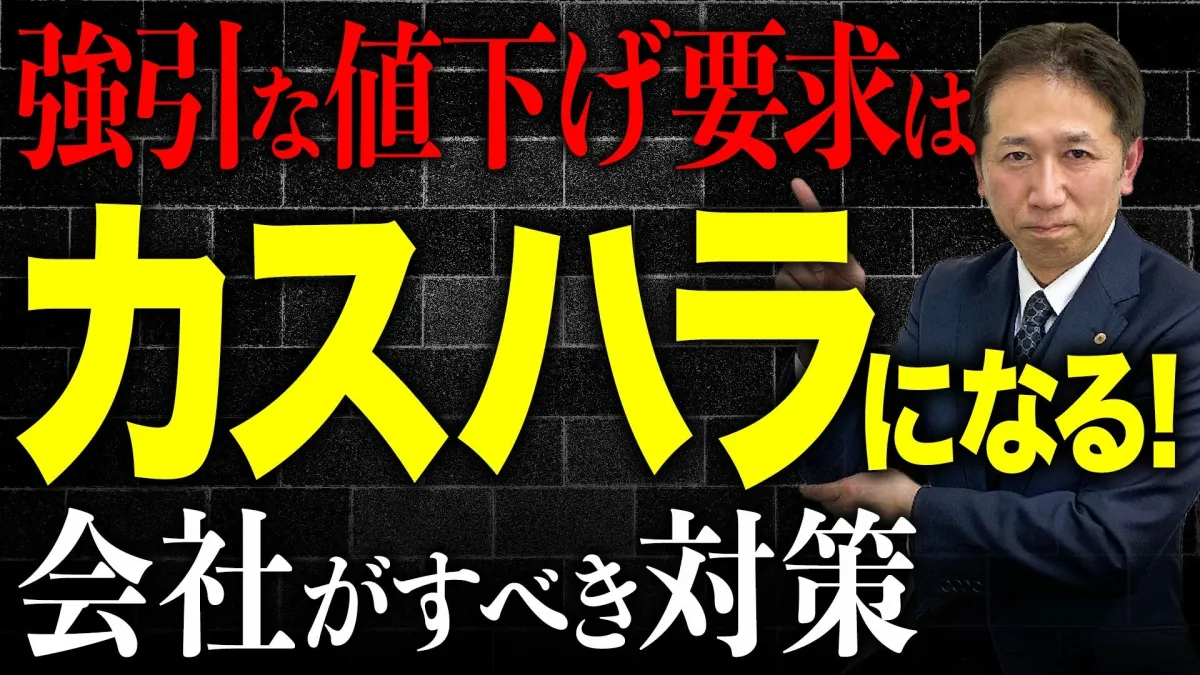
New Guidelines for Customer Harassment: A Shift in Business Conduct Standards
Understanding the Draft Guidelines on Customer Harassment
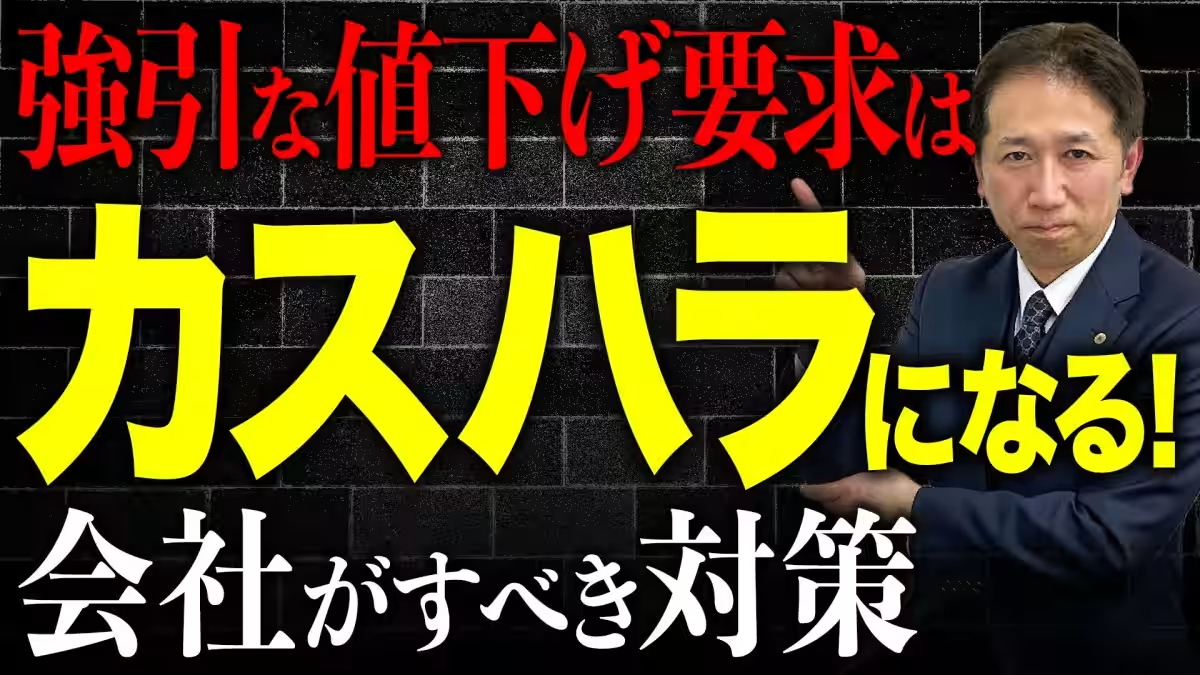
In recent discussions surrounding the workplace and service environments, the issue of customer harassment, often referred to as 'カスハラ' in Japan, has gained significant attention. The Ministry of Health, Labour and Welfare (MHLW) has released a draft proposal for guidelines that stand to reshape how businesses across all sectors deal with harassment from customers. This new framework, while initially thought to apply solely to the service industry, actually extends its implications to B2B companies as well.
The Scope of ‘Customer’ in New Guidelines
One of the most notable aspects of the draft guidelines is the expanded definition of 'customers.' Previously, customers in service sectors were the primary focus. However, the draft categorizes not only clients who frequent retail spaces but also employees from partner companies and negotiation counterparts as 'customers.' This broadens the scope and suggests that businesses must now prepare to address potential harassment scenarios that could arise from multiple sources.
Impact on Various Industries
As we dissect this draft, it becomes evident that the ramifications are not isolated to customer-facing businesses like stores and restaurants. B2B operations, often removed from direct consumer interactions, may now face challenges as aggressive negotiations or competitive pressures could fall under harassment claims. The document prompts companies to reassess their interaction strategies to mitigate risks associated with customer harassment.
Key Questions Addressed
During an upcoming informational session hosted by the Claire Human Resource Development Association on February 19, 2026, crucial questions will be discussed, including:
- - What position does the draft hold in the broader context of employment law?
- - How do we precisely define the new scope of 'customer'?
- - Are aggressive price negotiations in B2B transactions considered harassment?
- - What prior preparations do organizations need to implement before formal guidelines are established?
- - What procedures should be followed when harassment incidents occur?
- - How should businesses revise their customer service protocols to fit these guidelines?
Expert Guidance from Jun Ono
To provide valuable insights, Jun Ono, a specialist in social insurance and labor law with vast experience conducting workshops on harassment, will lead discussions. Having delivered over 400 training sessions in corporate and educational settings, Ono emphasizes practical application over theoretical knowledge, making the upcoming roundtable a must-attend for business leaders seeking clarity on these essential guidelines.
The Role of Claire Human Resource Development Association
Founded in 2023, the Claire Human Resource Development Association supports businesses in understanding and implementing policies that prevent harassment and promote a safe working environment. With a focus on tangible learning, the association equips professionals with the knowledge to handle harassment issues effectively, earning qualifications like the 'Employment Clean Planner.' Over 700 individuals have successfully acquired this designation, contributing their expertise within various sectors, including local agencies and educational institutions.
The guidelines reflect the evolving nature of workplace dynamics and emphasize the necessity for robust mechanisms that safeguard both employees and customers alike. As the proposal evolves into formal legislation, proactive measures businesses take today can determine their ability to thrive in an increasingly complex environment.
The Claire Human Resource Development Association maintains a commitment to ongoing training and development, ensuring that businesses not only comply with legal expectations but also foster a culture where respect and dignity prevail. Starting now will not only protect employees and clients but also cultivate a stronger, more accountable corporate identity in the long run.
Topics Policy & Public Interest)

【About Using Articles】
You can freely use the title and article content by linking to the page where the article is posted.
※ Images cannot be used.
【About Links】
Links are free to use.