



Japan Emerges as the Largest Data Center Investment Market in APAC by 2030
The Rise of Japan as the Leading Data Center Investment Market in APAC
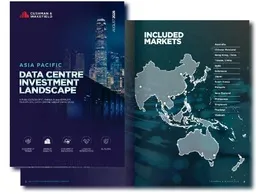
As technology continues to advance, the need for robust digital infrastructure has never been more critical. A recent report by Cushman & Wakefield, titled "2026 Asia Pacific Data Center Investment Trends," reveals that Japan is poised to dominate the APAC data center investment landscape. By 2030, the country is expected to require a staggering $69.1 billion in infrastructure investment, accounting for nearly 25% of the total demand across the Asia Pacific region.
Growth Drivers Behind Japan's Investment Surge
The anticipated investment surge is fueled by various factors, including the accelerated adoption of Artificial Intelligence (AI), the expansion of cloud computing, and a significant push towards digital transformation throughout the region. Although APAC represents over 60% of the global population, it currently holds just 22% of the world's operational data center capacity, indicating a substantial opportunity for future infrastructure investment and development.
Pritesh Swamy, Head of Research & Consulting for the APAC Data Center Group at Cushman & Wakefield, emphasizes, "APAC remains one of the most attractive digital infrastructure investment opportunities globally. The growth of this sector is no longer solely driven by the progression of digitalization. Investors are increasingly focused on the scale of infrastructure necessary to support AI, cloud computing, and the rapidly expanding data consumption across the region. The imbalance between demand and available infrastructure continues to create significant investment opportunities."
Concentration of Capital Investment
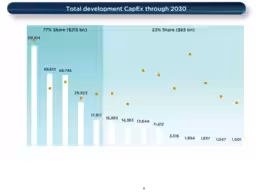
Investment demand is becoming increasingly concentrated in five primary markets: Japan, Malaysia, Australia, India, and Indonesia, which together are expected to account for approximately 77% of APAC's capital expenditure by 2030, amounting to about $215 billion in investment opportunities. Notably, Japan is anticipated to maintain its status as the largest data center investment market in the APAC region, with its asset value projected to exceed $250 billion by 2030.
Moreover, Japan's mature leasing market, large market size, and low capitalization rates underpin its prominence. The colocation services revenue in Japan alone is projected to reach approximately $13.5 billion by 2030, the highest in the APAC region. Despite being one of the most sought-after markets with over 820 MW of pre-leased capacity, Japan faces high development costs, leading to a lower yield on cost of around 7.4%.
Rapid Expansion of Development Pipeline
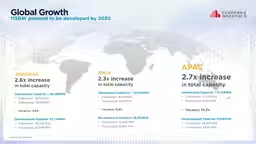
The expansion of investment opportunities in these key markets is supported by a rapidly growing development pipeline. The total data center capacity in APAC is expected to expand to 2.7 times its current level by 2030, surpassing growth rates in both the Americas and EMEA. With current operational capacity at 15,135 MW, the development pipeline has reached 26,455 MW.
Strong Capital Inflow and Demand
Capital inflow into the sector continues at an accelerated pace. In 2025 and 2026, total funding raised through public debt financing among data center operators in the Asia Pacific is expected to exceed $43 billion, reflecting strong demand from banks, infrastructure investors, and institutional investors seeking investment opportunities in digital infrastructure assets.
Tenants' strong demand lends further credibility to the investment outlook, as pre-leases surged by 115% from the first half of 2025 to the first half of 2026, especially among operators and hyperscalers securing future capacity ahead of handovers amid growing power constraints and elongated development timelines.
Countries like Australia, Malaysia, India, and Japan have secured the majority share of contracted capacity, while Indonesia and Thailand recorded the fastest growth rates, at 5x and 9x respectively. Approximately 7.8 gigawatts (GW) of future capacity has already been secured across the region.
Future Revenue Projections
With solid demand fundamentals and capacity expansion backing the sector, APAC's annual colocation services revenue is projected to exceed $66 billion by 2030. Japan, Australia, Malaysia, India, and mainland China are expected to represent about 71% of the region's overall revenue, further solidifying their positions as essential investment markets.
Gordon Marsden, Head of Asia Pacific & EMEA at the Global Capital Division, notes, "Institutional investors are increasingly recognizing that data centers are no longer a niche alternative asset class but an essential component of modern infrastructure portfolios. Active fundraising activity, clear demand outlooks, and the prospect for long-term revenue growth will continue to support capital inflows across the region."
The Impact of AI on Investment Strategies
Artificial Intelligence is also reshaping investment requirements across the industry. AI-enabled facilities, equipped with advanced cooling technologies, require 25-35% higher capital investments compared to traditional data centers, reflecting the need for higher power density and specialized infrastructure. As AI adoption accelerates, investors are increasingly inclined to evaluate assets based on their capacity to support next-generation computing workloads.
Andrew Green, Head of the APAC Data Center Group, states, "The state of infrastructure readiness is becoming a critical determinant of capital allocation. Investors are increasingly prioritizing assets and markets that offer stable long-term power supply, scalability, and the ability to meet future AI requirements. These factors will increasingly influence where capital flows and how value is created across the industry."
About the Asia Pacific Data Center Investment Trends Report
The "Asia Pacific Data Center Investment Trends Report" assesses investment trends, growth factors, and capital market dynamics shaping the digital infrastructure sector across 14 markets in the region. The 2026 edition analyzes key indicators such as population per megawatt, pre-lease trends, tenant behavior, lenders' perspectives, funding dynamics, investment requirements, revenue outlook, cap rate estimates, cost yield, and projected asset valuations through 2030.
For more details, please refer to the PDF report.
About Cushman & Wakefield
Cushman & Wakefield (NYSE: CWK) is one of the world's largest global firms providing comprehensive commercial real estate services in tenant and investment businesses. With over 350 offices across approximately 60 countries and a workforce of about 53,000 employees, the firm reported revenues of $10.3 billion in 2025 across key sectors, including facilities management, sales and leasing, valuation, tenant representation, project management, and more. Adhering to its philosophy of "Better never settles," Cushman & Wakefield is committed to sustainable growth and enhancing corporate value, earning high praise within and outside the industry. For more information, visit the company's website at www.cushmanwakefield.com.
Topics Business Technology)
【About Using Articles】
You can freely use the title and article content by linking to the page where the article is posted.
※ Images cannot be used.
【About Links】
Links are free to use.