



Groundbreaking Hybrid between Wheat and Corn: A Scientific Milestone in Agriculture
Introduction
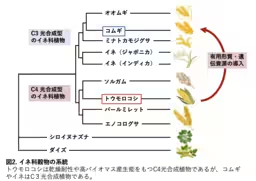
The world of agricultural science has achieved a remarkable milestone with the development of the first hybrid plant created from wheat and corn. These two vital crops belong to different subfamilies, making them traditionally incompatible for hybridization due to reproductive barriers. However, a team of researchers led by academic members from Tokyo Metropolitan University, including graduate students and professors, has broken through these barriers using cutting-edge techniques.
The Research Team's Breakthrough
The research effort brought together experts from various institutions, including the University of Indonesia and Tottori University’s Dryland Research Center. Together, they utilized advanced fertilization methods, specifically in vitro fertilization (IVF), to achieve hybridization between wheat (Triticum) and corn (Zea mays). This pioneering work not only represents a scientific breakthrough but also demonstrates the potential for enhancing genetic interaction between disparate plant species.
Methodology and Findings
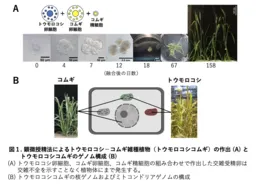
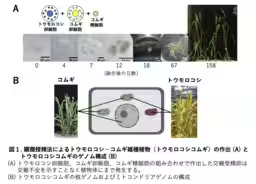
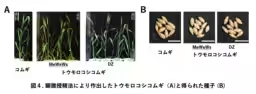
To create the hybrid plants, the researchers extracted gametes—egg and sperm cells—from the flowers of wheat and corn. By manipulating these gametes through IVF techniques, they successfully produced multiple fertilized embryos. The new plant, commonly referred to as ZeaWheat, was characterized as a cytoplasmic hybrid (Cybrid wheat), containing a combination of nuclear genomes from wheat and mitochondrial genomes from corn. This unique genetic composition indicates a significant leap forward in agricultural biotechnology, allowing for the possibility of introducing desirable traits from corn into wheat.
Genetic Analysis
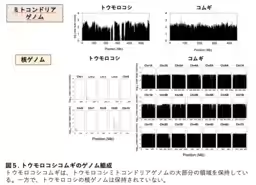
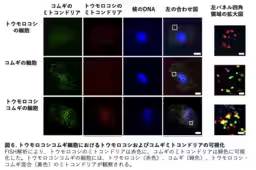
The team conducted comprehensive genome sequencing of the resulting hybrids, confirming that ZeaWheat possesses the nuclear genome typical of wheat along with the mitochondrial genome derived from corn. The introduction of corn's mitochondrial DNA into wheat is particularly noteworthy, as mitochondria play crucial roles in plants’ abilities to adapt to environmental stresses. The findings suggest that ZeaWheat may exhibit novel traits that enhance drought resistance and other stress tolerances distinct from traditional wheat varieties.
Implications of the Research
The implications of this groundbreaking discovery are profound. The ability to hybridize wheat and corn opens new avenues for breeding strategies aimed at improving the resilience of crops in the face of climate change and increasing global food demand. The research addresses the urgent need for innovative solutions to ensure food security as populations grow and agricultural conditions become more challenging.
A Response to Global Agricultural Challenges
As traditional wheat-exporting countries like Australia face dire conditions due to climate change, the establishment of hybrid plants like ZeaWheat could be critical in developing more resilient varieties. These advancements represent a response to the ongoing risks posed by rising temperatures, drought, and other environmental stresses that threaten agricultural yields worldwide.
Future Directions
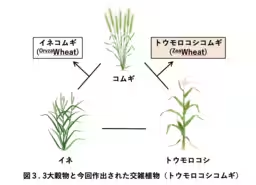
Following this success, the research team is now focused on evaluating the traits and performance of ZeaWheat and plans to expand their efforts to create hybrids with other economically important crops, such as foxtail millet and sorghum. This work shows the versatility of IVF methods in creating hybrids between a range of grain species, not just the three major cereals.
Conclusion
This research marks a pivotal moment in agricultural science, offering hope for a future where crops can be enhanced and diversified through novel hybridization techniques. The collaboration among various researchers illustrates the collective effort needed to tackle one of humanity’s most pressing challenges: food security.
Research Publication Details
- - Title: Inter-subfamily cybrid plants between wheat and maize, Zeawheat: Production via an in vitro fertilization system, genome composition, and photosynthetic type
- - Authors: Nonoka Onda, Aya Satoh, Nowroz Farzana, Tety Maryenti, Offiong Ukpong Edet, Ryosuke Mega, Takayoshi Ishii, Takashi Okamoto
- - Published in: Journal of Experimental Botany
- - DOI: doi:10.1093/jxb/eraf354
Topics Consumer Products & Retail)


【About Using Articles】
You can freely use the title and article content by linking to the page where the article is posted.
※ Images cannot be used.
【About Links】
Links are free to use.