



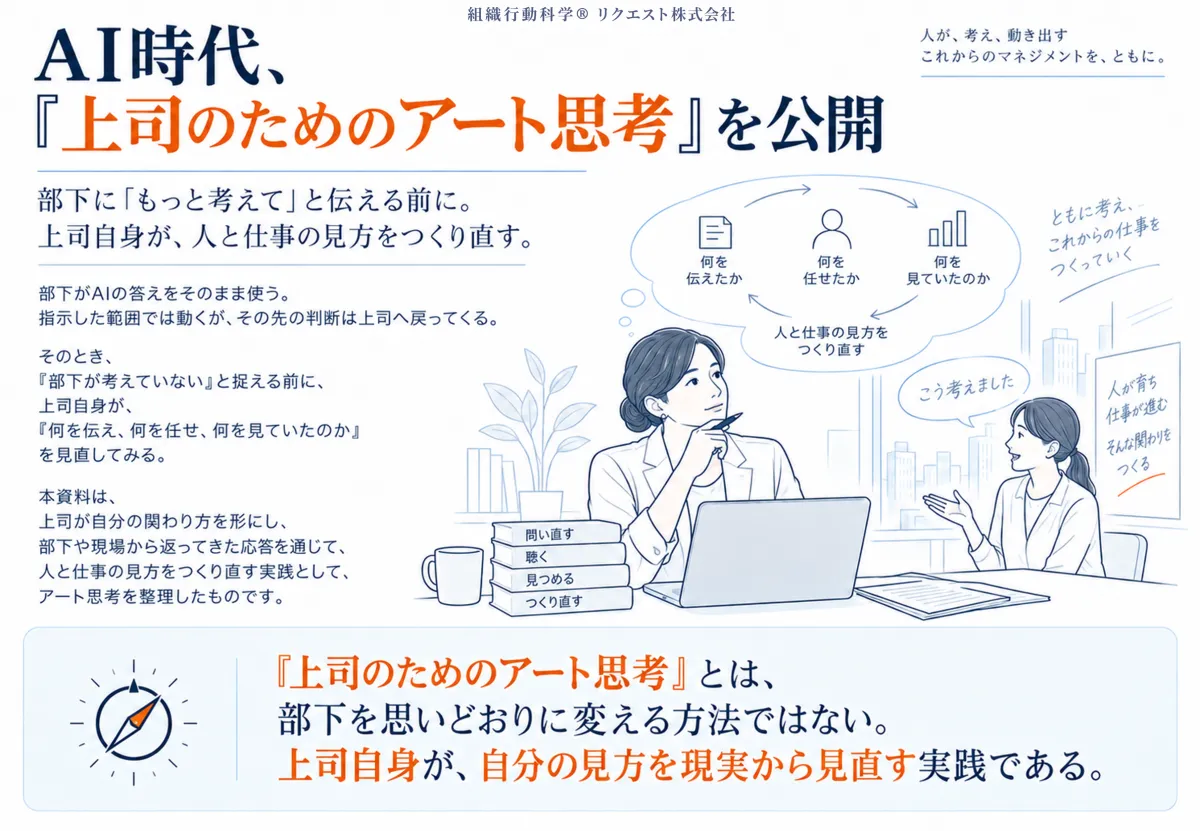
Exploring 'Art Thinking' for Managers in the Era of AI: A Practical Guide
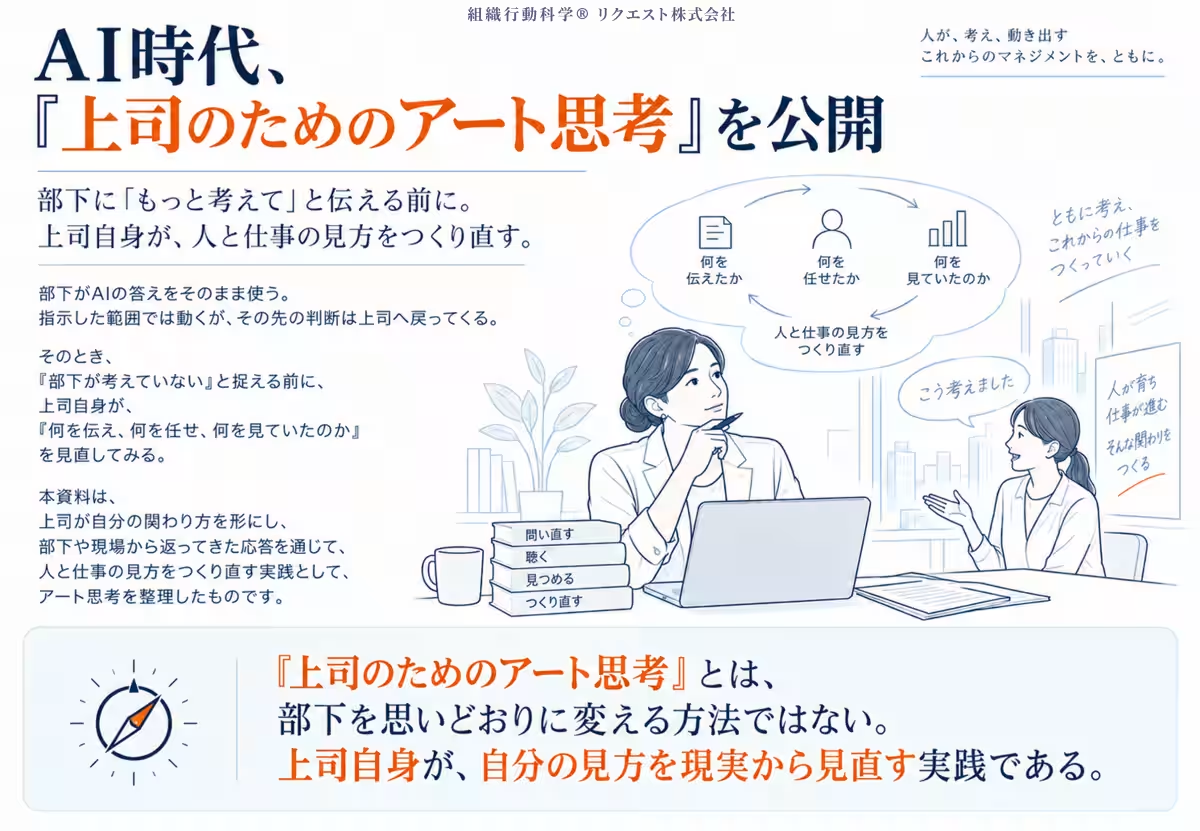
Unveiling 'Art Thinking' for Managers in the AI Era
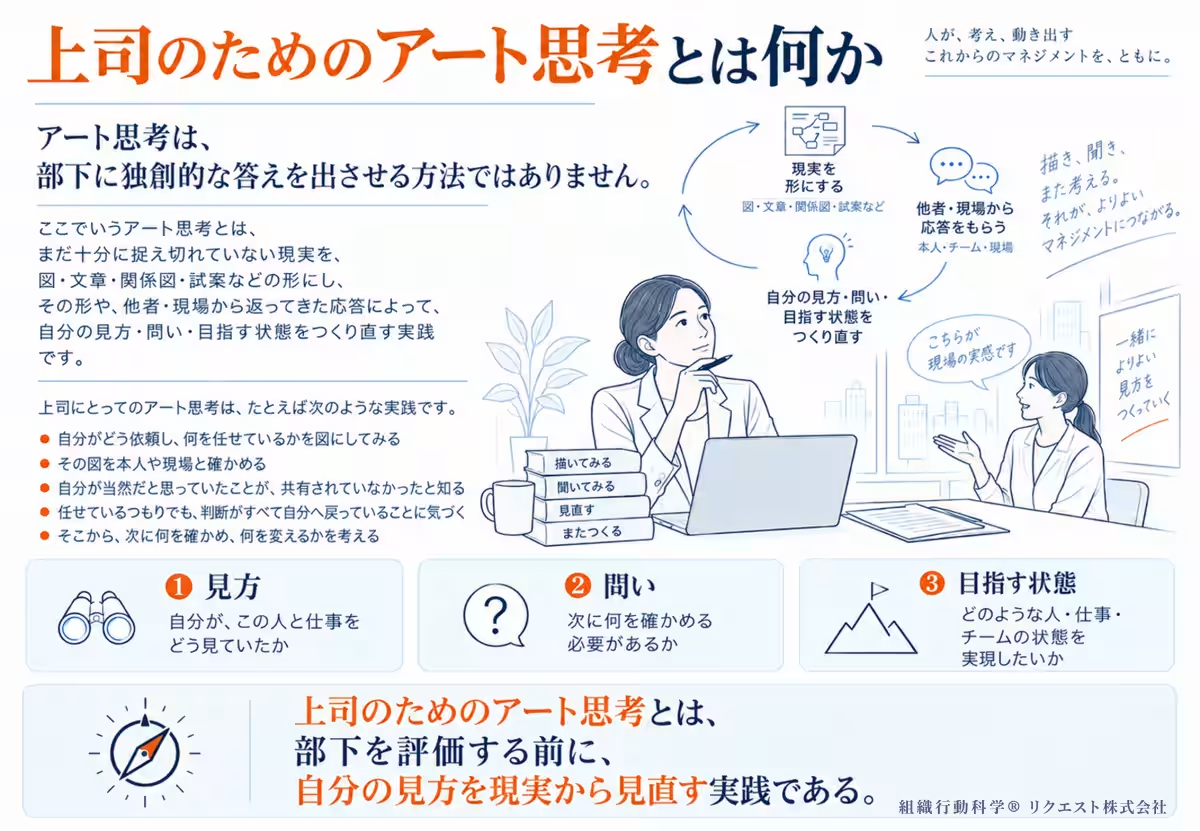
As workplaces evolve in the age of AI, the necessity for innovative thinking among leaders has become paramount. Request Inc., a Tokyo-based company specializing in Organizational Behavior Science, has recently unveiled a practical resource titled "Art Thinking for Managers." This twelve-page document, aimed at managers, project leaders, and trainers, is designed to help them reflect on their own work practices while effectively guiding their teams.
Understanding the Context of 'Art Thinking'
The inspiration behind this initiative stems from the previous publication, "Introductory Art Thinking," which set the groundwork for understanding creative processes. In contrast, the newly released document delves deeper, shifting the focus toward the managers' own tasks, offering practical insight into delegating responsibilities and fostering productive discussions.
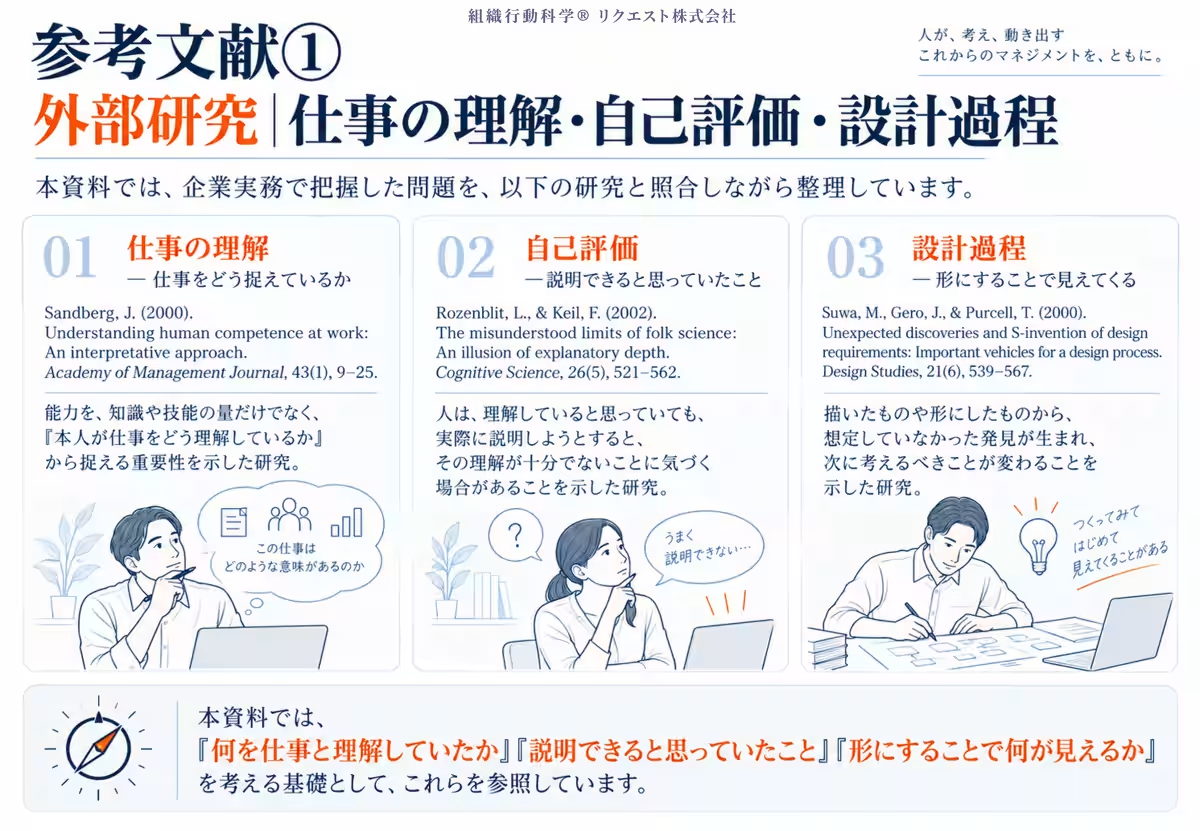
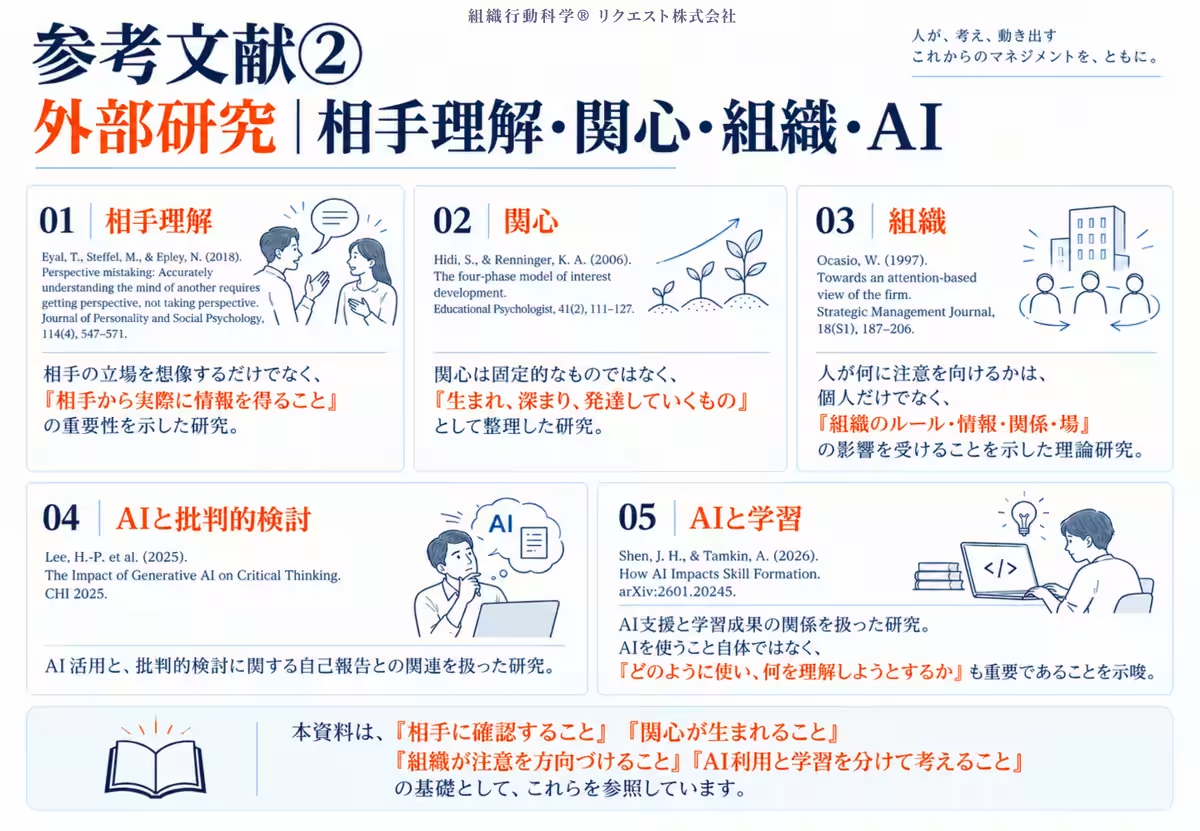
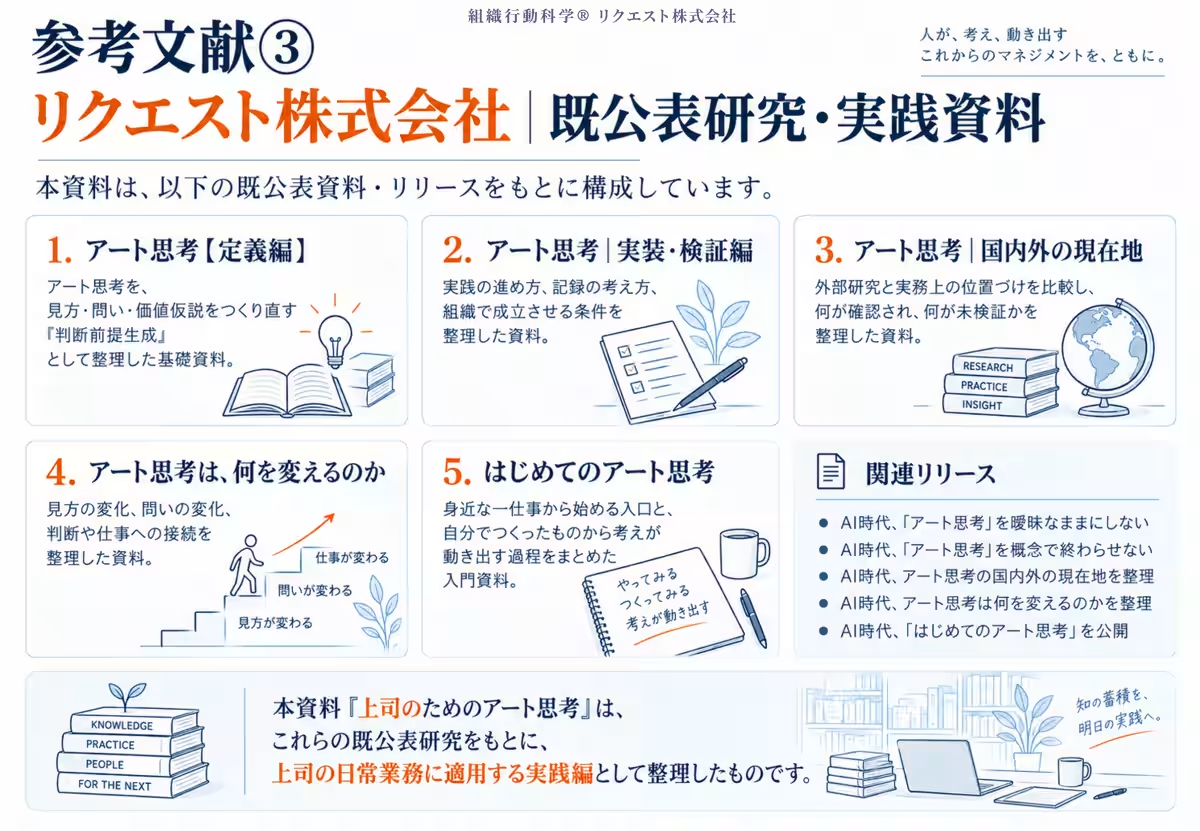
The document, which comprises eight main pages and three additional scholarly references, is freely accessible as a PDF, encouraging managerial reflection and teamwork discussions. It is particularly tailored to prompt managers to consider specific tasks where they wished their subordinates had applied deeper thought.
Reflecting on Task Expectations
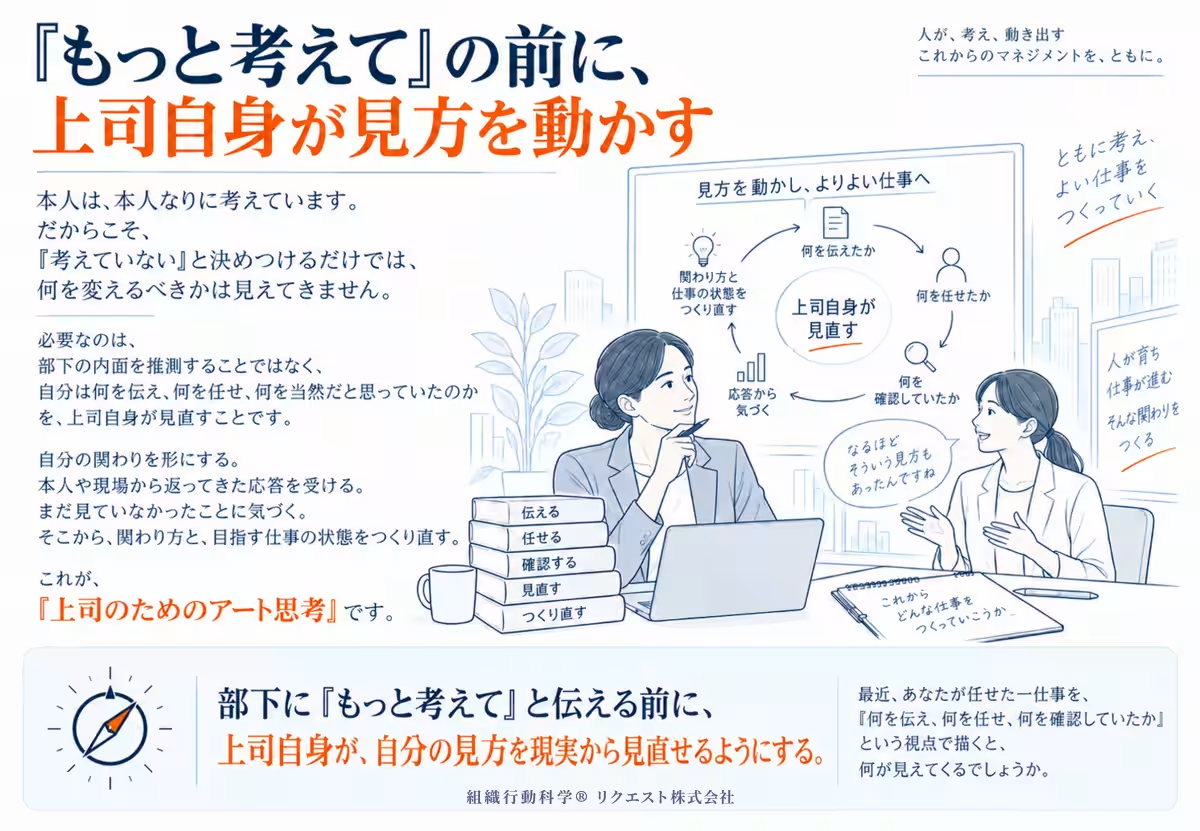
Before one can utilize this resource, it is important to recall specific instances where expectations were unmet. Were there expectations you felt should have been intuitive? Looking back at the completed work, did it miss any critical points that you anticipated?
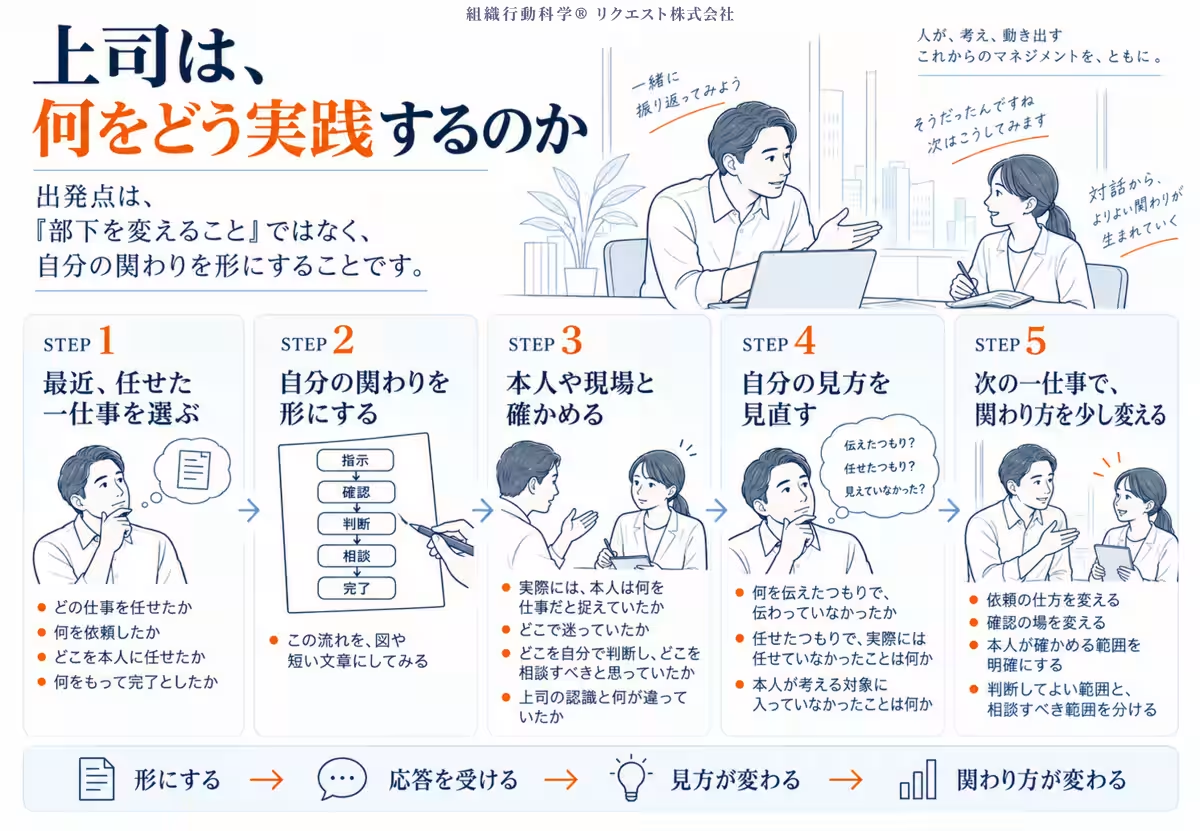
This framework does not require identifying flaws in subordinates before engaging with the material. Instead, participants are encouraged to reflect on recent projects, juxtaposing their requests with the output received. This reflective process allows managers to engage with the document constructively.
Clarifying Managerial Expectations
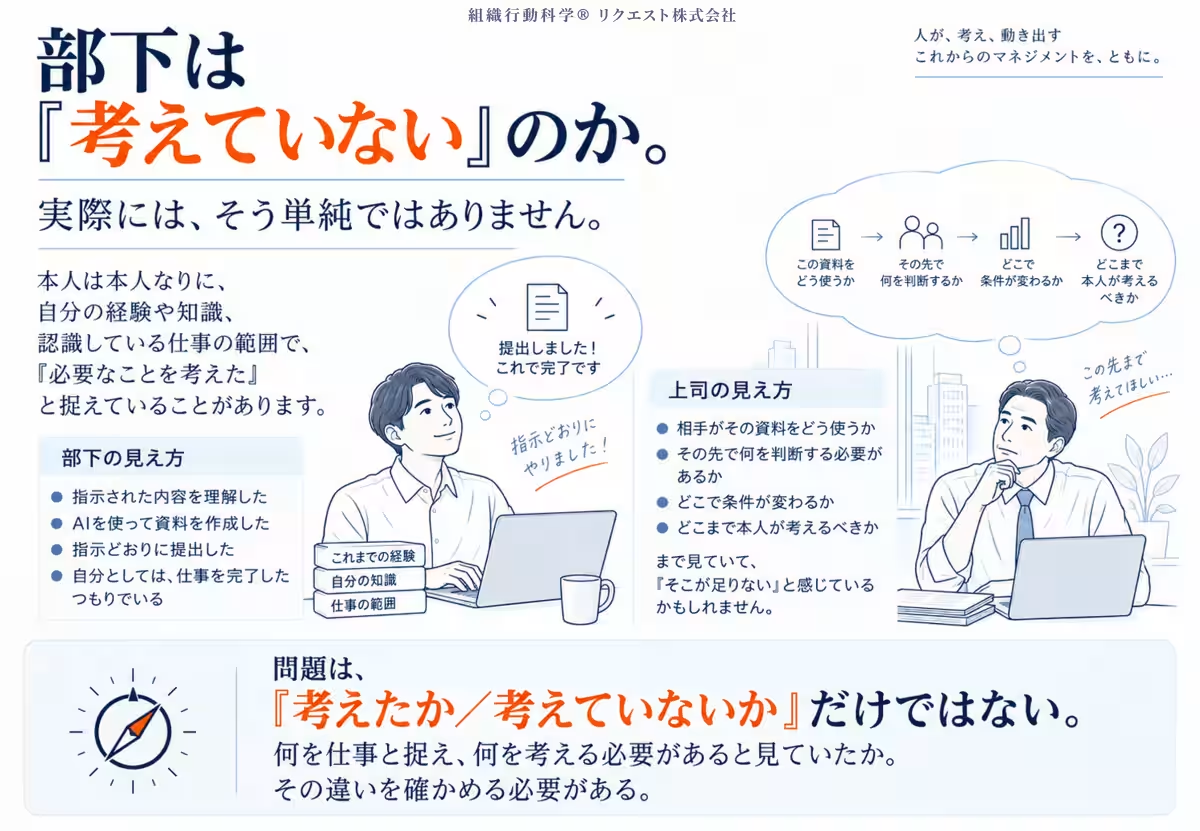
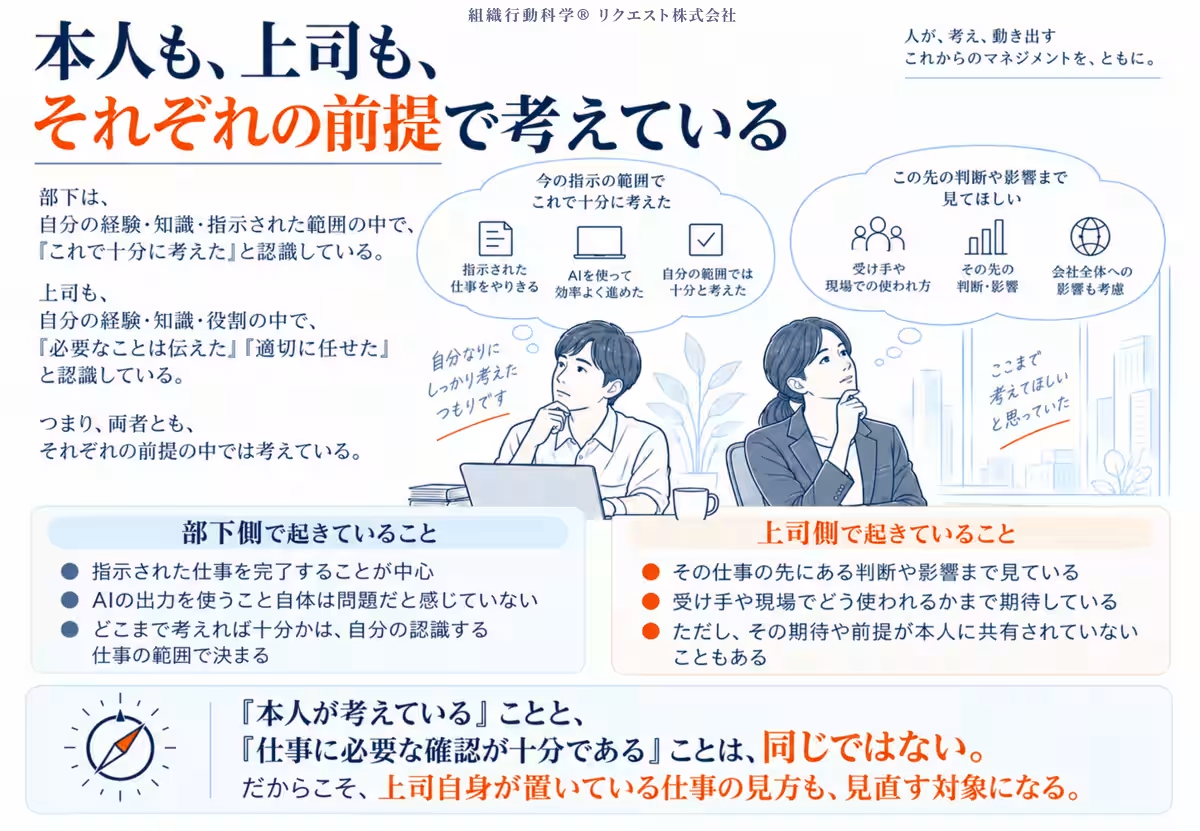
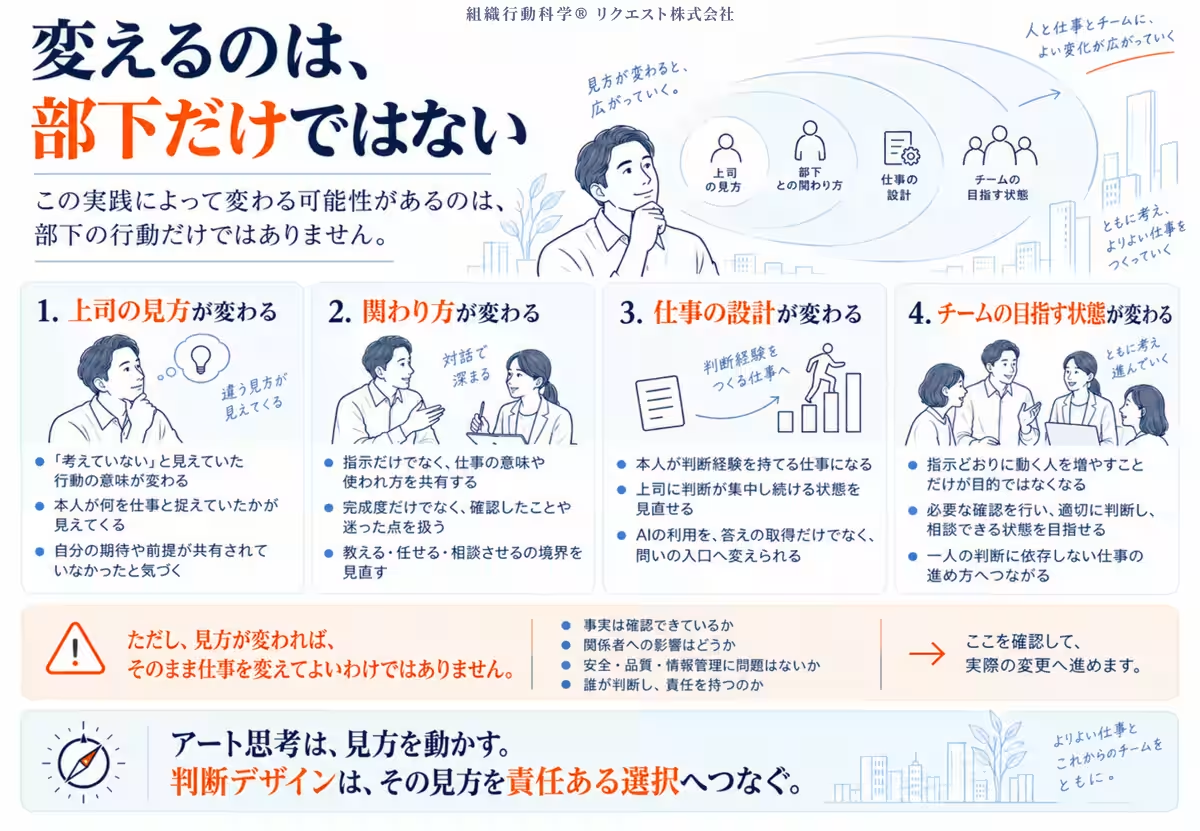
This resource addresses the common misconception that subordinates might simply follow instructions without exploring further possibilities. Sometimes, even when the tasks are executed as directed, employees could feel they have fulfilled their responsibilities without considering broader implications. The aim here is not to align perceptions prematurely but to clarify the purpose, roles, and expectations for a task. By separating observed actions from assumptions, managers can foster a more collaborative environment.
This analytical avenue encourages managers to explore realms of uncertainty in their directions, potentially making way for deeper discussions and subsequent task evaluations.
Acknowledging the Role of Mistakes in Learning
The process of integrating 'Art Thinking' should not lead to overburdening teams with new challenges or reforms. Instead, it aims to enrich existing job interactions—be it reviewing submitted works together or reflecting upon past tasks. This encourages introspection and a better comprehension of how previous experiences can shape future tasks.
By retaining an openness to inquiry, managers can navigate through uncertainties in their teams' responses and adapt accordingly, ensuring that their leadership style is not static but rather responsive to the needs of their teams.
Practical Application of 'Art Thinking'
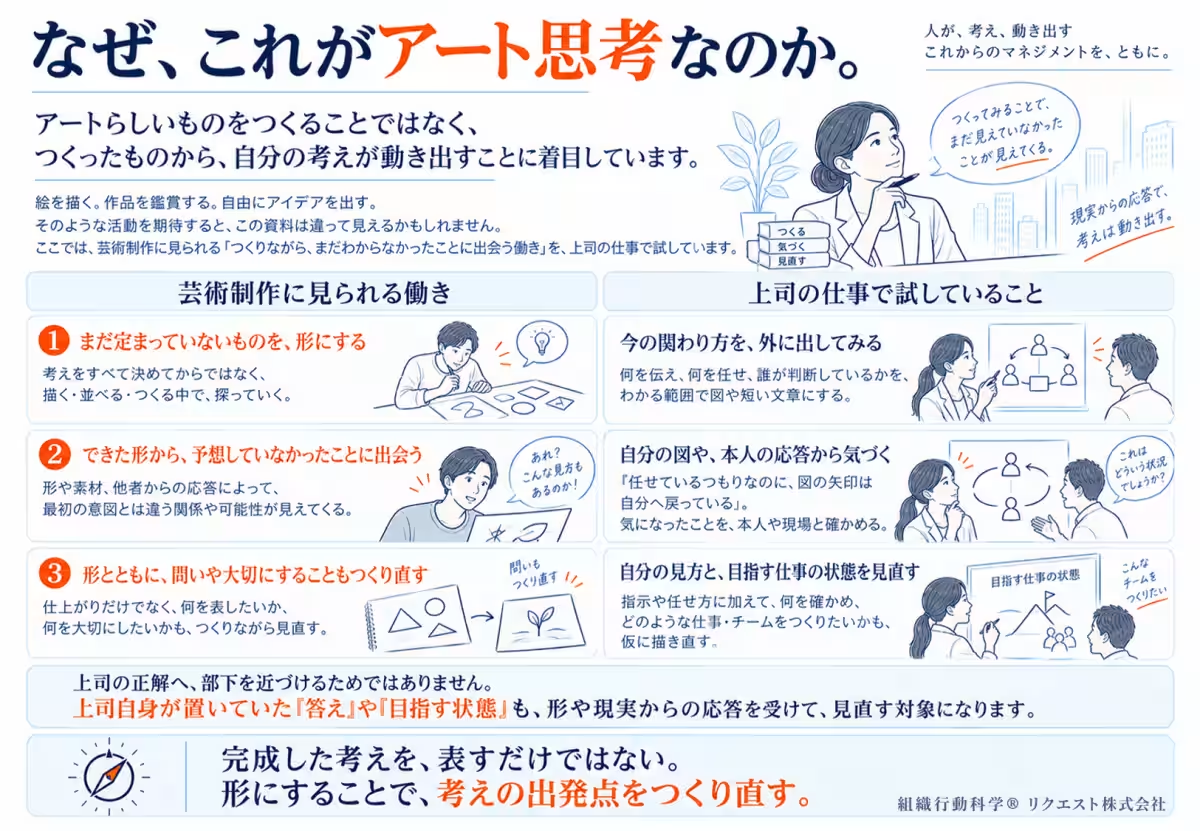
As managers read through this resource, they are called to consider why 'Art Thinking' is particularly relevant today. The document juxtaposes artistic processes with managerial duties, directing attention to what unfolds during the journey of creation and thought. Managers are invited to reflect on whether their responses lead to expected outcomes or spark unanticipated insights.
This practice encourages managers to focus on the ongoing dialogue between their expectations and reality—an essential component for developing adaptability and insight within their teams.
Conclusion: A Connection to Research
With the insights derived from this material, leaders can bridge the gap between existing practices and innovative thinking methodologies rooted in academic research. The document not only summarizes existing knowledge but also propels managers toward applying these principles effectively in their day-to-day operations.
In conclusion, 'Art Thinking for Managers' serves as a vital tool for enhancing managerial effectiveness in a rapidly changing work environment. By embracing reflective practice and fostering creative thinking, managers can not only improve their own work but also empower their teams to engage more meaningfully with their tasks. Download the PDF freely and start exploring these transformative strategies today.

Topics People & Culture)
【About Using Articles】
You can freely use the title and article content by linking to the page where the article is posted.
※ Images cannot be used.
【About Links】
Links are free to use.