



Mitsubishi and NEC Begin Collaborative Research on Human Digital Twin Technology
Mitsubishi Research Institute (MRI) and NEC Solution Innovators have embarked on a groundbreaking collaborative research project focusing on the Human Digital Twin (HDT), which aims to replicate human emotions and behaviors in cyber space. The HDT technology will allow for simulations and the design of various services by translating human psychological and behavioral characteristics into a digital format.
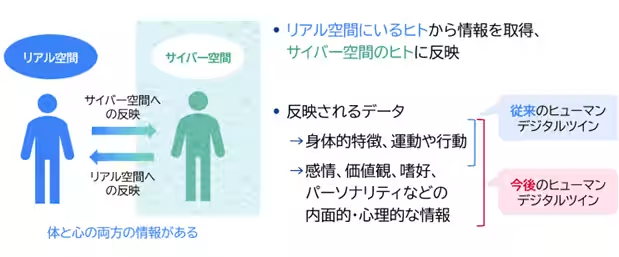
The term "Digital Twin" has traditionally referred to the real-time digital replicas of physical entities in our world, often applied in sectors like manufacturing for factories and urban environments. However, with advancements in sensors and artificial intelligence, the focus is now shifting towards creating digital twins of human beings. The HDT incorporates an individual’s actions, moods, and even their intrinsic psychological profiles, bringing a richer representation into digital landscapes.
While prior applications of HDT have emphasized physical aspects such as posture and movement, recent trends show a burgeoning interest in representing deeper psychological insights including values, emotions, and personality traits. This shift highlights the importance of HDT for effectively simulating market research or social surveys without physically reaching out to individuals. Utilizing HDT can enrich policymaking by quickly aligning results with demographic insights.
This research project aims to develop an HDT that leverages extensive psychological databases to fully validate the replication of human minds in a digital space. The collaborative tasks include:
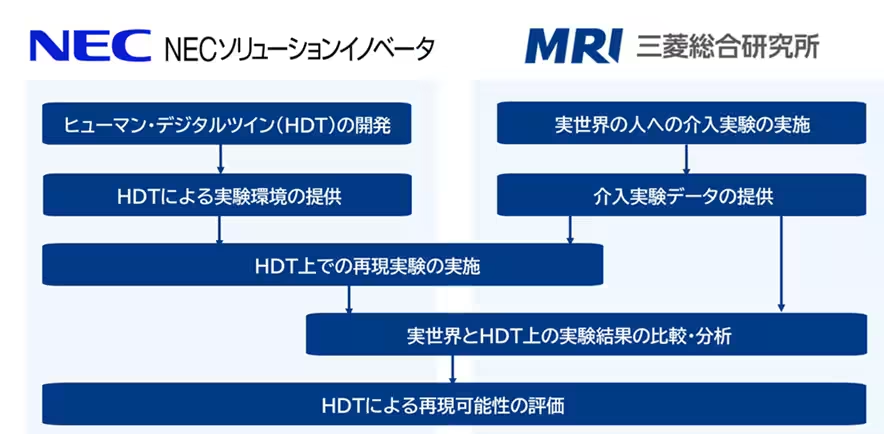
1. Development of HDT that embodies Japanese psychological and behavioral attributes.
2. Conduct of real-world interventions aimed at encouraging behavioral changes among individuals, like promoting self-care techniques for health maintenance.
3. Repeating the interventions conducted in the real world within the HDT to analyze their effectiveness digitally.
4. Comparative study and analysis of results between the real-world interventions and HDT simulations.
Both MRI’s analytical prowess in social issues and NEC Solution Innovators’ robust system capabilities will complement one another. This collaboration will significantly enhance the research with insights from behavioral economics, providing a well-rounded approach.
The goal of MRI and NEC Solution Innovators is to assess the extent to which the HDT can emulate actual human responses to interventions while gleaning insights that optimize costs and efficiency in think tank operations. Furthermore, they aim to offer more tailored services and societal infrastructures grounded in individual needs, potentially catalyzing innovative services and industries.
The findings from this project are expected to be consolidated and published towards the end of next year, illuminating the potential applications of this technology.
Ultimately, this collaboration between Mitsubishi Research Institute and NEC Solution Innovators stands to redefine the landscape of behavioral research and digital interactions, bringing us closer to a future where human behaviors can be accurately predicted and influenced through digital mean. As this research progresses, it promises transformative impacts on how we understand and engage with human psychology in both social and commercial contexts.
What is Human Digital Twin?
The term "Digital Twin" has traditionally referred to the real-time digital replicas of physical entities in our world, often applied in sectors like manufacturing for factories and urban environments. However, with advancements in sensors and artificial intelligence, the focus is now shifting towards creating digital twins of human beings. The HDT incorporates an individual’s actions, moods, and even their intrinsic psychological profiles, bringing a richer representation into digital landscapes.
The Need for HDT in Modern Research
While prior applications of HDT have emphasized physical aspects such as posture and movement, recent trends show a burgeoning interest in representing deeper psychological insights including values, emotions, and personality traits. This shift highlights the importance of HDT for effectively simulating market research or social surveys without physically reaching out to individuals. Utilizing HDT can enrich policymaking by quickly aligning results with demographic insights.
Overview of the Collaboration
This research project aims to develop an HDT that leverages extensive psychological databases to fully validate the replication of human minds in a digital space. The collaborative tasks include:
1. Development of HDT that embodies Japanese psychological and behavioral attributes.
2. Conduct of real-world interventions aimed at encouraging behavioral changes among individuals, like promoting self-care techniques for health maintenance.
3. Repeating the interventions conducted in the real world within the HDT to analyze their effectiveness digitally.
4. Comparative study and analysis of results between the real-world interventions and HDT simulations.
Both MRI’s analytical prowess in social issues and NEC Solution Innovators’ robust system capabilities will complement one another. This collaboration will significantly enhance the research with insights from behavioral economics, providing a well-rounded approach.
Future Directions
The goal of MRI and NEC Solution Innovators is to assess the extent to which the HDT can emulate actual human responses to interventions while gleaning insights that optimize costs and efficiency in think tank operations. Furthermore, they aim to offer more tailored services and societal infrastructures grounded in individual needs, potentially catalyzing innovative services and industries.
The findings from this project are expected to be consolidated and published towards the end of next year, illuminating the potential applications of this technology.
Conclusion
Ultimately, this collaboration between Mitsubishi Research Institute and NEC Solution Innovators stands to redefine the landscape of behavioral research and digital interactions, bringing us closer to a future where human behaviors can be accurately predicted and influenced through digital mean. As this research progresses, it promises transformative impacts on how we understand and engage with human psychology in both social and commercial contexts.
Topics Other)
【About Using Articles】
You can freely use the title and article content by linking to the page where the article is posted.
※ Images cannot be used.
【About Links】
Links are free to use.