



The Growing Demand for Spot Workers and Their Earning Potential in Japan
The Growing Demand for Spot Workers in Japan
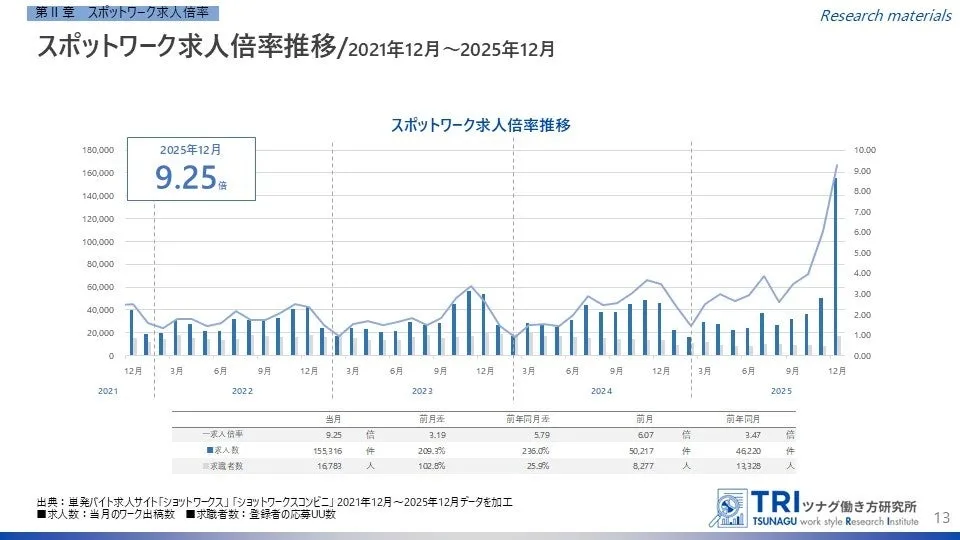
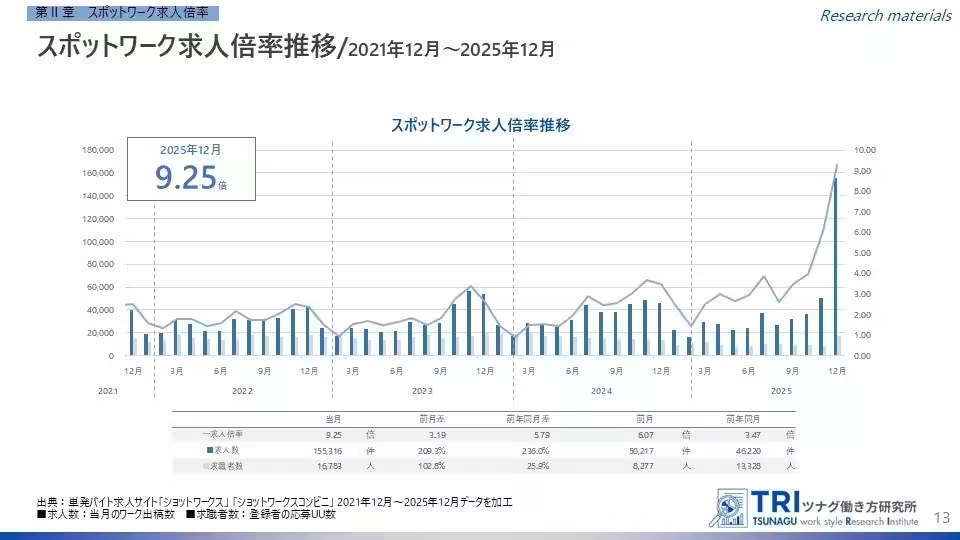
The spot work market in Japan is experiencing remarkable changes, reflecting a growing demand for temporary and flexible employment. According to the latest "Spot Work Market Data Report" by the Tsunagu Group Holdings and its research institute, Tsunagu Working Style Research Institute, the employment rate for spot workers in December 2025 has reached a staggering 9.25 times the number of vacancies, rising by 3.19 points from the previous month. This increase is largely attributed to the seasonal surge in demand as year-end approaches.
Key Findings
1. Job Vacancy Rate: The demand for spot work has significantly increased, with a current job vacancy rate of 9.25 times, marking a continuous rise for 19 consecutive months compared to the same month last year.
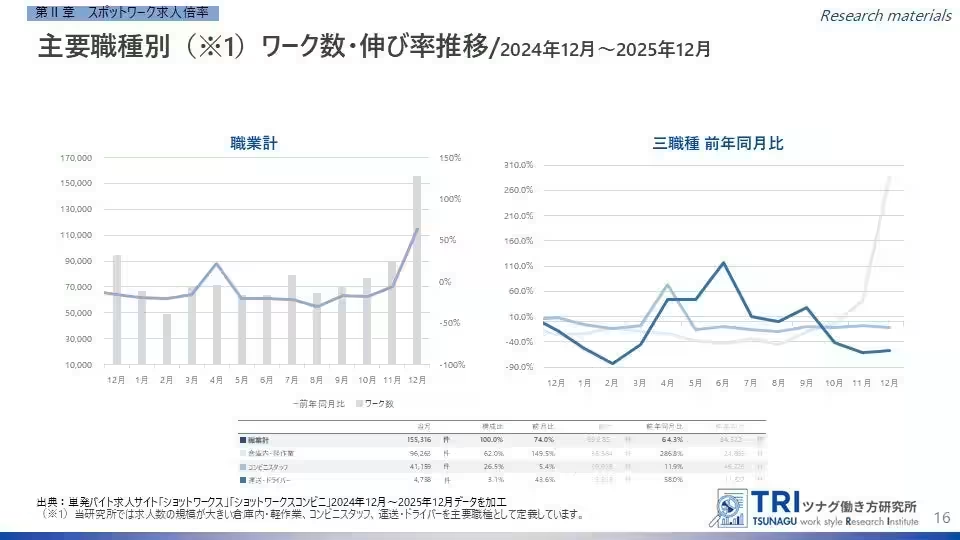
2. Growth Rate: Compared to the previous month, the number of job opportunities in the spot work sector saw a 74.0% increase, and compared to the same month last year, there was a 64.3% growth. Much of this growth is driven by warehouse and light work positions, which now make up more than half of the total work opportunities, having quadrupled in number compared to the previous year.
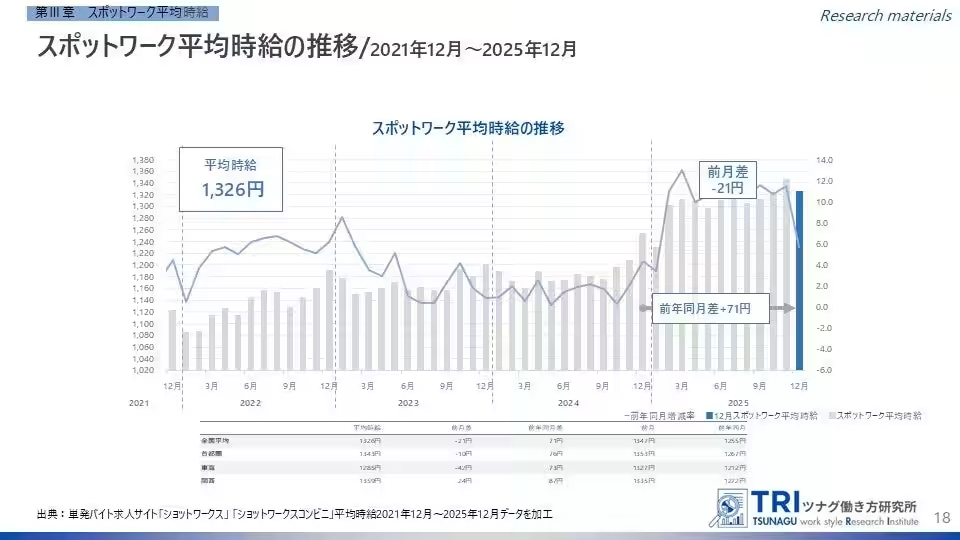
3. Average Hourly Wage: The average hourly wage for spot workers is currently set at 1,326 yen, which is 7 yen higher than the average wage of regular part-time workers at 1,319 yen.
Insights into Spot Work
Spot work, defined as temporary and flexible employment without a continuous employment relationship, can be categorized into two main types: gig work, such as deliveries for Uber Eats, and short-term employment contracts. The market for spot work has blossomed, especially since the COVID-19 pandemic, which has changed the landscape of labor across various sectors.
Market Dynamics
The pandemic has contributed to a rise in the number of spot workers as individuals seek additional income amid stricter labor regulations leveraging working hour restrictions. Employers have also turned to spot work as a means to optimize labor costs and ensure workforce flexibility. As technology evolves, more spot work platforms have emerged, allowing for timely and on-demand job matching.
The Importance of Monitoring
Regular observations of the spot work market are crucial for understanding broader employment trends and labor dynamics. For example, the Ministry of Internal Affairs and Communications of Japan introduced the "Unused Labor Indicator" in its labor force survey in 2018. This includes individuals who are classified as "potential unemployed" due to their desire to engage in additional work. Spot work not only helps stabilize individual incomes but also positively impacts the nation's overall workforce efficiency. Monitoring such trends aids in visualizing market size, revealing beneficial topics, and identifying internal challenges while connecting social implications to the research outcomes.
The Tsunagu Working Style Research Institute
Founded in 2015, the Tsunagu Working Style Research Institute, part of the Tsunagu Group Holdings, focuses on exploring diverse working styles and their implications on labor legislation. Led by Director Hiroshi Ohno, the institute collaborates with specialists in human resources and employment law to provide insights into the evolving nature of employment relationships in Japan. By analyzing legislative changes and proposing an ideal future for labor, the institute is at the forefront of redefining Japan's work culture.
The results of the December 2025 data, showing a profound impact on the job market and payment structures, underscore the significance of adaptive workforce practices in navigating an ever-changing economic landscape. For further information on the trends and insights related to the spot work market, access the full report through the Tsunagu Group's official website.

Topics People & Culture)


【About Using Articles】
You can freely use the title and article content by linking to the page where the article is posted.
※ Images cannot be used.
【About Links】
Links are free to use.