



Huawei Introduces Innovative Future Energy Network Strategy at The Smarter E 2026
Huawei Unveils a Groundbreaking Strategy for Future Energy Networks
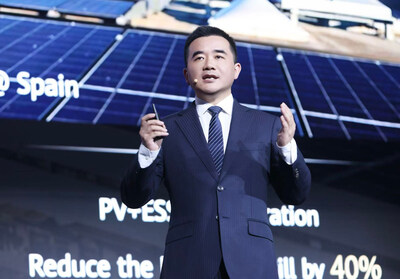
In a pivotal presentation at The Smarter E 2026 in Munich, Steven Zhou, the head of Huawei Digital Power's Smart Photovoltaics and Energy Storage Systems product line, discussed the company's fresh approach to energy networks. This strategy aims at developing solutions that enhance grid stability while facilitating a transition to a larger share of renewable energy sources in Europe.
The energy landscape in Europe is set to evolve significantly, with expectations that wind and solar energy will account for 64% of the total energy mix by 2030. However, this transition comes with challenges, particularly concerning network resilience and the diminishing input of traditional synchronous generators. In response, European markets are amplifying their investments in electric grid infrastructure and expanding the deployment of Battery Energy Storage Systems (BESS).
Zhou articulated that these developments send a clear message — the next generation of photovoltaic and BESS products must evolve to become primary energy sources. As new energy technologies solidify their status as mainstays, the industry has shifted into a phase characterized by active innovation, moving from isolated innovations to integrated solutions.
The complementary capabilities of photovoltaic systems combined with BESS are crucial for facilitating this transition, gradually replacing conventional thermal power plants. Key grid-forming functionalities such as 'black start', inertia support, and short-circuit support have been thoroughly validated in various operational scenarios and conditions.
Zhou recounted how Huawei’s strategic direction has adapted in response to the evolving landscape of energy networks. The launch of the LUNA system in 2020, the industry's first intelligent string energy storage system, was a major milestone. LUNA, named after the moon, was designed to ensure that clean energy does not end at sunset. Its counterpart, the solar inverter known as SUN, bridges energy availability during daylight hours. Zhou emphasized that the role of energy storage has been redefined to uphold the stability of the entire grid, leading to the rebranding of LUNA to LUTERRA, a name derived from 'Terra' meaning Earth, representing a shift from merely lighting up the night to protecting our planet.
Huawei aims to leverage its strengths by integrating core technologies through a strategy termed 'Smart Photovoltaics', which involves ongoing innovation to accelerate the establishment of a modern energy system. This includes tailor-made solutions for different user segments and scenarios. Zhou highlighted significant case studies of commercial and industrial applications across Europe utilizing Huawei's unified solutions that integrate photovoltaics, BESS, EV chargers, and AI-driven planning.
In Germany, the AHS business park experienced a notable revenue boost of 10% just two years after implementing Huawei's comprehensive solutions. Meanwhile, in Spain, Carrefour's supermarket has seen nearly a 40% reduction in electricity costs, achieving return on investment in a mere five years.
Looking ahead, Huawei is poised to adapt to the evolving electricity market dynamics. Zhou noted, “In the future, the business models for BESS systems will further diversify. Thanks to flexible hardware and software capabilities, our universal platform can adjust to various business models, maximizing benefits.”
With demonstrations worldwide from Spain to Mongolia and across Germany to the Philippines, Zhou asserted that Huawei's technology significantly contributes to energy network formation, enhancing the Smart Photovoltaics and BESS solutions for all scenarios, ensuring maximum value for customers while bolstering grid stability amid a higher share of renewable resources.
This comprehensive and forward-looking strategy places Huawei at the forefront of the evolution of energy networks in Europe and sets a new standard for how technology can facilitate sustainable development.
Topics Energy)
【About Using Articles】
You can freely use the title and article content by linking to the page where the article is posted.
※ Images cannot be used.
【About Links】
Links are free to use.