



Innovative Method to Assess Predictive Walking Adjustments in Seniors Using Timed Up and Go Test
Understanding Predictive Walking Adjustments in Seniors
The ability to anticipate and adjust walking patterns to avoid hazards is crucial for safe mobility, especially among elderly populations. As individuals age, their capacity for predictive locomotor adjustments tends to decline. This loss of ability can significantly contribute to an increased risk of falls, a serious health concern for seniors. Traditional methods of assessing these abilities have relied on sophisticated motion capture systems, which are often impractical for large studies or community-wide assessments aimed at fall prevention.
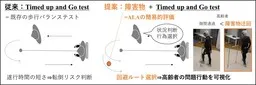
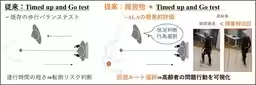
In a groundbreaking study led by Takahiro Higuchi, a professor at Tokyo Metropolitan University, researchers have explored a simplified assessment method for evaluating the anticipatory locomotor adjustments in seniors. Building upon the widely recognized "Timed Up and Go" test (TUG), the team introduced a modified version called the "Obstacle TUG." This variation includes obstacles that participants must navigate, thereby testing their ability to make predictive adjustments as they walk.
The Obstacle TUG Study
The study involved 38 older adults and 24 younger adults. Participants were tasked with standing from a chair, navigating around two obstacles placed three meters away, and returning to the chair as quickly as possible. The placement of these obstacles was intentional, challenging participants to assess whether to maneuver through the gaps or take a wider route, potentially leading to slower performance.
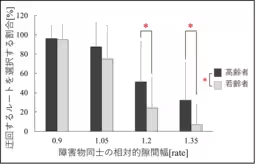
The findings revealed that even when the spaces between the obstacles were ample for passing, older adults displayed a strong tendency to choose the longer route around the obstacles rather than taking the more efficient path through them. Consistently, their walking patterns featured decreased stride length and step width, exhibiting a singular pattern of behavior characterized by minimal variation in movement.
Insights from the Research
1. Seniors’ Decision-Making Patterns: Older individuals preferred choosing a detour route over passing through gaps, even when it would take longer. This behavior illustrates a conservative approach to movement that prioritizes stability over efficiency.
2. Movement Adjustments: The study highlighted that elderly participants maintain narrower strides and steps regardless of the task demand, in contrast to younger participants who adjust their gait flexibly based on the environment.
3. Implications for Fall Prevention: The research suggests that the simple addition of an obstacle in the TUG test can effectively assess the decline in anticipatory locomotor adjustments among seniors, providing valuable insights for preventing falls.
The Importance of Predictive Walking Adjustments
Predictive walking adjustments are critical for navigating everyday environments, particularly in the presence of obstacles. These adjustments are reflective of an individual's ability to process and respond to visual information ahead of them. Elderly individuals often exhibit diminished sensory and cognitive functions, which can lead to challenges in making timely decisions regarding their movements.
The Obstacle TUG presents a viable method for healthcare providers to assess and monitor seniors’ mobility and adaptive strategies. This study lays the groundwork for future investigations into the utility of the Obstacle TUG in various populations, including frail elderly individuals and stroke patients. These assessments could significantly enhance fall risk evaluations and contribute to proactive prevention strategies.
Conclusion
The introduction of the Obstacle TUG provides a straightforward yet effective assessment tool for measuring predictive walking adjustments in older adults. As the aging population continues to grow, understanding and improving these abilities will be vital in promoting senior independence and safety.
Topics Health)
【About Using Articles】
You can freely use the title and article content by linking to the page where the article is posted.
※ Images cannot be used.
【About Links】
Links are free to use.