



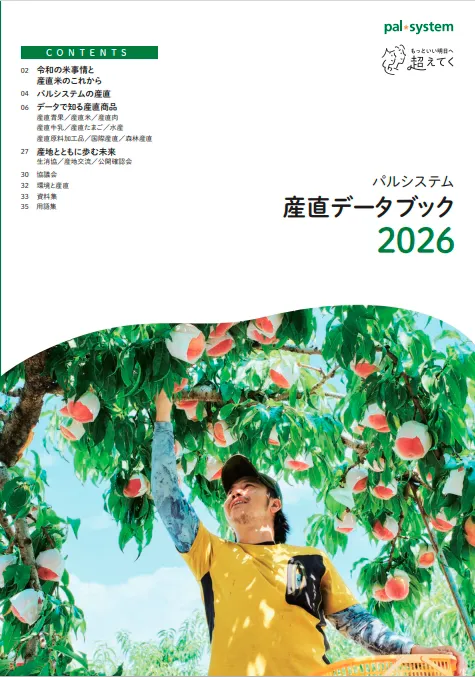
The Launch of Palsystem's Direct Production Data Book 2026: A Step Towards Sustainable Food
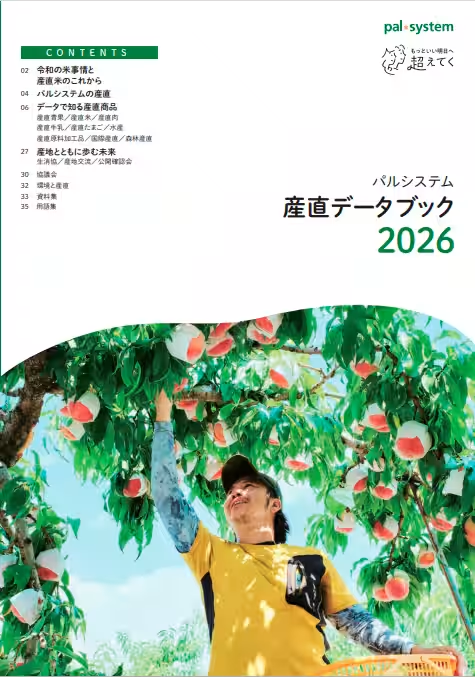
Palsystem's Direct Production Data Book 2026
In June 2026, the Palsystem Consumer Cooperative Union, based in Shinjuku, Tokyo, released the much-anticipated "Direct Production Data Book 2026" on their official website. This publication emerges against the backdrop of pressing issues such as labor shortages and climate change that challenge the primary industries. The book highlights various initiatives aimed at achieving sustainable food production and consumption while sharing essential data from direct production regions.
A Comprehensive Look at the Current State of Production Regions
Since 2010, the Direct Production Data Book has been published annually, focusing on information related to regions partnered with Palsystem. It aims to illustrate the sustainable production practices created through a balanced relationship between producers and consumers. This year’s edition delivers insights into domestic primary industries, covering rice, vegetables, livestock, aquaculture, and forestry, as well as advocating for practices that ensure sustainable food production into the future.
Moreover, the book also includes international partners engaged in direct production and those innovating through renewable energy initiatives. The goal is to promote active exchanges between consumers and producers, thereby fostering a deep understanding of Palsystem's direct production business model.
Supporting Japanese Agriculture Post-Reiwa Rice Incident
The 2024 Reiwa Rice Incident proved to be a turning point, prompting Palsystem to reinforce the necessity for proper price stabilizations and the enduring importance of sustaining agricultural production. In response to declining rice demand, exacerbated by factors like an aging population, climate transformation, and evolving food preferences, Palsystem has launched initiatives such as “Onigiri Good,” aiming to bolster rice consumption and contribute to community building.
Analyzing Achievements and Social Valuation through Data
Palsystem's direct production initiatives strictly adhere to the "Four Principles of Direct Production,” including criteria for transparent sourcing that has resulted in an impressive ratio of direct production for various commodities by 2025. These figures include 98.3% for vegetables, 99.4% for rice, followed closely by 91.1% for beef and 92.3% for pork; while products such as chicken, eggs, and milk boast a solid 100% direct production status.
Furthermore, the area certified organic under the Japanese Agricultural Standards has expanded to 3,313 hectares, and the number of partnerships with direct production regions reached 380. The longstanding commitment to environmentally sustainable agricultural methods has garnered significant recognition, including awards from Japan’s Ministry of Agriculture, Forestry and Fisheries for initiatives linked to the future of the “Yasato Organic Cultivation Committee” and the expansion of domestic fertilizer resources.
Building Community through Public Confirmations
To ensure safe and reliable food, Palsystem has established a unique system known as the "Public Confirmation Meetings." Since their inception in 1999, these meetings have occurred 167 times, allowing consumers to visit production sites and verify production standards and crop records. Annually, approximately 19,629 participants engage in these exchanges, cultivating direct feedback between producers and consumers, which fosters mutual understanding and a shared commitment to both profits and risks.
It is clear that Palsystem’s approach not only promotes transparent agricultural practices but also reinforces the social fabric by connecting consumers directly with the sources of their food. Through initiatives documented in the Direct Production Data Book 2026, Palsystem continues to champion the importance of sustainable agriculture in Japan.
Related Links
Palsystem Consumer Cooperative Union
Location: 2-2-6 Okubo, Shinjuku, Tokyo, 12 Chairman: Atsuyuki Shibusawa
Total Sales: 268.96 billion yen, Members: 1.77 million as of March 2026
Members: Palsystem Tokyo, Kanagawa, Chiba, Saitama, Ibaraki, Tochigi, Yamanashi, Nagano, Gunma, Fukushima, Shizuoka, Niigata, and others.

Topics Consumer Products & Retail)
【About Using Articles】
You can freely use the title and article content by linking to the page where the article is posted.
※ Images cannot be used.
【About Links】
Links are free to use.