



AECOM Honored at the FIDIC Global Infrastructure Awards for Norrbotniabanan Project
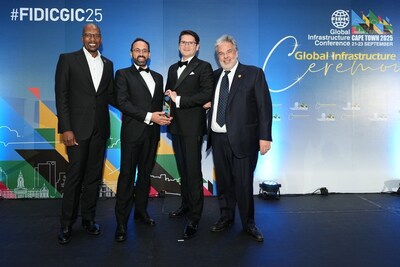
AECOM, a global leader in infrastructure, was recently recognized at the prestigious FIDIC Global Infrastructure Awards. The company received an honorary mention in the Large Project category for its exceptional work on the Norrbotniabanan project in northern Sweden. This railway project was lauded for its technological innovation, sustainability, and international collaboration.
The Norrbotniabanan is a vital infrastructure endeavor comprising a 270-kilometer railway line that connects the cities of Umeå and Luleå along Sweden's northern coast. The new railway is set to significantly enhance the capacity, safety, and performance of rail transport in the area. Specifically, AECOM has developed 30 kilometers of railway, along with 45 kilometers of access roads and 21 bridges to facilitate passenger and freight transport in northern Sweden.
What sets this project apart is its pioneering use of advanced Building Information Modeling (BIM) techniques. These methods have allowed for real-time coordination among interdisciplinary teams from various countries, including Sweden, Spain, Greece, South Africa, India, Ireland, and the United Kingdom. This collaboration has led to greater transparency, traceability, and efficiency throughout all phases of project design.
The well-structured use of metadata and attributes—such as quantities, material specifications, and carbon footprint indicators—has enabled optimized construction processes, improved decision-making, and adherence to high quality and sustainability standards. A standout feature of the Norrbotniabanan project is its proactive approach to sustainability. AECOM regularly evaluated the carbon footprint using the Swedish Transport Administration's climate calculation tool, achieving substantial reductions in emissions compared to the original design. The Transportation Administration had aimed to reduce the project's carbon footprint by 30% during design, construction, and operational phases. To achieve this, calculations were made for the 30-kilometer railway stretch, complemented by regular seminars involving all disciplines to identify opportunities, optimize design, and explore the use of low carbon materials or processes during construction.
The project also made use of stone columns to enhance soil characteristics, stability, consolidation, and durability during construction. This technique, new to the Nordic region, is expected to prompt adjustments to existing geotechnical standards in Sweden. Landscape integration, noise mitigation, and respect for cultural heritage were other crucial factors ensuring that the new infrastructure benefits the surrounding environment and local communities.
Mark Miyaoka, Country Manager at AECOM Sweden, remarked, "Norrbotniabanan is a nationally significant project that will improve connections, foster economic growth, and provide environmental benefits to communities along the Norrland coast. It is gratifying to see this project recognized in such prestigious global contexts, as it exemplifies the dedication and work invested by our entire local and international team. It also reflects the exceptional technical expertise underpinning its implementation. We are delighted and proud that our enthusiasm for innovation, sustainability, and global collaboration—principles woven into AECOM’s DNA—has been acknowledged."
About AECOM
AECOM is a global infrastructure leader committed to delivering a better world. As a trusted service company with deep technical expertise, we solve complex problems for our clients in water, environment, energy, transportation, and buildings. Our teams work with public and private sector clients to create innovative, sustainable, and resilient solutions throughout the project lifecycle—from consulting and planning to design and construction management. AECOM is a Fortune 500 company with total revenue of $16.1 billion for fiscal year 2024. For more information, visit aecom.com.
The Norrbotniabanan is a vital infrastructure endeavor comprising a 270-kilometer railway line that connects the cities of Umeå and Luleå along Sweden's northern coast. The new railway is set to significantly enhance the capacity, safety, and performance of rail transport in the area. Specifically, AECOM has developed 30 kilometers of railway, along with 45 kilometers of access roads and 21 bridges to facilitate passenger and freight transport in northern Sweden.
What sets this project apart is its pioneering use of advanced Building Information Modeling (BIM) techniques. These methods have allowed for real-time coordination among interdisciplinary teams from various countries, including Sweden, Spain, Greece, South Africa, India, Ireland, and the United Kingdom. This collaboration has led to greater transparency, traceability, and efficiency throughout all phases of project design.
The well-structured use of metadata and attributes—such as quantities, material specifications, and carbon footprint indicators—has enabled optimized construction processes, improved decision-making, and adherence to high quality and sustainability standards. A standout feature of the Norrbotniabanan project is its proactive approach to sustainability. AECOM regularly evaluated the carbon footprint using the Swedish Transport Administration's climate calculation tool, achieving substantial reductions in emissions compared to the original design. The Transportation Administration had aimed to reduce the project's carbon footprint by 30% during design, construction, and operational phases. To achieve this, calculations were made for the 30-kilometer railway stretch, complemented by regular seminars involving all disciplines to identify opportunities, optimize design, and explore the use of low carbon materials or processes during construction.
The project also made use of stone columns to enhance soil characteristics, stability, consolidation, and durability during construction. This technique, new to the Nordic region, is expected to prompt adjustments to existing geotechnical standards in Sweden. Landscape integration, noise mitigation, and respect for cultural heritage were other crucial factors ensuring that the new infrastructure benefits the surrounding environment and local communities.
Mark Miyaoka, Country Manager at AECOM Sweden, remarked, "Norrbotniabanan is a nationally significant project that will improve connections, foster economic growth, and provide environmental benefits to communities along the Norrland coast. It is gratifying to see this project recognized in such prestigious global contexts, as it exemplifies the dedication and work invested by our entire local and international team. It also reflects the exceptional technical expertise underpinning its implementation. We are delighted and proud that our enthusiasm for innovation, sustainability, and global collaboration—principles woven into AECOM’s DNA—has been acknowledged."
About AECOM
AECOM is a global infrastructure leader committed to delivering a better world. As a trusted service company with deep technical expertise, we solve complex problems for our clients in water, environment, energy, transportation, and buildings. Our teams work with public and private sector clients to create innovative, sustainable, and resilient solutions throughout the project lifecycle—from consulting and planning to design and construction management. AECOM is a Fortune 500 company with total revenue of $16.1 billion for fiscal year 2024. For more information, visit aecom.com.
Topics General Business)
【About Using Articles】
You can freely use the title and article content by linking to the page where the article is posted.
※ Images cannot be used.
【About Links】
Links are free to use.