



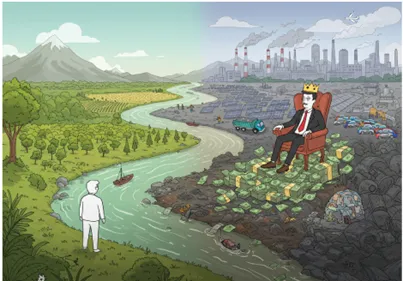
A New Form of Circular Economy from Okayama: Tsuginohi's Vision for Environmental and Economic Sustainability
Tsuginohi Co., Ltd.: Innovating Circular Economy for a Sustainable Future
In a groundbreaking initiative emerging from Okayama, Tsuginohi Co., Ltd. is redefining the relationship between environment and economy. Focusing on a circular economy, the company demonstrates that it is entirely possible to prioritize both environmental preservation and profit generation. Tsuginohi has achieved remarkable results through the reprocessing of diesel exhaust, successfully reducing CO₂ emissions equivalent to '223 times around the Earth' (approximately 86 million kg).
Over 5,000 automotive repair and logistics companies nationwide have implemented Tsuginohi's innovative model. However, the significance of this achievement goes beyond the impressive numbers; it symbolizes a definitive resolution to the long-standing challenge of harmonizing environmental action with economic viability. Parts that would otherwise be discarded are being given new life, thus reinforcing both corporate profits and a sustainable future for our planet.
A Milestone with Meaning
The figure of 5,000 represents much more than just the number of companies adopting the model; it reflects the tangible actions taken by real-world operations to support a sustainable future. In various industries such as automotive, logistics, and repairs, numerous voices have expressed concerns about the costs and efforts associated with going green. Tsuginohi has courageously tackled these issues head-on, creating a business model where 'the more waste we reduce, the greater the profits'. This dual approach has led to many companies nationwide embracing a model for sustainability that is as profitable as it is responsible.
CEO Seima Kurokawa remarked, "What we are expanding is not just a product but a system."
Transforming Waste into Opportunity
At the core of Tsuginohi's business is the remanufacturing of Diesel Particulate Filters (DPF). These components, typically discarded at the end of their lifespan, are rejuvenated through processes of cleaning, re-inspection, and reassembly, facilitating their reuse. This innovative technique has resulted in CO₂ emissions being reduced by as much as 45%. Across the nation, repair facilities have begun opting for this rational reuse of parts, shifting the perception of environmental measures from mere costs to valuable opportunities.
Design Philosophy: Beyond Mere Technology
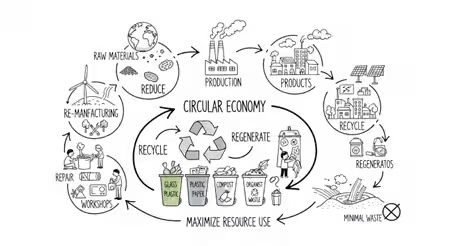
What sets Tsuginohi apart is its focus not only on technology but on designing a comprehensive operational framework. Establishing a national circulation network to collect, refurbish, and redistribute DPFs, Tsuginohi integrates logistics, inventory, inspection, and quality assurance under one roof. This holistic approach allows for synergy between speed, quality, and environmental standards, representing a radical redesign of the industrial structure itself.
A Symbiotic Economy Rooted in Community
What began in a small local automotive repair shop has blossomed into an expansive network involving over 5,000 companies nationwide. The ethos is shifting from a throwaway culture to one of sustained use—moving the economy forward while nurturing the planet. This paradigm shift has influenced not just the automotive repair industry but also new sectors like EV battery recycling, industrial waste, and fuel additives.
The Impact of Numbers
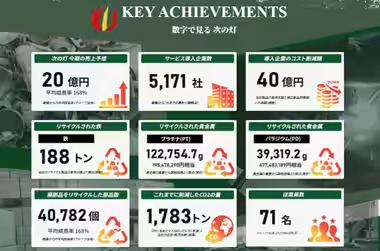
- - Number of Companies Adopted: 5,171—Reflecting genuine engagement and initiative from the ground up.
- - CO₂ Reduction: Approximately 86 million kg (equivalent to 223 times around the Earth)—A testament to the power of resourcefulness.
- - Annual Recycled DPFs: 18,000 units—Highlighting the operational capability of transforming waste into value.
- - Total Reuse Value: 860 million yen—Demonstrating that circular models can be economically viable.
- - Average Employee Age: 29—Indicating youthful energy leads the charge in overcoming environmental challenges.
A Local Model with Global Aspirations
The GX model created by Tsuginohi is now expanding from local roots to the national stage and beyond, with plans to establish bases in Saitama, Nagoya, and Kyushu by 2025, alongside ongoing initiatives for a recycling facility in Asia.
As they export the structural benefits of reducing environmental impact for increased profitability to the world, Tsuginohi is gearing up for its next major challenge: to foster sustainable practices globally.
An Innovative Workspace
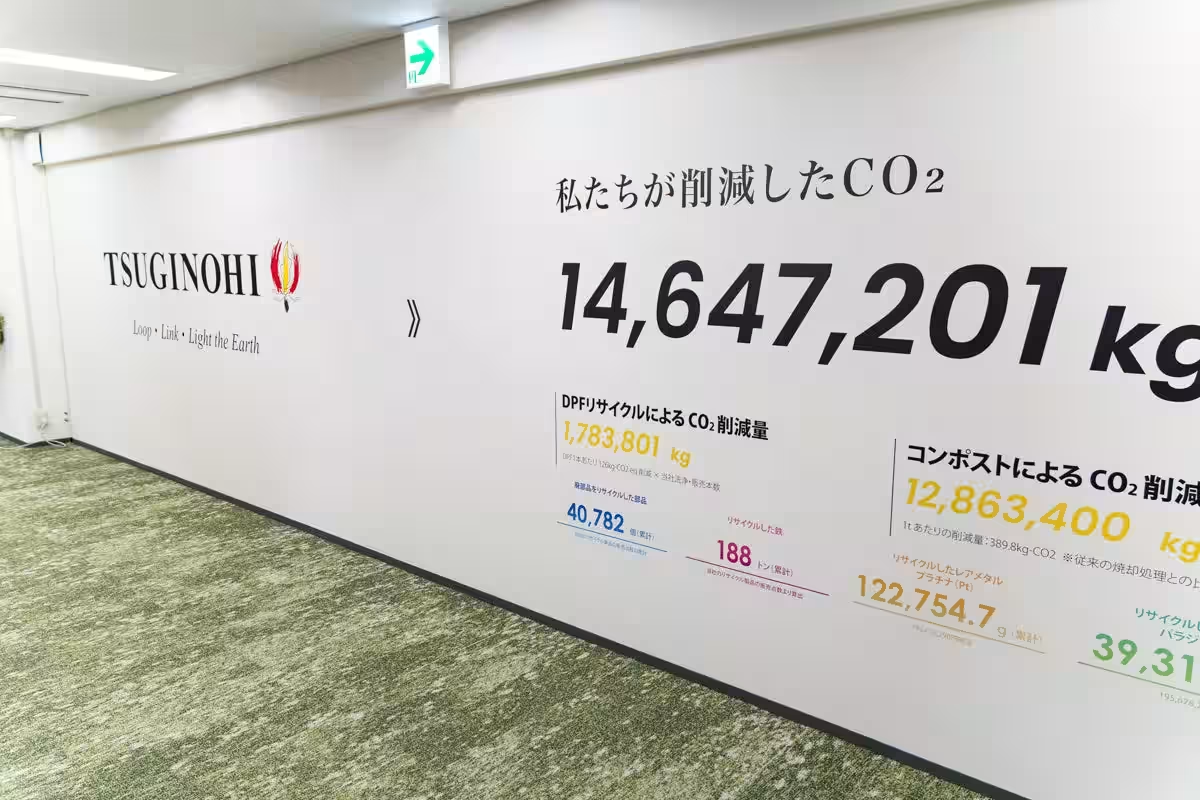
Tsuginohi's new headquarters transcends conventional office spaces, reflecting the company's foundational philosophy on sustainable design. Walls adorned with data on CO₂ reduction and resource recovery turn numbers into tangible achievements, manifesting a culture of transparency and ambition among employees. Every day, team members find inspiration as they envision achieving 'the next 5,000 companies and the next 223 loops around the Earth'. It is truly a space where the energy of individuals driving the system circulates continuously.
Closing Thoughts from the CEO
"There are still many 'usable items' and 'shining individuals' left in local communities. Creating systems to cycle them back into productivity is our mission. Now that 5,000 companies have joined forces, the real journey begins."
— Seima Kurokawa, CEO of Tsuginohi Co., Ltd.


Topics Consumer Products & Retail)
【About Using Articles】
You can freely use the title and article content by linking to the page where the article is posted.
※ Images cannot be used.
【About Links】
Links are free to use.