



The Shift in Smartphone Perception: Exploring Rental Services in Japan
Understanding Smartphone Rental Awareness in Japan
In recent years, the soaring prices of smartphones have sparked discussions among consumers, leading to questions such as: are smartphones becoming too expensive to buy? With the latest models often exceeding 100,000 yen, users are increasingly feeling the financial burden. To explore these perceptions, Ex-Mobile Inc. collaborated with Plus-T Inc. to conduct a nationwide survey involving 500 individuals aged between 20 and 59. This article delves deeper into the survey results regarding smartphone usage perceptions and the awareness and attitudes towards smartphone rental services.
Survey Overview
The survey, titled "Survey on Smartphone Usage", ran from March 9 to March 16, 2026. It was conducted online and focused on various factors such as consumer sentiment about smartphone prices, awareness of rental services, actual usage, reasons for non-use, and future intentions to use these services.
Price Sensitivity among Smartphone Users
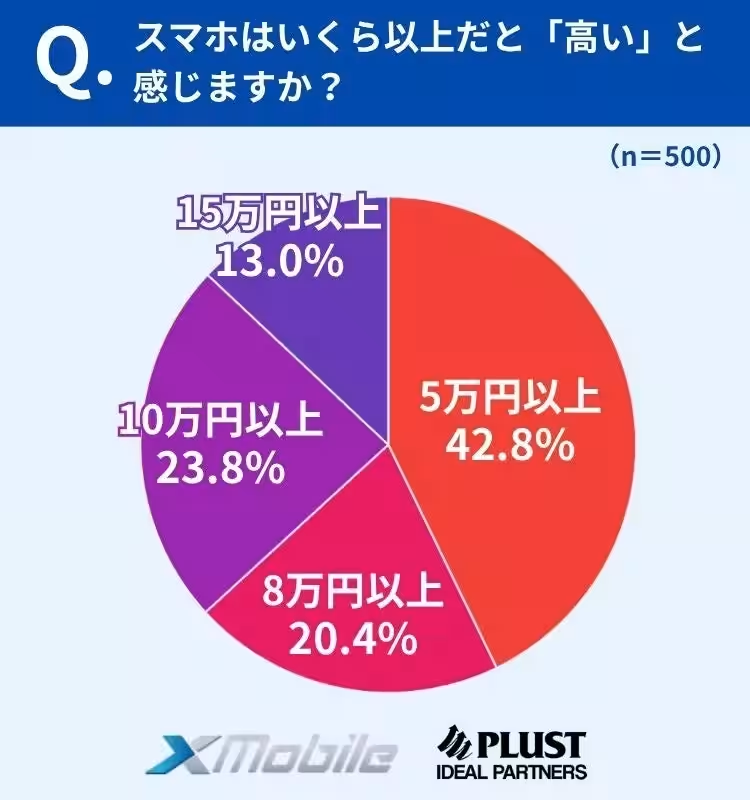
The survey revealed that 42.8% of respondents felt that a smartphone costing over 50,000 yen is expensive. Here’s a breakdown of the price perceptions:
- - 50,000 yen and above: 42.8%
- - 80,000 yen and above: 20.4%
- - 100,000 yen and above: 23.8%
- - 150,000 yen and above: 13.0%
These findings signal a disconnect between the market's high-end pricing trends and consumer expectations. While the latest high-spec models dominate the market, many users feel a pinch even at the 50,000 yen mark, highlighting a growing gap between pricing and user comfort levels.
Low Awareness of Smartphone Rental Services
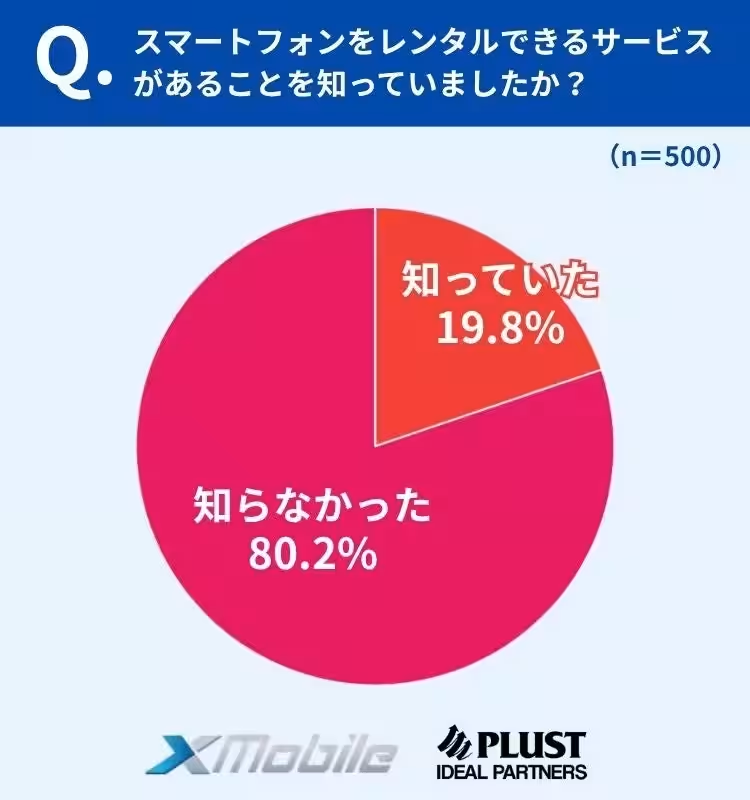
When asked if they were aware of smartphone rental services, only 19.8% of respondents said they knew about them, while a staggering 80.2% admitted they had no prior knowledge. This suggests that rental services remain relatively unknown to the general public, contrasting sharply with popular sharing services like car rentals and streaming platforms. The limited exposure of smartphone rentals through advertising and retail outlets seems to contribute to this lack of awareness, resulting in users not even considering rental options as a feasible choice.
User Experience with Rentals
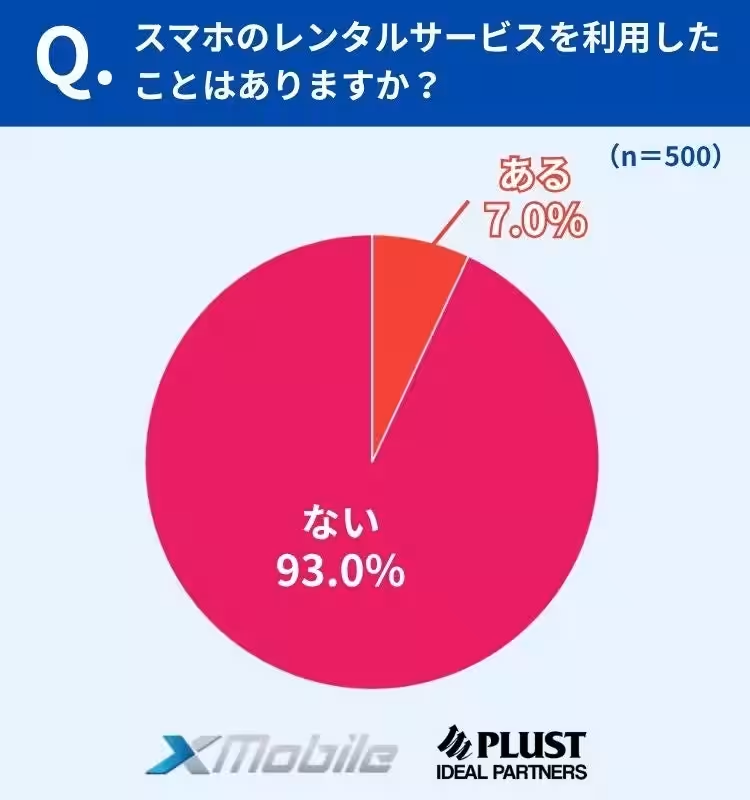
The survey explored user experiences with smartphone rentals, finding that a mere 7.0% of respondents had utilized such services before. This confirms that smartphone rentals have not yet become a mainstream option among consumers. The combination of low awareness and lack of opportunity appears to hinder the service's adoption. Furthermore, the intrinsic habit of using a personal smartphone for prolonged periods suggests underlying psychological barriers, such as reluctance to change devices once they've become accustomed.
Recognizing Rental Service Benefits
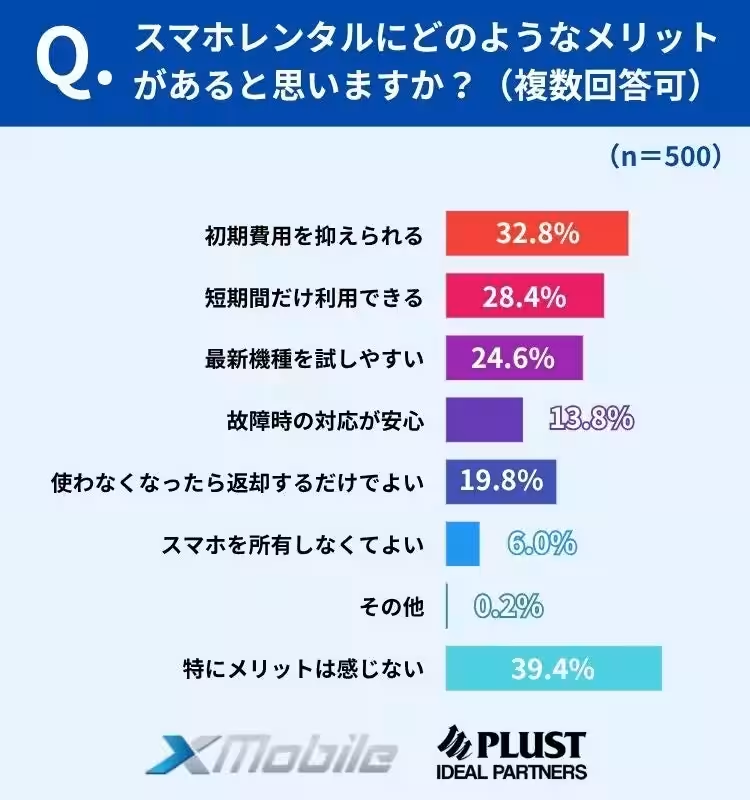
Despite the low uptake, the survey did identify several perceived benefits of smartphone rentals:
- - Cost savings on initial expenses: 32.8%
- - Flexibility for short-term use: 28.4%
- - Ease of trying the latest models: 24.6%
- - Peace of mind in case of device damage: 13.8%
However, it’s noteworthy that 39.4% of participants felt they did not see any significant advantages to rental services. The existence of suitable scenarios for rentals—such as short-term needs or specific events—are not effectively communicated to potential users, highlighting a disconnect in service perception versus actual utility.
Cultural Norms Surrounding Ownership
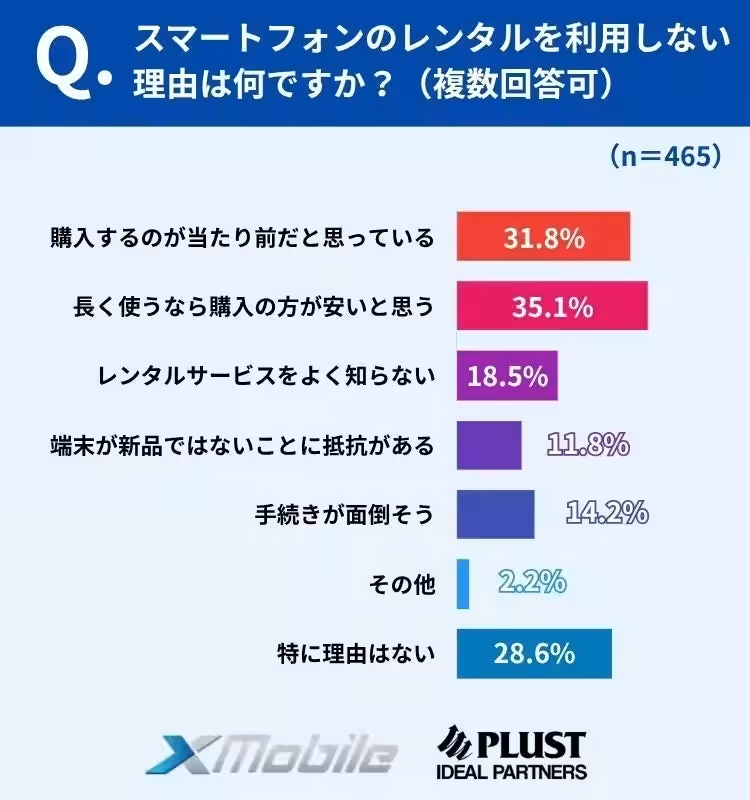
Among the respondents who opted not to use rental services, the most common reason was the belief that buying is more economical for long-term use (35.1%). Following this, 31.8% indicated that purchasing a smartphone is viewed as the norm. This emphasizes the strong cultural inclination towards ownership versus sharing in technology, particularly when compared to other sectors that have successfully adopted sharing models.
Future Potential for Smartphone Rentals
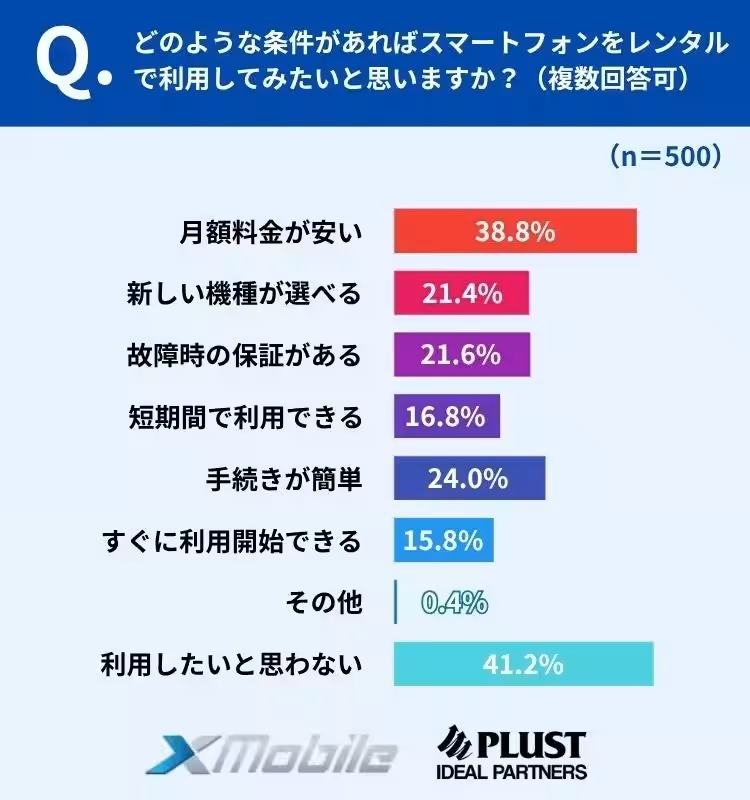
Looking ahead, 41.2% of survey respondents expressed they do not wish to use rental services. Nevertheless, around 38.8% indicated that they might consider rentals if monthly fees were more affordable. Factors such as ease of use and device guarantees also emerged as significant considerations for users when contemplating potential rentals. This implies that while current interest may be limited, there exists room for growth should rental services align more closely with consumer expectations and foster easier access.
Conclusion
The findings from this survey highlight a critical perspective on the smartphone landscape in Japan. While the high pricing and user burden suggest a pivot toward alternative usage models, awareness of rental options remains woefully inadequate. As smartphone prices continue to escalate, the acknowledgment of renting as a viable option could change over time. Fostering a richer understanding of rental services and their practical advantages could ultimately cultivate a more accessible market. Brands need to ramp up their outreach efforts, ensuring that potential renters are not just aware but also recognize the value these services offer. Exploring new pathways of engagement and communication will be key for establishing a broader acceptance and utilization of smartphone rental services.
Topics Consumer Products & Retail)
【About Using Articles】
You can freely use the title and article content by linking to the page where the article is posted.
※ Images cannot be used.
【About Links】
Links are free to use.