



Innovative Cooling Vest Proves Effective for High Temperature Work Environments
Introduction
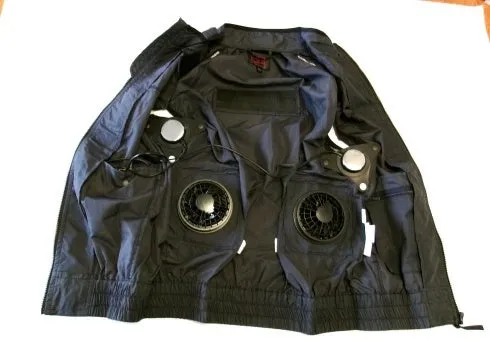
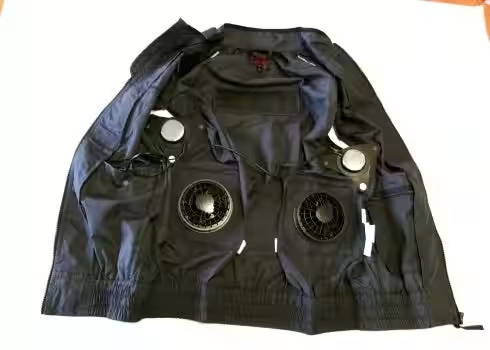
In a groundbreaking collaboration, Daito Kentaku Corporation and Showa Shokai have developed an innovative fan-assisted Peltier cooling vest that aims to alleviate the physical demands of workers in high-temperature environments. Recently, the companies conducted a validation study with Rikkyo University, which confirmed the vest's effectiveness. By employing a combination of fan-driven evaporative cooling and direct cooling through Peltier elements, the vest has been found to lower skin temperature and reduce perceived exertion during work.
The Research Behind the Cooling Vest
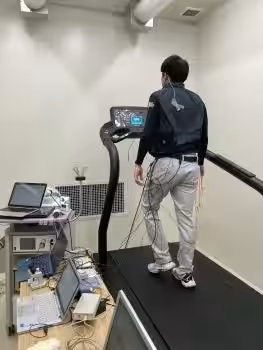
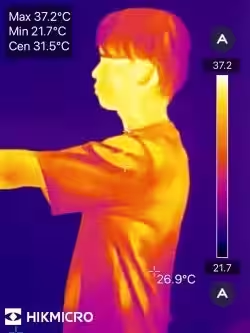
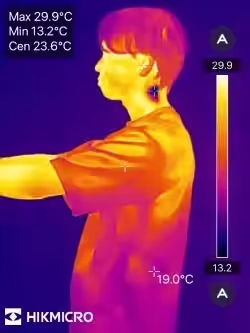
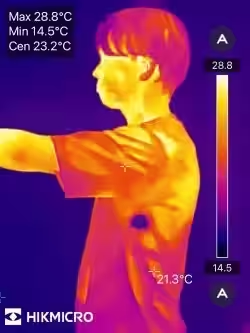
The research was led by esteemed professors from Rikkyo University and Matsuyama University, who measured both physiological and psychological responses of participants during light exercise in a hot environment of 32°C (WBGT 28°C). Previous traditional fan-assisted workwear relied predominantly on evaporative cooling, which proved insufficient under extreme heat. However, this new vest, equipped with Peltier elements, significantly reduced temperature rise at contact points and surrounding areas of the upper arms by about 0.5°C.
In addition to the temperature reduction, participants reported improved comfort levels. Notably, cognitive function assessments showed encouraging improvements as well, indicating that the cooling vest could help reduce heat-related stress for workers, maintaining both mental and physical well-being. This research will be further presented at the 80th Annual Meeting of the Japanese Society of Physiology.
Product Features
The fan-assisted cooling vest incorporates a Peltier cooling plate powered by a mobile battery. Users can position the cooling plate either at the neck or under the armpits, achieving a cooling surface that is approximately 20°C lower than the ambient temperature. The real-time cooling solution is crucial for protecting workers in demanding construction jobs during the sweltering summer months.
Expert Insights
Prof. Takayuki Ishi-wata from Rikkyo University's Sports Wellness Department remarked, "Future iterations could involve automated adjustments of fan speed and Peltier power based on individual skin temperature and heart rate, enhancing battery efficiency and comfort. Customizing the placement of Peltier elements will allow for optimal contact and effectiveness."
Prof. Hidetoshi Tanaka of Matsuyama University added, "Daito Kentaku's initiative in addressing heat stress in the workplace is commendable. This is a significant contribution to the Ministry of Health's efforts in promoting heat stroke prevention on construction sites."
Future Implications
Daito Kentaku plans to leverage the validation data from this study to further its commitment to improving working conditions in high-temperature environments in the construction field. Meanwhile, Showa Shokai aims to enhance product performance and operational viability based on the trial outcomes.
Both companies recognize the importance of creating a safe, comfortable, and efficient work environment for their team members. The collaborative efforts reflect a growing trend towards integrating advanced technology in personal protective equipment to ensure worker safety and productivity in challenging conditions.
Conclusion
With this exciting advancement in cooling technology, the fan-assisted Peltier cooling vest promises to revolutionize how workers manage heat stress. As the construction industry encounters increasingly hotter seasons, innovations like these are essential in ensuring the safety and well-being of employees. The combined expertise of Daito Kentaku and Showa Shokai not only highlights the potential for improved worker conditions but also sets the stage for future innovations in workplace safety gear.
For additional details on this initiative, visit Daito Kentaku and Showa Shokai.



Topics Consumer Products & Retail)
【About Using Articles】
You can freely use the title and article content by linking to the page where the article is posted.
※ Images cannot be used.
【About Links】
Links are free to use.