



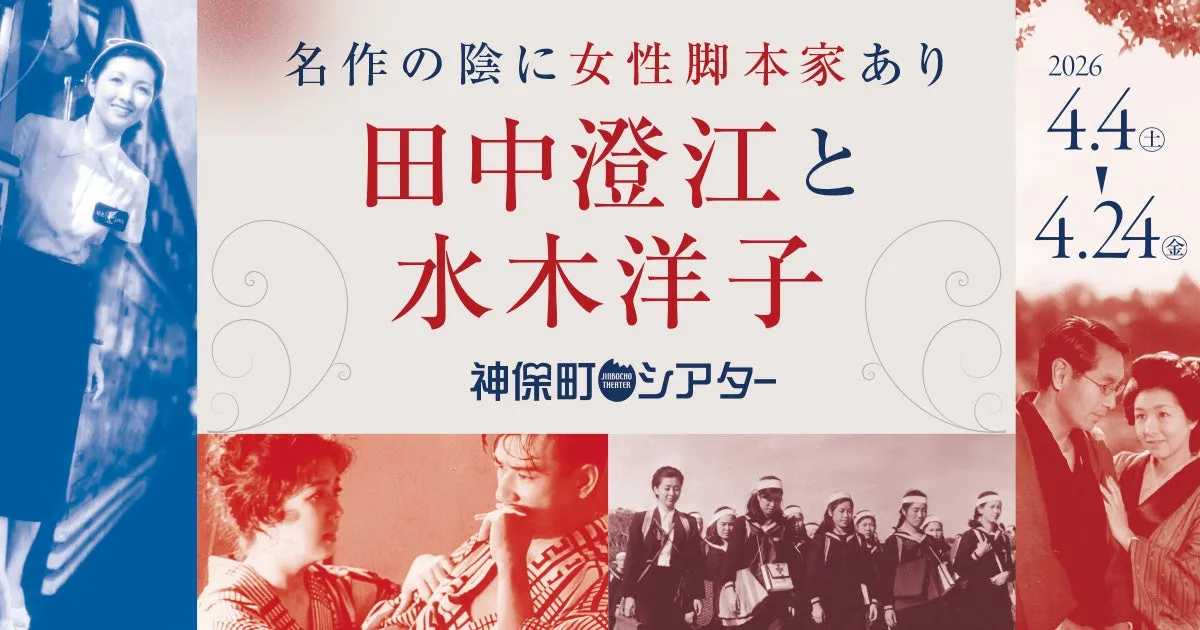
Exploring Female Screenwriters in Post-War Japanese Cinema at Jinbocho Theater
Unveiling the Female Voices Behind Classic Japanese Cinema
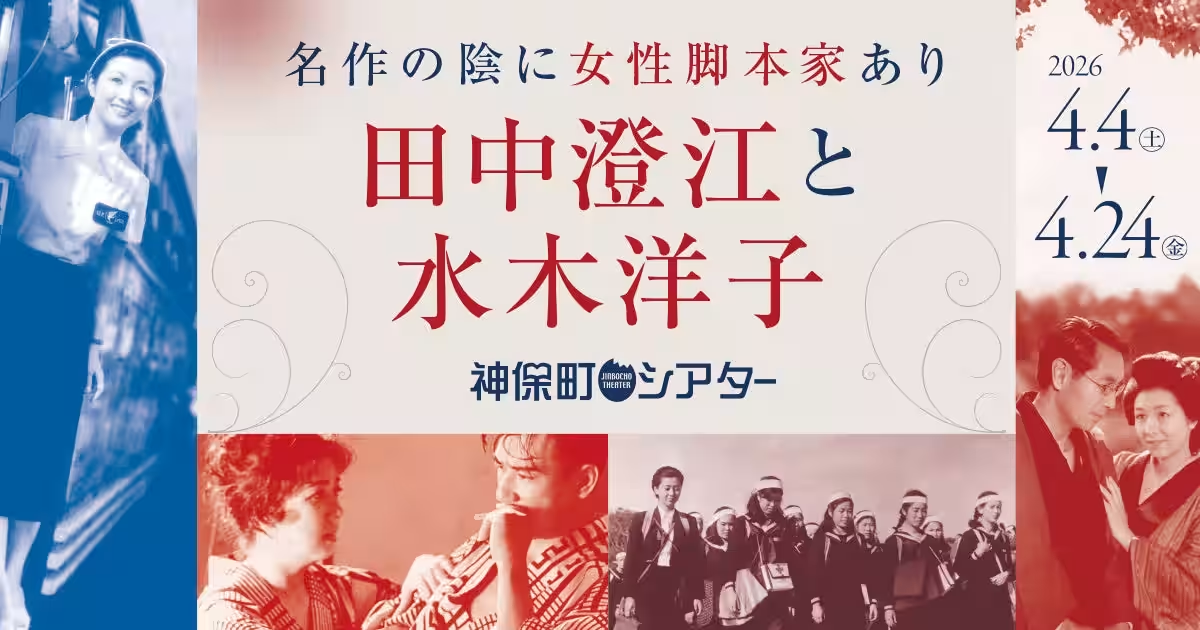
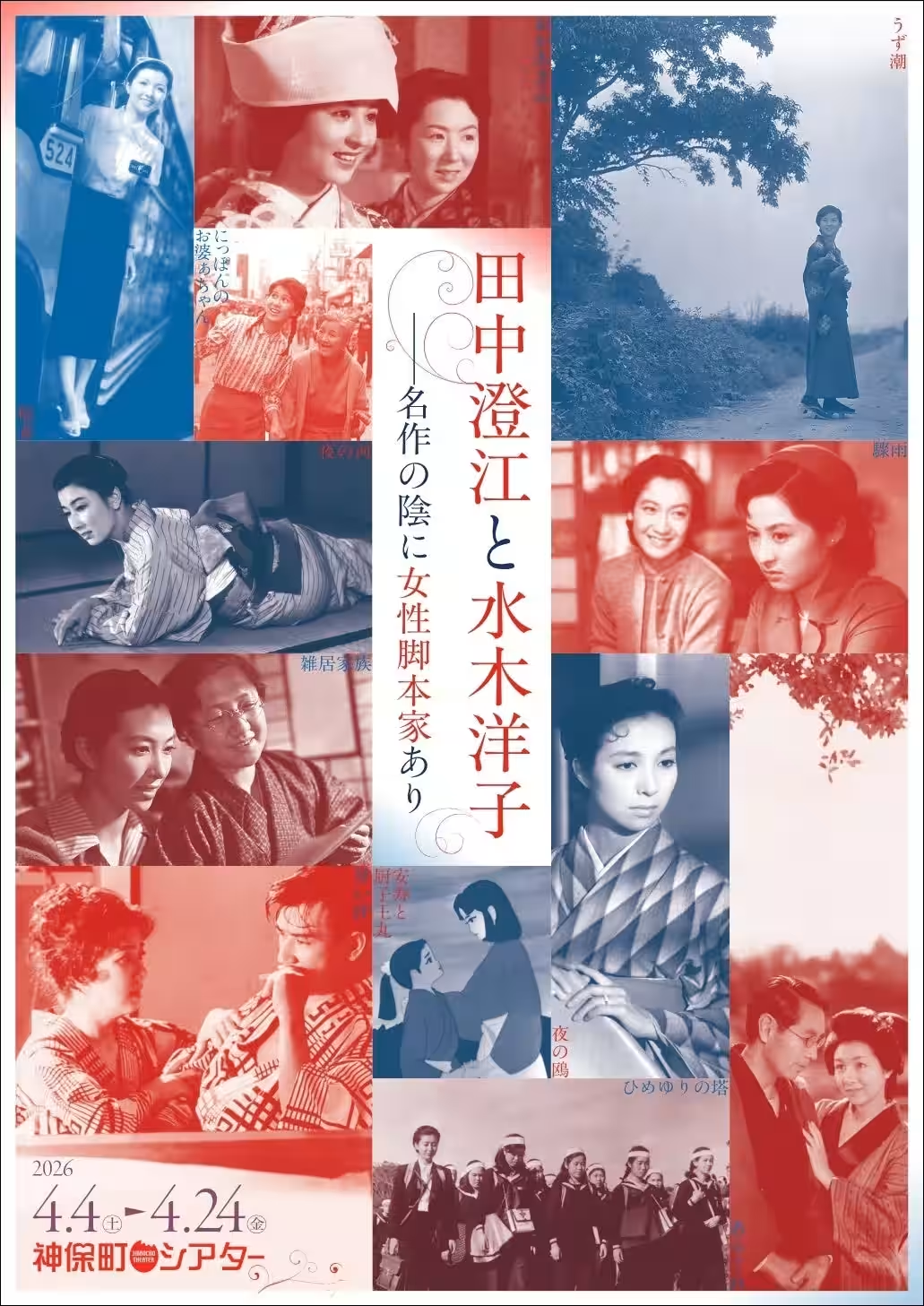
In the heart of Tokyo lies the Jinbocho Theater, renowned for screening classic films that highlight the artistic essence of Japan. Starting April 4 until April 24, 2026, the theater will host a special screening celebrating the works of two remarkable female screenwriters who significantly shaped post-war Japanese cinema: Tanaka Sumie (1908-2000) and Mizuki Yoko (1910-2003).
Tanaka Sumie was celebrated for her collaborations with legendary director Mikio Naruse, contributing scripts to films like "Meshi" and "Inazuma" that explored women's lives and struggles. Her talent was recognized through various literary awards, reflecting her prowess not just in screenwriting but also in writing as a whole. On the other hand, Mizuki Yoko left an indelible mark on film history with her screenplays for iconic works like "Kaidan" and "Ugrum." Her dedication to research and nuanced storytelling brought social issues to the forefront, making her contributions crucial in the narrative landscape of Japanese cinema.
During this special showcase, the focus won't solely be on their acclaimed works; it will delve deeper into the originality and creativity of their screenplays, encouraging audiences to appreciate the artistic integrity present in these narratives. The goal is to explore how these two women portrayed the tumultuous times they lived through and their reflections on the roles of women in society.
The event holds particular significance as it shines a light on female perspectives in a male-dominated industry. With a diverse lineup of screenings that encompass both narrative depth and storytelling mastery, this initiative provides a unique opportunity for cinema lovers to experience films through the lens of these talented scriptwriters.
The screening schedule features a total of 12 works, including:
1. Tanaka Sumie's Works:
- Zakkyo Kazoku (Family in the Room), released in 1956 under the direction of Shigeru Kumamoto.
- Yoru no Kamome (Seagulls of the Night), directed by Noboru Sasaki in 1957.
- Yoru no Kawa (River of the Night), with direction by Koji Yoshimura in 1956.
- Uzu Shio (Whirlpool), directed by Takeichi Saito in 1964.
- Inazuma (Lightning), directed by Mikio Naruse in 1952.
- Anju to Chusou Ou Maru, an animated piece from 1961.
2. Mizuki Yoko's Works:
- Okaasan (Mother), directed by Mikio Naruse in 1952.
- Himeyuri no Tou (Himeyuri's Tower), directed by Seiji Imai in 1953.
- Shuuu (Sudden Rain), also directed by Naruse in 1956.
- Amai Ase (Sweet Sweat), released in 1964.
- Arakure, directed by Naruse in 1957.
- Nihon no Obaachan (Grandmother of Japan), directed by Seiji Imai in 1962.
The entry fees for this remarkable showcase are as follows: 1,400 yen for general admission, 1,200 yen for seniors, and 1,000 yen for students. Note that the theater will be closed on April 14 for maintenance.
For more information on the schedule and featured works, visit the Jinbocho Theater homepage, or explore the dedicated feature page for Tanaka Sumie and Mizuki Yoko here. In this celebration of female influence, attend this exploration of art, culture, and history by witnessing the brilliance of two extraordinary women in Japanese cinema.
Topics Entertainment & Media)
【About Using Articles】
You can freely use the title and article content by linking to the page where the article is posted.
※ Images cannot be used.
【About Links】
Links are free to use.