


Revolutionary Optics-Free UV MicroLED Achieves Gbps-level Wireless Communication
World-First Development: Optics-Free Deep UV MicroLED Wireless Communication
In a remarkable advancement in the realm of wireless communication, a research group led by Shin-ichiro Inoue at the National Institute of Information and Communications Technology (NICT) in Japan has successfully achieved Gbps-level wireless communication using a revolutionary technology called optics-free deep ultraviolet (DUV) microLEDs. This innovative approach eliminates the need for external optical components, such as lenses, significantly reducing both complexity and cost.
The Breakthrough
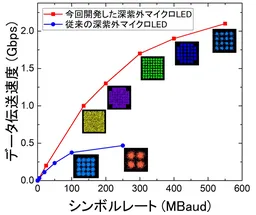
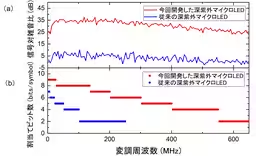
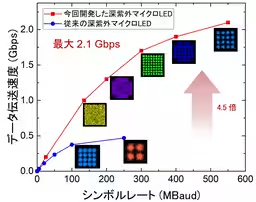
Historically, achieving high-speed data transmission with deep UV microLEDs has been a formidable challenge due to their small light-emitting area and the limited output of light coupled with a broad emission angle. This typically resulted in a low signal-to-noise ratio (S/N ratio), making reliable data transmission difficult. By employing a unique nano-optical structure technology, the NICT team was able to control the light distribution angle without needing any external lenses. This crucial improvement elevated the S/N ratio from 10 dB to an impressive 35 dB, showcasing an approximate fourfold increase in data transmission speed. The achieved maximum data rate was 2.1 Gbps, a feat roughly 4.5 times faster than traditional systems.
The implications of this development are profound, particularly because it paves the way for low-noise, high-speed optical wireless communication systems suitable for various applications, including outdoor environments and vehicle-to-vehicle communication. By avoiding expensive external optical components like high-purity synthetic quartz lenses, the team has unlocked new opportunities for cost-effective deep UV wireless communication systems designed for next-generation applications.
Technical Aspects of the Development
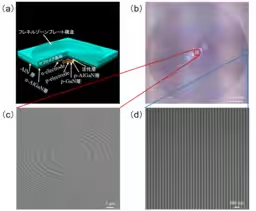
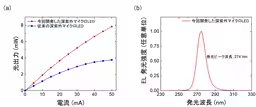
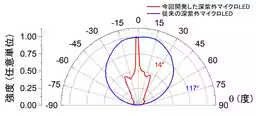
The success of the optics-free deep UV microLED technology stems from innovative changes made to its light extraction surface. By creating a phase-type Fresnel zone plate nano-structure, researchers were able to enhance light extraction efficiency by more than double. Furthermore, the research reduced the light distribution angle from a previously expansive 117 degrees down to a mere 14 degrees, allowing for efficient transmissivity of high-directional deep UV light to the receiving end.
During experimental trials utilizing the developed optics-free deep UV microLED as the transmitting source, the team saw remarkable results, effectively demonstrating a signal-to-noise ratio improvement that translates to a power ratio increase of around 300 times. The integration of advanced modulation techniques, such as Orthogonal Frequency-Division Multiplexing (OFDM) and Quadrature Amplitude Modulation (QAM), facilitated this extraordinary leap in data transmission speeds.
Future Prospects
Looking ahead, the capabilities of this technology seem limitless. By negating the need for costly external lenses, researchers at NICT expect to realize highly efficient Gbps-level wireless communication in outdoor settings, enhancing the potential for various applications including vehicle communication and beyond-line-of-sight optical wireless communication systems. NICT is committed to further research and development of deep UV light ICT device technologies, working towards implementing next-generation optical communications systems that ensure high-speed, low-noise transmissions even in the presence of sunlight.
In conclusion, this breakthrough signifies a significant step forward in the field of wireless communication. With continued investment and research, the future holds great promise for the widespread application of deep UV microLEDs in everyday technologies, potentially revolutionizing how we communicate and interact with the world around us.
Publication Details
The findings of this groundbreaking research have been documented in a paper titled "Optics-free Gbps DUV optical wireless communication through far-field pattern control of DUV micro-LEDs using nano-structures" published in Optics Express on November 16, 2026. Furthermore, various related press releases highlight NICT's prior developments and contributions in the area of deep UV LED technologies.
For further reading, access the paper here.
Topics Consumer Technology)

【About Using Articles】
You can freely use the title and article content by linking to the page where the article is posted.
※ Images cannot be used.
【About Links】
Links are free to use.