



Why Many Freelance IT Engineers Prefer Freedom Over Traditional Employment
The Evolution in the Freelance IT Sector
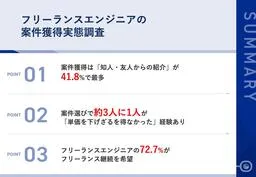
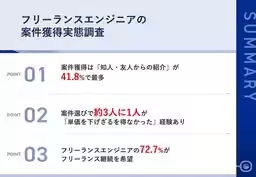
In a recent investigation conducted by KIKKAKE CREATION, a notable firm based in Tokyo, insights into the lives of freelance IT engineers were highlighted. The research surveyed 110 individuals who have been successfully freelancing for over five years. The overarching theme revealed is the striking disconnect between their financial realities and their preferred work conditions.
Key Findings from the Survey
1. Competitive Advantages of Freelancing
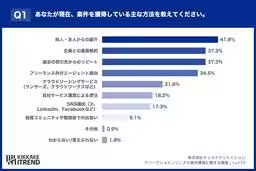
Approximately 41.8% of the respondents stated that their primary means of securing projects is through referrals from acquaintances and friends. Following this, 37.3% reported obtaining projects via direct contracts with companies, and another 37.3% resonated with repeat engagements from past clients. This intricate web of connections underlines a crucial aspect of the freelance landscape, where personal relationships can often lead to sustainable work opportunities.
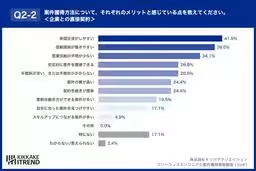
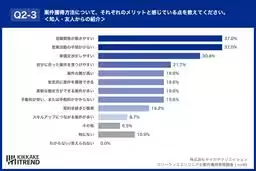
2. Evaluating the Benefits of Different Acquisition Methods
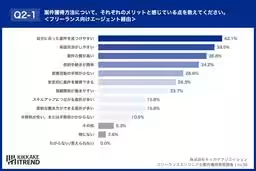
Inquiry into the benefits associated with varying project acquisition methods yielded fascinating results. When asked what merits they found in these approaches, 42.1% noted that working with freelance agents made it easier to find suitable projects. On the other hand, directly contracting with companies allowed for smoother negotiations regarding project rates, appreciated by 41.5% of participants. Referrals from friends and acquaintances were valued for fostering trust and minimizing sales efforts, each appreciated by 37.0% of those surveyed.
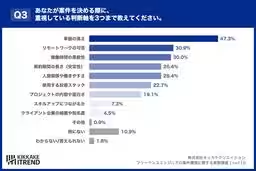
3. Project Selection Criteria
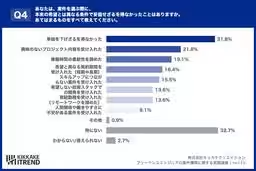
When it comes to project selection, 47.3% of respondents emphasized the importance of payment rates. Following this, flexibility in working hours and options for remote work were priorities for 30.9% and 30.0% respectively. This focus on financial reward ought to be considered alongside the pressures many freelancers feel when selecting projects, as 31.8% admitted to having to lower their desired rates, and 21.8% had taken on projects that did not pique their interest due to financial considerations.
Underlining the Challenges
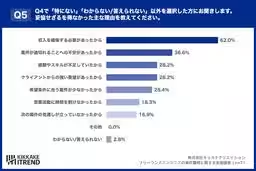
A prominent factor for the compromises freelancers make is financial necessity. An overwhelming 62.0% of those who had to adjust their demands cited the need to secure income as the driving reason. Meanwhile, 36.6% expressed concerns about the prospect of having a gap in projects.
4. Project Length Preferences
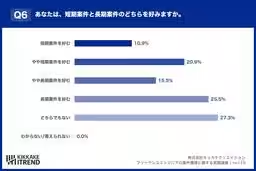
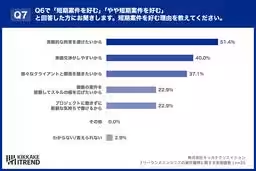
The survey shed light on the divide between preferences for short-term versus long-term projects. Approximately 29.3% of respondents, including those slightly leaning towards short-term work, preferred flexible engagement that does not impose prolonged commitments. Reasons for this preference include evading long-term constraints and smoother pricing negotiations.
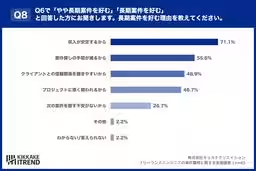
Conversely, 71.1% of participants favor longer projects due to the reliability of consistent income, indicating a clear dichotomy in project preference amongst freelancers.
5. Work Hours and Income Levels
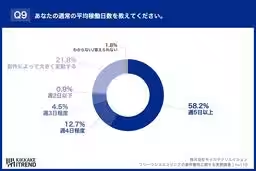
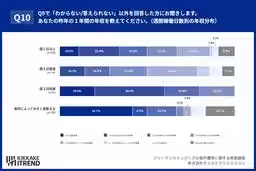
Interestingly, nearly 58.2% of surveyed freelancers operate on a full-time schedule of five or more days per week. Notably, those working full-time have a reported income predominantly ranging between JPY 3 million and JPY 5 million annually, echoing the income variances that freelancers often face.
Commitment to Freelancing
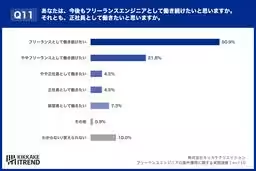
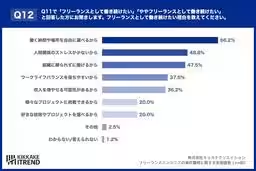
In an encouraging trend, about 50.9% of respondents not only wish to continue in their freelance roles but feel positively about their future in this sector. Many cite the liberty to choose working environments and conditions as the primary motivator for this preference. Additionally, minimized stress from interpersonal relationships and the freedom from workplace confines were reported by nearly half of the participants.
Conclusion
This survey into the realities faced by freelance IT engineers has unveiled a complex interplay between the desire for financial stability and the intrinsic benefits of independent work. It emphasizes the necessity for diversifying project acquisition methods through agent platforms, which could lead to more stable incomes while allowing freelancers to retain their desired freedoms in the workplace.

Topics Business Technology)
【About Using Articles】
You can freely use the title and article content by linking to the page where the article is posted.
※ Images cannot be used.
【About Links】
Links are free to use.