




Streamlined Process for Obtaining Environmental Load Reduction Labels in 2025
Simplified Procedures for Environmental Load Reduction Labels
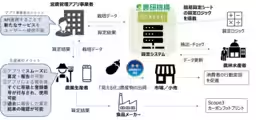
As of October 2025, the process for obtaining environmental load reduction labels, known as "Mieru Label," will become significantly easier. This advancement is the result of the integration of the Ministry of Agriculture, Forestry, and Fisheries' (MAFF) environmental load reduction visualization system with the JA ZEN-NOH's support system for agricultural operators, colloquially called the NE Support System.
This initiative aims to enable producers to efficiently convey their environmental load reduction efforts to consumers. As a first implementation of this collaboration, the JA Aizu Yotsuba rice production division's Shin-Tsurui branch has successfully acquired the Mieru Label. This initiative will also expand its integration with other agricultural management applications to further enhance the convenience for producers in obtaining the label.
About the Environmental Load Reduction Visualization System
The Environmental Load Reduction Visualization System calculates the greenhouse gas emissions and absorption quantities during the agricultural production stages, automatically assigning grades and registration numbers. Developed by MAFF in March 2025, this system has been available since June 2025 as an API for agricultural data connectivity platforms (WAGRI), enabling efficient assessments through agricultural management applications.
The Mieru Label system adheres to the “Guidelines for Evaluation and Display of Environmental Load Reduction in Agricultural Produce,” allowing users to compute emissions and contributions without needing to build custom calculation logic. This system supports producers with verified information by comparing their agricultural practices against regional benchmarks. Additionally, necessary reporting results to MAFF for the label can be effectively managed through the integrated platform.
Key Features of the System
Producers using agricultural management applications connected to the visualization system will no longer need to fill out traditional simplified calculation sheets (often in Excel) or report via email to MAFF. This advancement is expected to save time in the application process for obtaining registration numbers and reduce the reporting burden significantly.
Although users can still report via the traditional method if desired, the integrated solution simplifies the workflow and accelerates the overall process.
Integration of the Visualization System with NE Support System
The NE Support System is designed to assist agricultural cooperative members with visitation management duties by JA Group staff. Recently, the NE Support System has integrated with the visualization system through an API, developing a "Carbon Reduction Visualization Management Function" targeted at 23 agricultural produce categories, including rice and vegetables.
As part of this integration, the first case of acquiring the Mieru Label utilized the special cultivation rice from JA Aizu Yotsuba. This function organizes data from production history records, manages reporting to MAFF, and supports JA production divisions and producers in acquiring the Mieru Label. JA ZEN-NOH is gearing up for a full-scale rollout.
For more details, visit the JA ZEN-NOH Weekly article here.
Current Agricultural Management Applications Integrated With the Visualization System
As of now, the following agricultural management applications are integrated with the visualization system. If you’re interested in achieving environmental load reduction, consider utilizing these applications:
- - Kubota Corporation KSAS (Kubota Smart Agricultural System)
- Target Produce: Rice (only for greenhouse gas reduction contribution)
- - Watercell Corporation Agrinote
- Target Produce: Rice (only for greenhouse gas reduction contribution; tea assistance planned in the future)
- - JA ZEN-NOH NE Support System
- Target Produce: 23 varieties (rice and vegetables, excluding bell peppers from the current 24 varieties eligible for visualization)
For Agricultural Management Application Providers
We welcome agricultural management application providers who wish to integrate with the visualization system via API. For more information on the visualization system, please visit the following links:
- - Environmental Load Reduction Visualization System
- - What is Visualization of Environmental Load Reduction?
This collaboration marks a significant leap toward greater transparency and efficiency in reporting agricultural environmental practices. Engaging in these initiatives not only benefits producers in achieving sustainability goals but also empowers consumers to make informed choices that support environmentally friendly practices. Together, we can pave the way for a more sustainable agricultural sector.

Topics Environment)
【About Using Articles】
You can freely use the title and article content by linking to the page where the article is posted.
※ Images cannot be used.
【About Links】
Links are free to use.