



Survey Reveals Working Parents Want More Time to Rest and Sleep
The Reality of Housework for Working Parents
In recent years, the lifestyle of working parents has undergone significant changes due to a rise in dual-income households and the prevalence of remote work. While these changes bring flexibility, they also highlight ongoing challenges related to household responsibilities. A recent survey conducted by LOBBY, a housework assistance service provider based in Tokyo, has provided insight into the realities of working parents aged 20 to 40 who are currently balancing childcare and domestic duties.
The Survey
LOBBY conducted this survey from August 7 to August 8, 2025, targeting working parents in the 20 to 40 age group. The results illuminate the time spent on housework and the division of responsibilities between partners. With 330 participants, the findings shed light on how many hours are dedicated to housework and the level of satisfaction among partners regarding household chores.
Key Findings
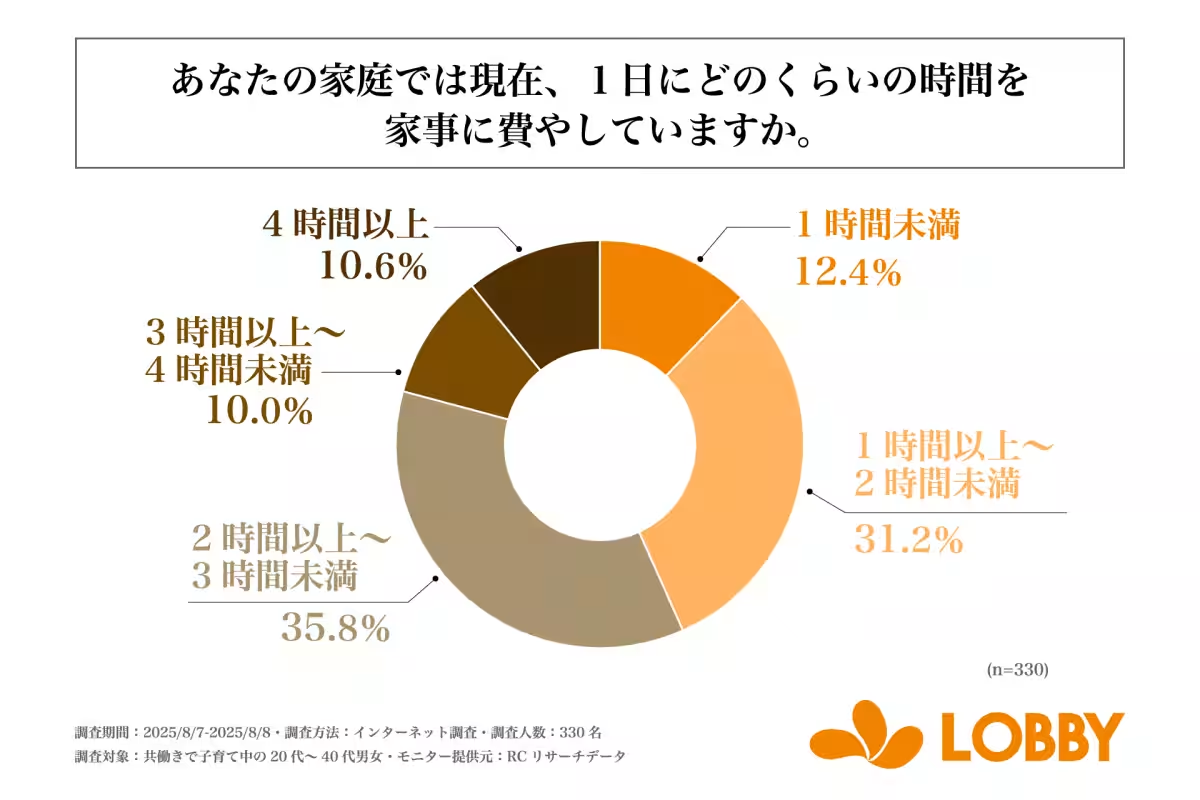
1. Significant Time Investment: Over 55% of working parents report spending at least two hours per day on housework. The survey found that approximately 35.8% dedicate between two and three hours, while 31.2% spend one to two hours daily. This equates to an alarming amount of time that could impact their overall well-being.
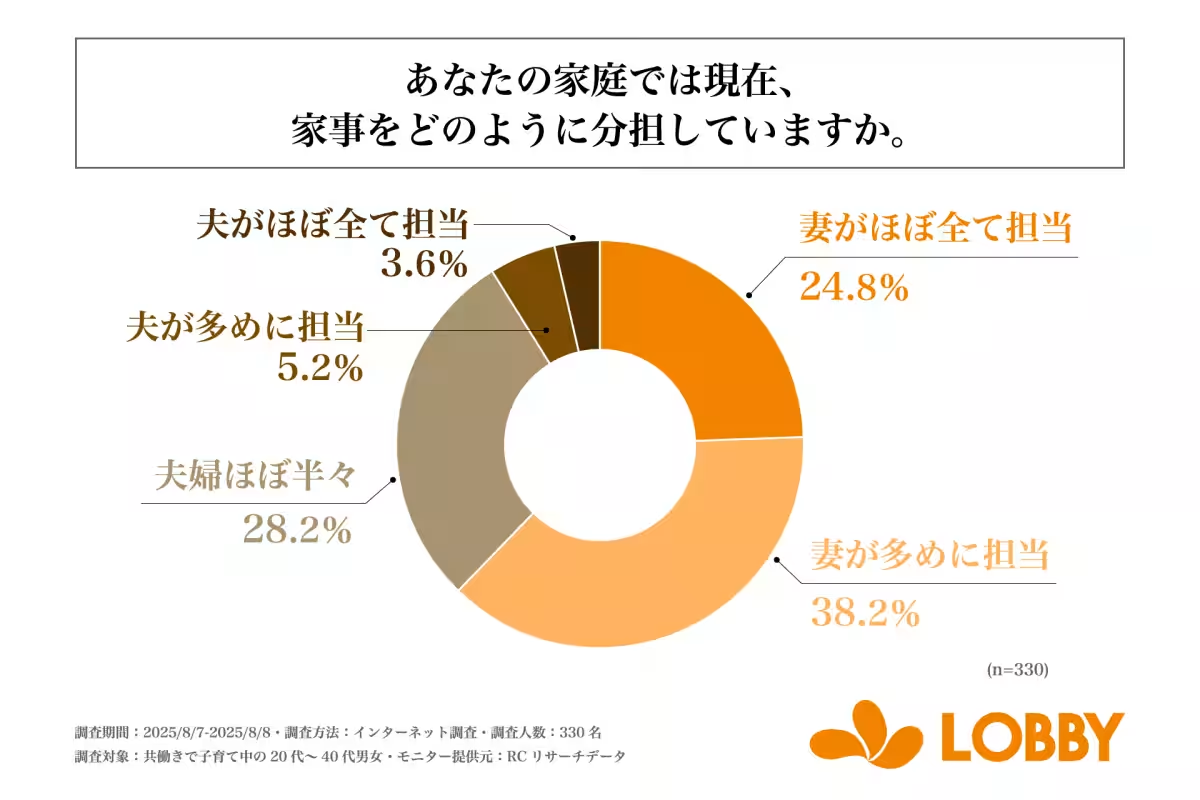
2. Uneven Workload: Among the participants, more than 60% of women take on the majority of housework. Specifically, 38.2% noted that their partners (women) do most of the chores, often leading to a significant imbalance in labor. About 28.2% of families share housework almost equally, while 24.8% noted that women handle almost all household duties.
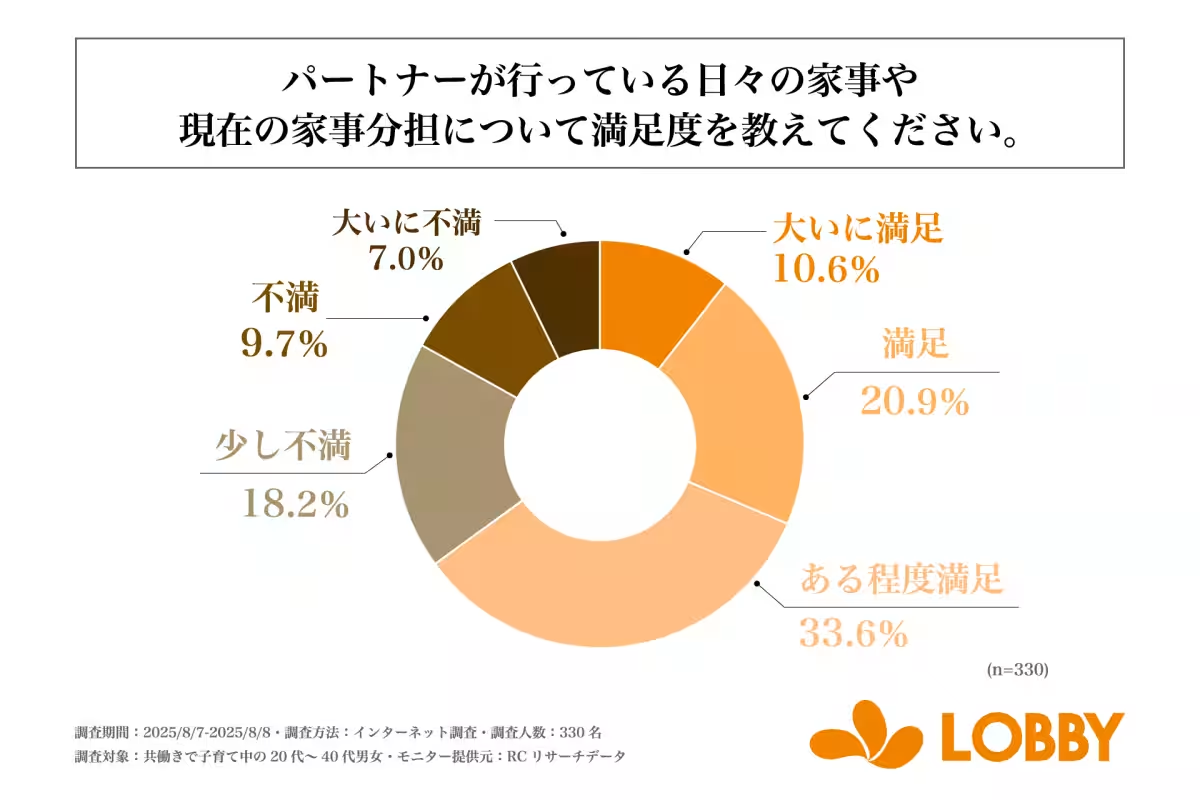
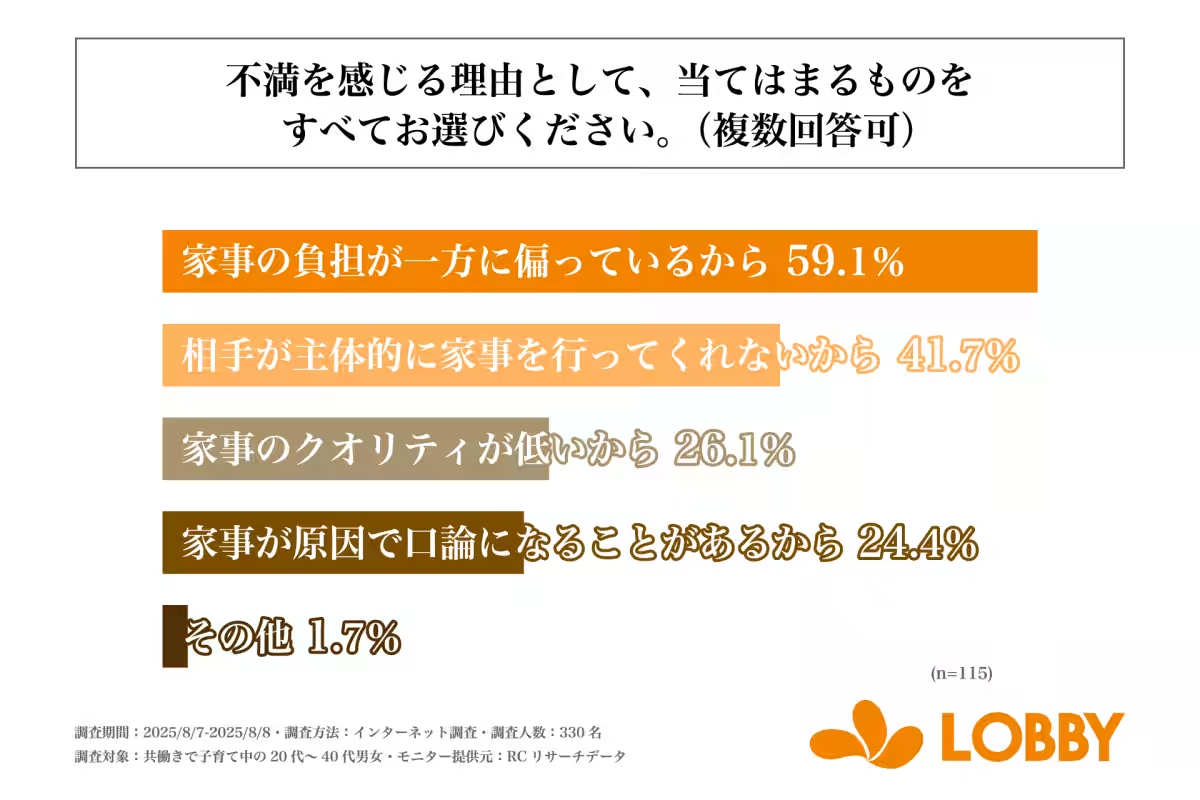
3. Partner Dissatisfaction: Approximately 35% of survey respondents expressed dissatisfaction with their partner’s contribution to housework. The reasons for this include the perception that the burden is unevenly shared, coupled with a lack of proactive participation from the partner.
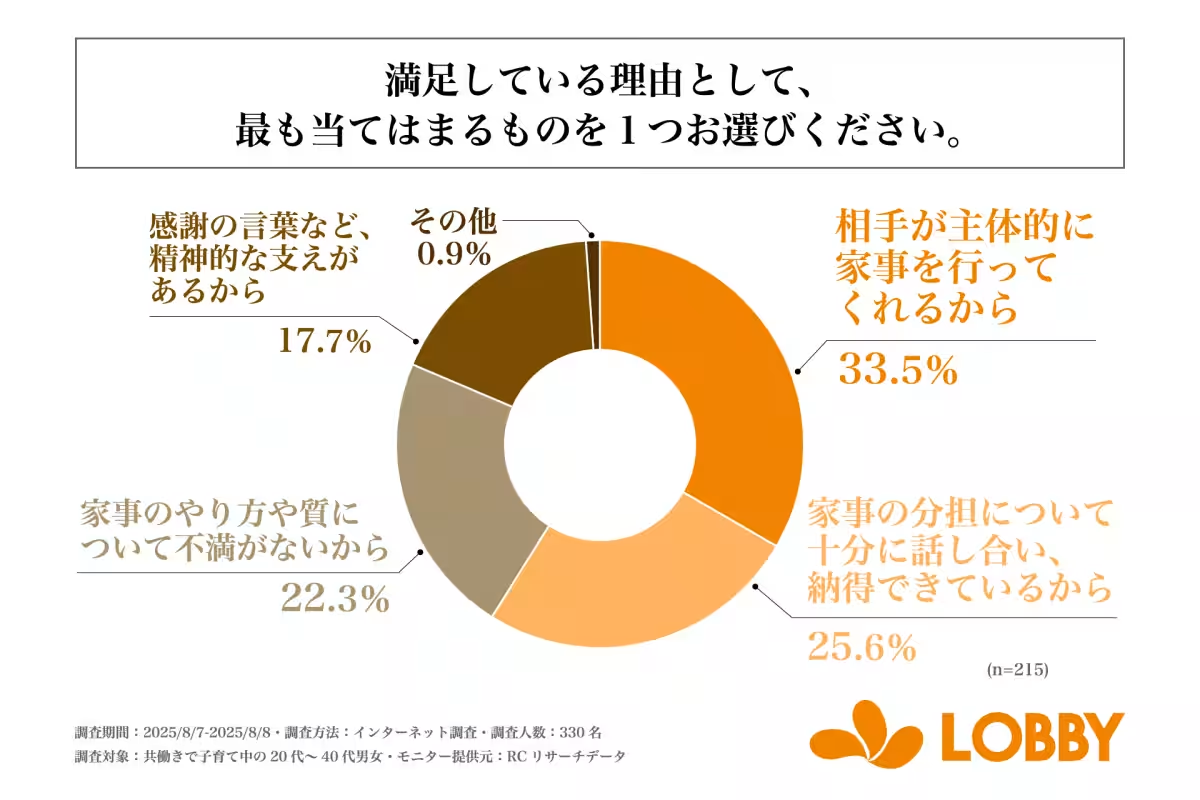
4. Satisfaction Metrics: Among those satisfied with the division of tasks, common reasons included recognizing their partner’s initiative in managing housework and having open discussions about responsibilities. On the flip side, those expressing dissatisfaction identified skewed workloads as a primary concern.
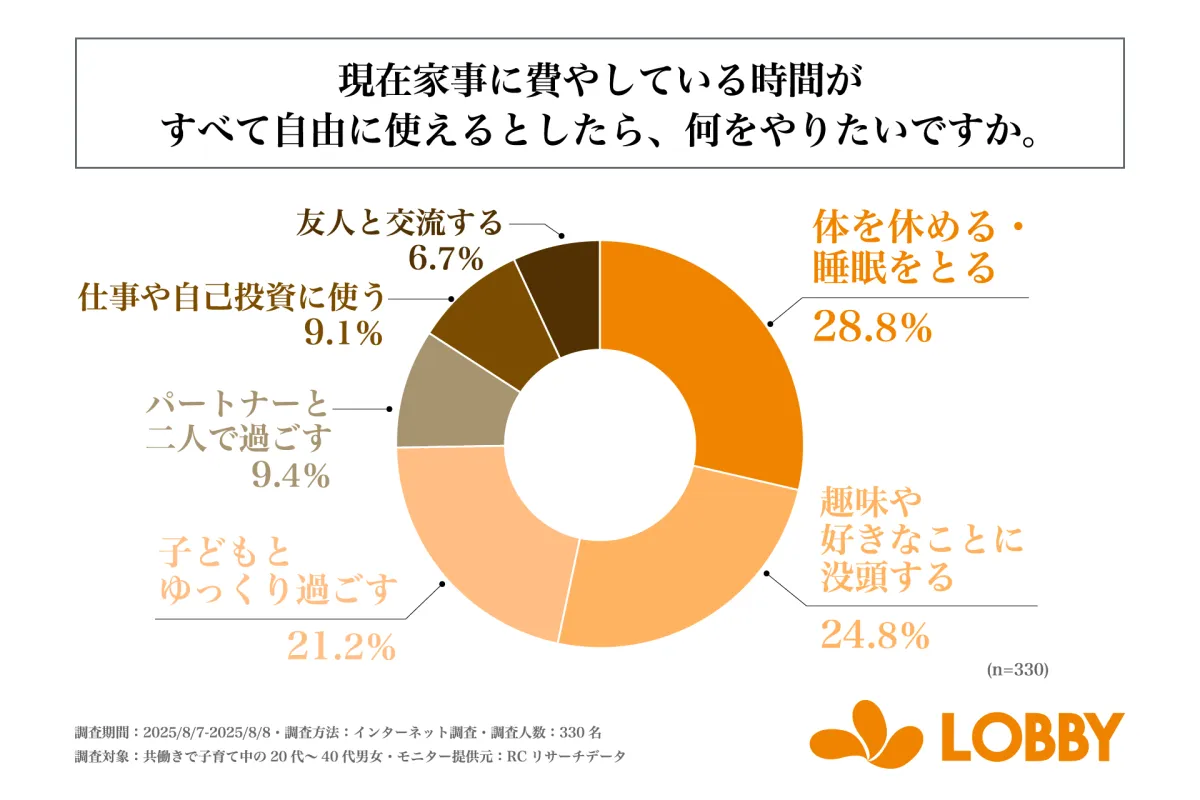
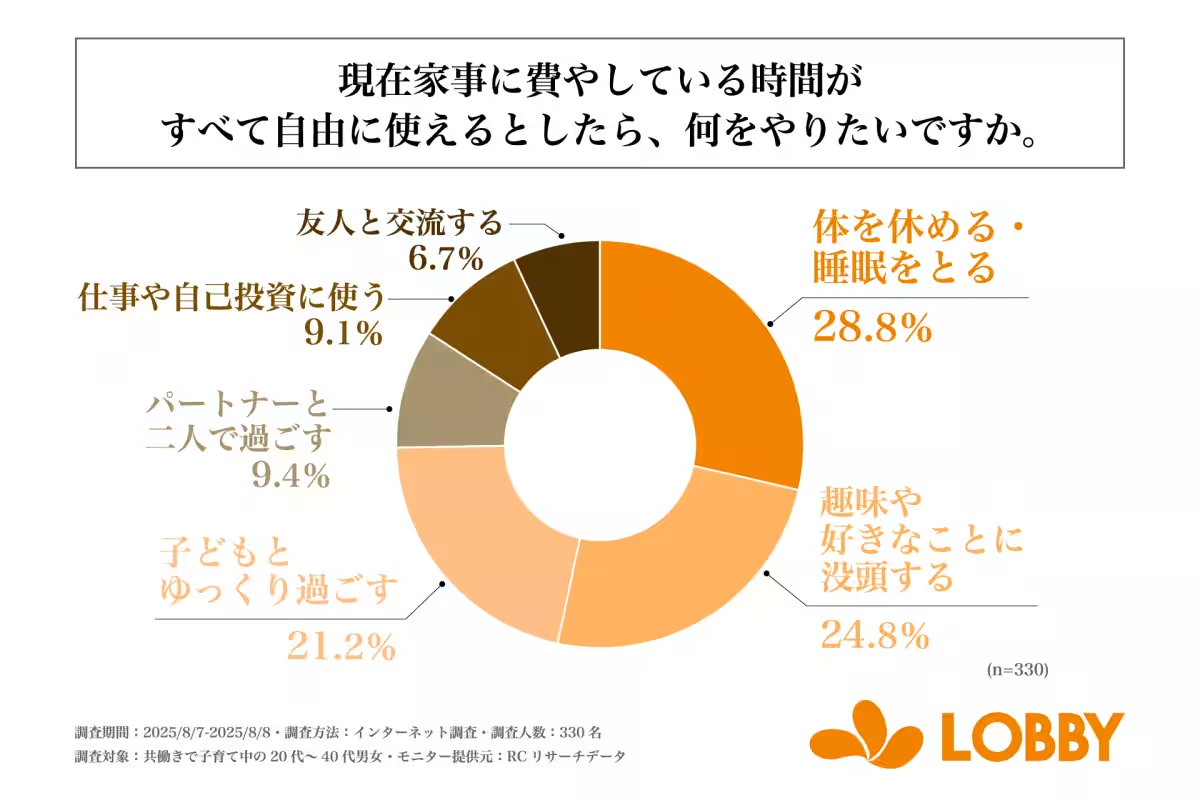
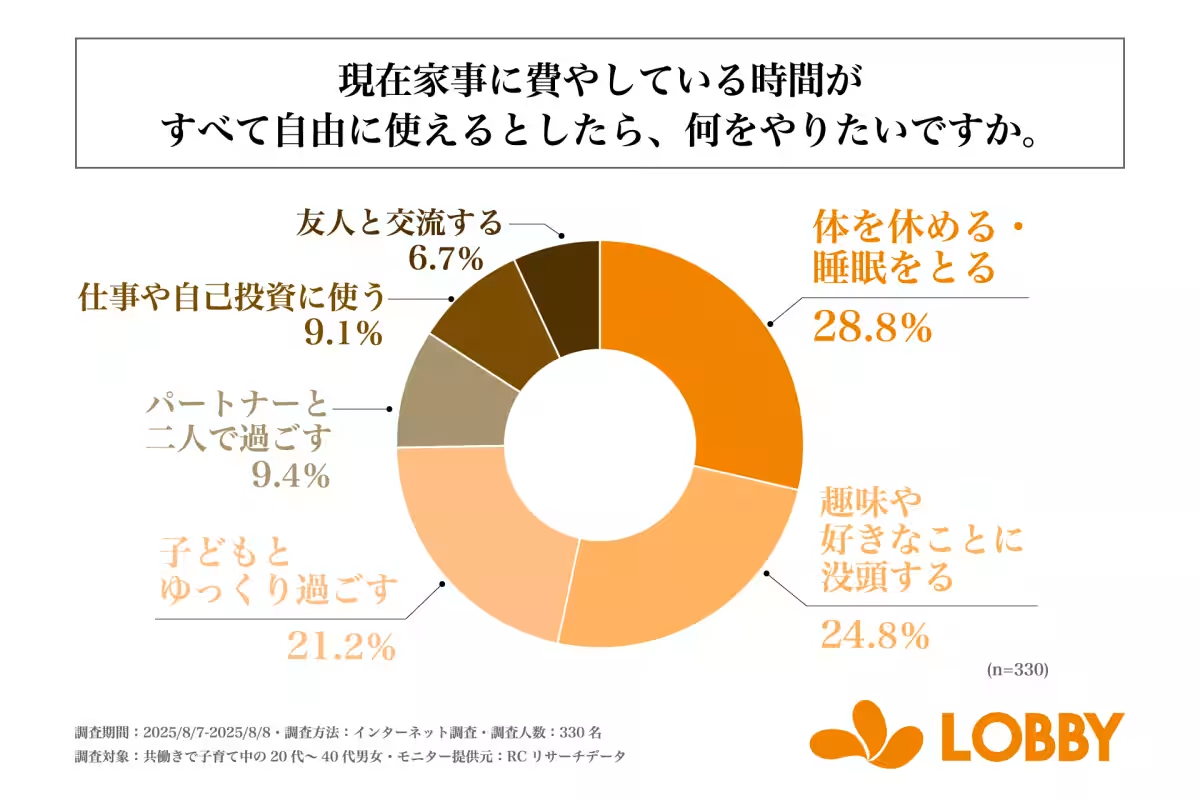
5. Desire for Rest: When asked what they would do if they could spend the time currently used for housework freely, the top answer was “rest and sleep,” with 28.8% of participants indicating this preference. Following closely were desires to engage in hobbies (24.8%) and spend quality time with children (21.2%).
Summary
The LOBBY survey underscores that over half of working parents aged 20 to 40 dedicate more than two hours a day to housework, primarily carried out by women in many households. The results also highlight that approximately 35% of these parents harbor some dissatisfaction regarding housework contributions and the division of labor in the home. The need for balance is apparent, emphasizing the necessity for services that can take on these responsibilities, allowing parents more time to rest and engage in personal interests.
Support Services for Working Parents
Recognizing these challenges, LOBBY offers housework assistance services tailored to the unique needs of dual-income families. By managing everyday tasks like cleaning, laundry, and cooking, LOBBY aims to provide working parents with the freedom to reclaim their time and enjoy a more balanced lifestyle.
For more information about LOBBY's services and how they can assist your family in managing housework, visit their website: LOBBY.

Topics Consumer Products & Retail)
【About Using Articles】
You can freely use the title and article content by linking to the page where the article is posted.
※ Images cannot be used.
【About Links】
Links are free to use.