



Hitachi and NTT Docomo Confirm Effectiveness of AI Agents for System Operations
Hitachi and NTT Docomo's Collaborative Efforts in AI
In a significant advancement towards streamlining system operations within IT infrastructure, Hitachi, Ltd. has embarked on a joint proof of concept with NTT Docomo aimed at deploying AI agents specifically designed for system operations. This initiative draws on Hitachi's extensive experience in utilizing generative AI, merging technical expertise with Docomo's reliability in managing large-scale system operations.
The Collaboration
The collaboration centers around the effective implementation of AI agents based on generative AI for Docomo’s Information System Department. Hitachi has leveraged its proven methodologies in AI deployment and has adapted its generative AI frameworks, utilizing principles of AI 'lift' and 'shift' to foster efficiency in operational tasks. The primary objective of this joint effort is to enhance the system operations ecosystem, ultimately leading to considerable improvements in business efficiency.
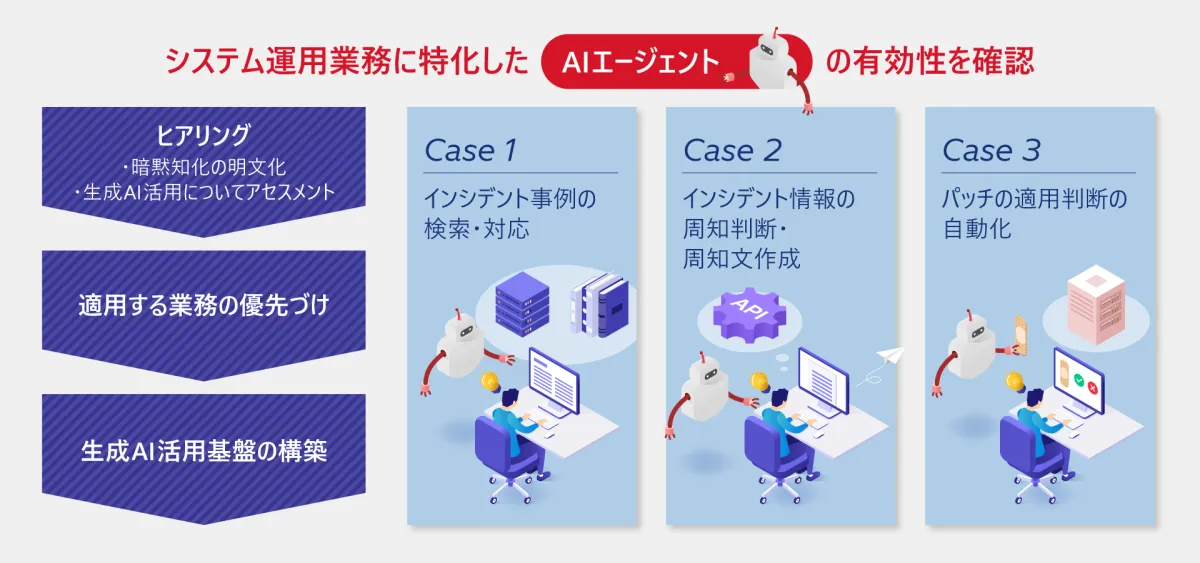
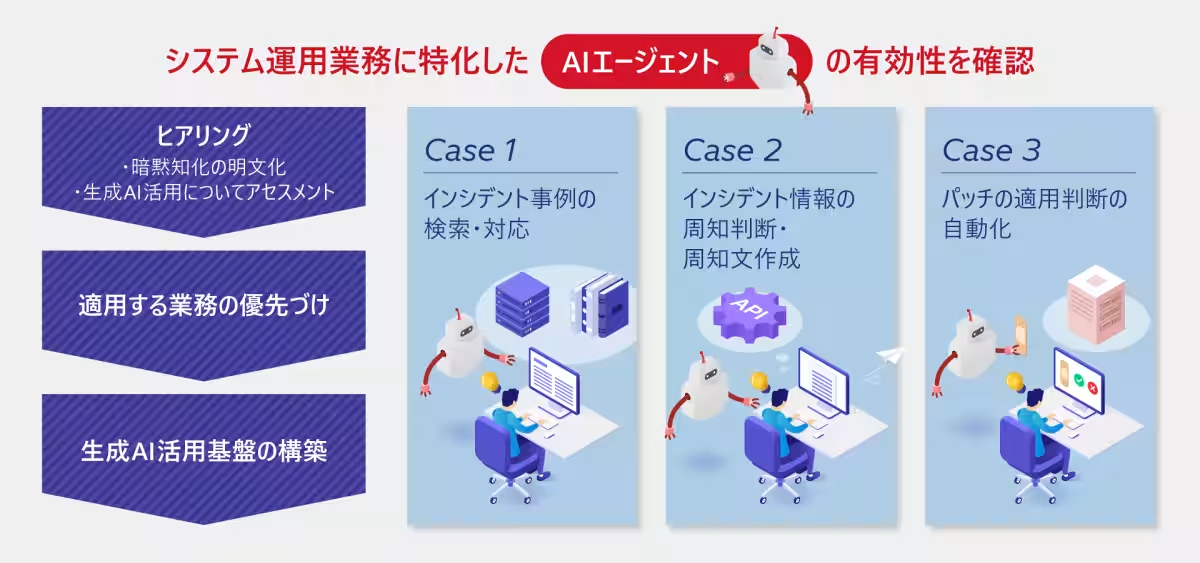
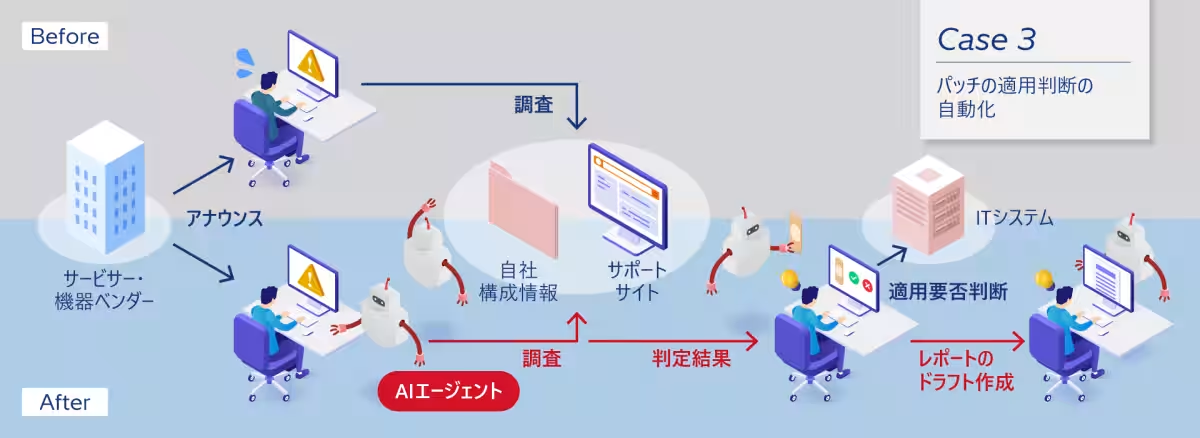
During the testing phase, the teams validated three major use cases demonstrating the AI agent's efficacy: incident case search and response, notification judgments for incident information, and automated patch application decisions. Notably, the automated patch application led to over a 50% reduction in required working hours, signifying substantial operational efficiency gains.
Addressing Industry Challenges
The backdrop of this proof of concept is rooted in the pressing challenges of labor shortages and an aging population, factors exacerbating the difficulties in managing IT systems that support societal infrastructure. Hitachi's vision revolves around innovating through AI-driven digital technologies to foster sustainable societies. As complex IT operations evolve, so does the need for comprehensive knowledge management to keep pace with regulatory and technological changes.
Hitachi's strategy focuses on preserving knowledge and improving business processes through AI, thus facilitating stable IT operations while supporting enterprises' sustainable growth. This collaborative proof of concept is a key element in achieving these ambitious goals.
Implementation and Results
The path towards effective implementation began with Hitachi conducting detailed assessments of Docomo's operational intricacies. They identified critical business processes requiring prioritization and constructed a generative AI utilization framework tailored to meet the specific needs of the Information System Department. This framework is designed to facilitate ease of generative AI use, promoting digital transformation (DX) across the organization.
The AI agents developed by Hitachi for the following use cases were rigorously tested:
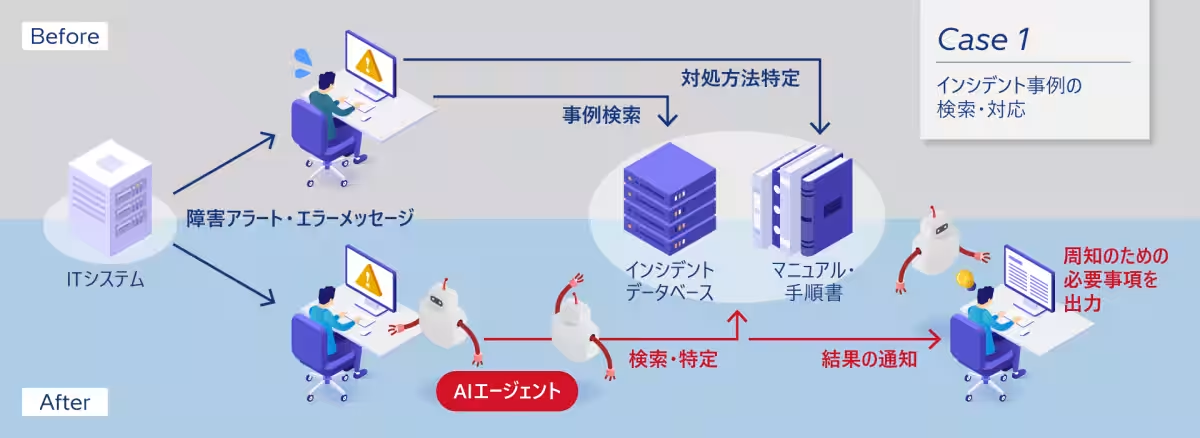
1. Incident Case Search and Response
During incident management, efficiently retrieving past case data has traditionally consumed significant time due to the overwhelming volume of available information. The new AI agent simplifies this by allowing users to input alert messages and server information instead of sifting through vast keyword searches. The results have shown that individuals could effectively review AI-generated summaries to make informed decisions quickly, thereby enhancing workflow.
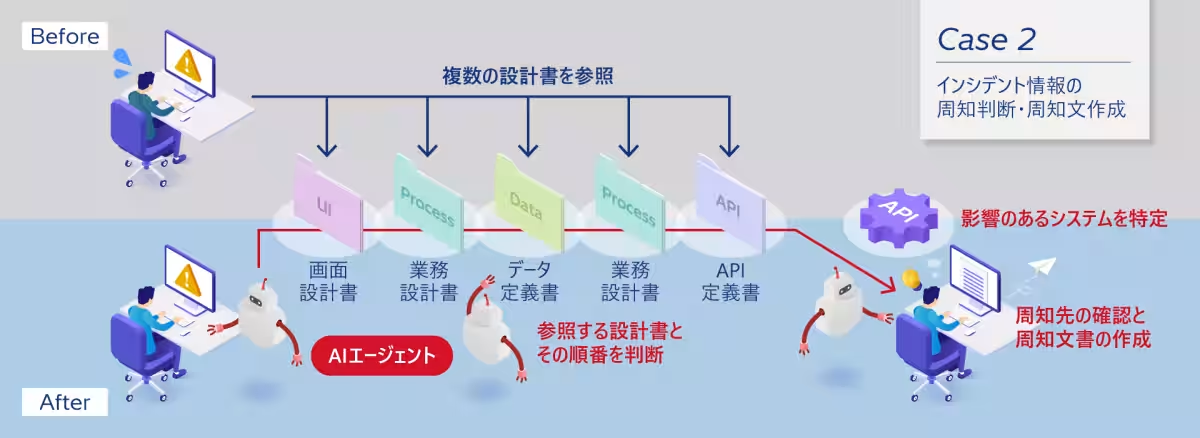
2. Notification and Documentation for Incidents
In situations requiring equipment replacement or construction work, identifying affected systems has previously required referencing multiple design documents. The AI agent streamlines this process by determining pertinent documentation and generating notification drafts automatically. Consequently, this innovation has notably decreased the time required for thorough system notifications.
3. Automated Patch Application Decisions
Patch application typically demands a meticulous examination of product data and bug reports to assess potential impacts. The AI agent developed automates the verification of product names and version particulars against known issues. This functionality allows technicians to make determinations on patch necessity more efficiently and produce draft reports summarizing necessary information. Early findings indicate that this automation has resulted in a remarkable 54% and 64% reduction in respective operational times involved in bug assessments and report generation.
Future Endeavors
Building on the achievements of this proof of concept, Hitachi is committed to expediting the operational roll-out of AI agents alongside NTT Docomo. This includes exploring additional use cases and enhancing the generative AI utilization framework to support common operational practices.
Looking ahead, Hitachi envisions deploying generative AI beyond the telecommunications sector, facilitating a transformation within various industries and elevating the roles of system engineers. The integration of this AI framework will not only promote systematic growth within the partnered entities but also contribute significantly to the stable operation of society’s IT systems and sustainable enterprise development.
Conclusion
This collaboration exemplifies how forward-thinking companies can leverage cutting-edge AI technologies to address crucial operational challenges. As Hitachi continues to develop solutions that fuse AI with traditional IT infrastructure, it paves the way for a future where intelligent systems may fundamentally reshape operational methodologies across industries.
For further information about the new initiatives and ongoing developments at Hitachi, please visit Hitachi's official website.
Topics Business Technology)
【About Using Articles】
You can freely use the title and article content by linking to the page where the article is posted.
※ Images cannot be used.
【About Links】
Links are free to use.