




Okayama University Partners with Nagase Viita for Sustainable Agriculture Research Initiative
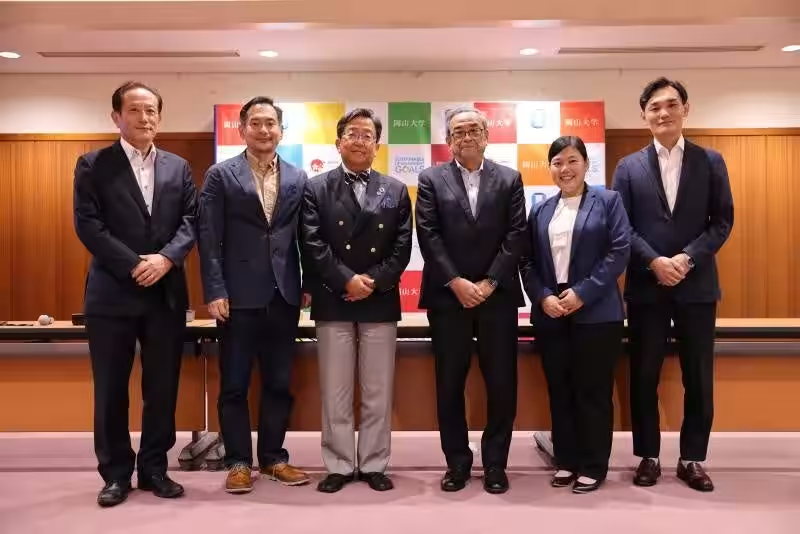
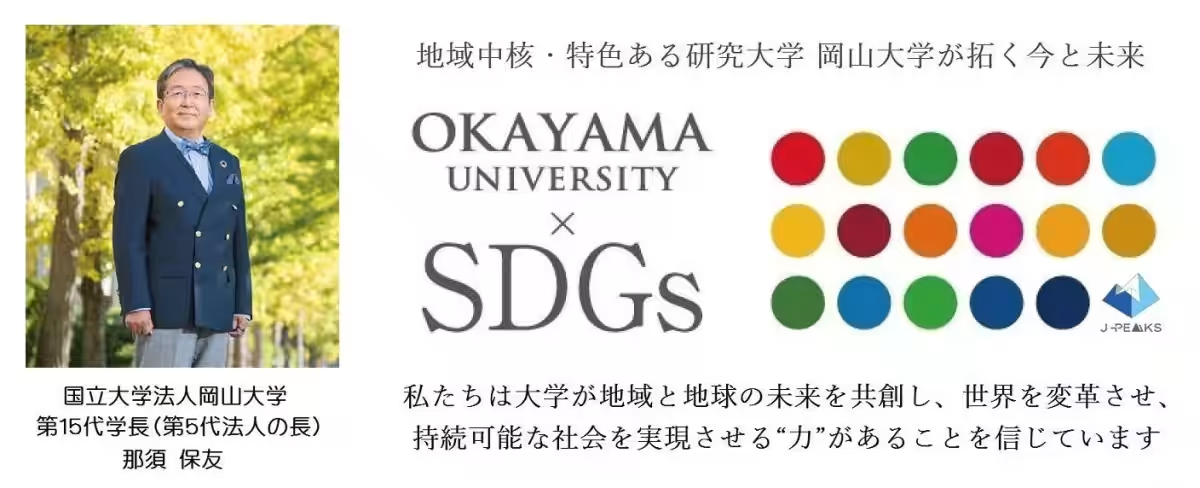
In a bid to address pressing global issues such as food security amid climate change, Okayama University, based in Japan, has officially inaugurated a collaborative research program titled "Laboratory of Glycobiology and Phytochemistry" in partnership with Nagase Viita Corporation. This initiative, announced by President Yasuto Nasu at a press conference on October 16, 2025, is set to begin on November 1, 2025, and aims to explore the potential of carbohydrates and plants in creating sustainable solutions to food production challenges.
The partnership builds on a longstanding relationship between Okayama University and Nagase Viita, formerly known as Hayashibara Company. This collaboration initiated back in August 2020 under the auspices of the "SDGs Academic-Industry Partnership Agreement," is a strategic move to leverage both institutions' joint research endeavors towards achieving Sustainable Development Goals (SDGs). Although the previous agreement concluded at the end of last year, the foundation of mutual cooperation has paved the way for this new research initiative focused on solving the global food crisis.
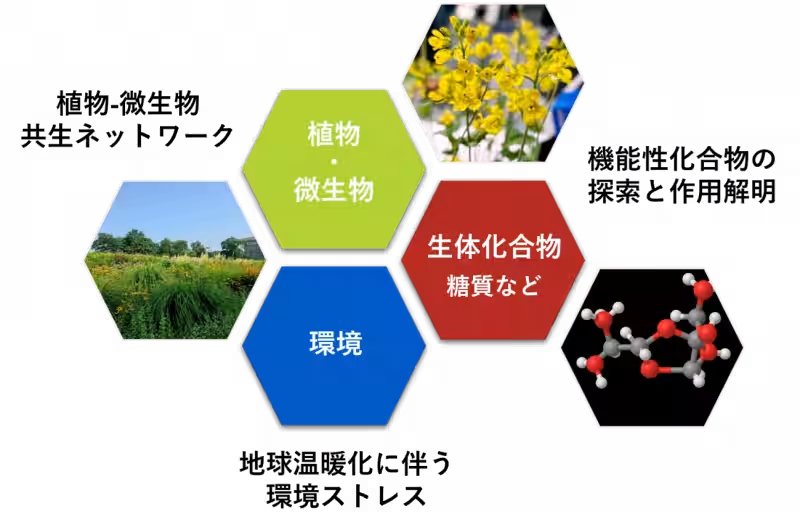
The primary focus of the Laboratory of Glycobiology and Phytochemistry will be an interdisciplinary study of the interactions among plants, microorganisms, and environmental factors, as well as the role of bioactive compounds. Researchers will seek sustainable solutions to food security challenges stemming from climate change. These efforts are expected to contribute significantly to Okayama University’s long-term vision of becoming a leading research university that co-creates a sustainable future for local and global communities.
The program will be headed by Associate Professor Wee Lee-Ya, who holds a Ph.D. in Agriculture from Okayama University. With a robust background in plant physiology, molecular biology, environmental monitoring, and biosensor technology, he is set to drive avant-garde research through this academic-industry collaboration.
Key research themes under this initiative will include:
Okayama University remains committed to fostering collaborations with the industrial sector to promote the sustainable use of plant resources, ensuring stable food supply chains, and striving for harmonization between humanity’s well-being and the planet's ecological balance.
As the research unfolds, stakeholders and the wider community are encouraged to anticipate significant contributions from Okayama University in the field of sustainable agriculture. This initiative not only aligns with the university's objectives within Japan’s Ministry of Education, Culture, Sports, Science and Technology's (MEXT) J-PEAKS program, which emphasizes excellence in solving global challenges through new technology, but also resonates with the institution’s pledge toward innovative research impacting future generations.
In summary, the Laboratory of Glycobiology and Phytochemistry embodies Okayama University's dedication to advancing sustainable practices and addressing critical environmental challenges, thus playing an integral role in regional and global research focused on sustainability. As we move forward, all eyes will be on the collaborative efforts of these two esteemed institutions, which aim to chart a path toward a more resource-efficient and sustainable agricultural future. Further updates on research outcomes and initiatives will be shared as they develop, reinforcing the important role of academia in addressing some of the world’s most pressing issues together.




The partnership builds on a longstanding relationship between Okayama University and Nagase Viita, formerly known as Hayashibara Company. This collaboration initiated back in August 2020 under the auspices of the "SDGs Academic-Industry Partnership Agreement," is a strategic move to leverage both institutions' joint research endeavors towards achieving Sustainable Development Goals (SDGs). Although the previous agreement concluded at the end of last year, the foundation of mutual cooperation has paved the way for this new research initiative focused on solving the global food crisis.
The primary focus of the Laboratory of Glycobiology and Phytochemistry will be an interdisciplinary study of the interactions among plants, microorganisms, and environmental factors, as well as the role of bioactive compounds. Researchers will seek sustainable solutions to food security challenges stemming from climate change. These efforts are expected to contribute significantly to Okayama University’s long-term vision of becoming a leading research university that co-creates a sustainable future for local and global communities.
The program will be headed by Associate Professor Wee Lee-Ya, who holds a Ph.D. in Agriculture from Okayama University. With a robust background in plant physiology, molecular biology, environmental monitoring, and biosensor technology, he is set to drive avant-garde research through this academic-industry collaboration.
Key research themes under this initiative will include:
- - Understanding the impact of environmental stress on plant-microbe interactions and their effects on plant productivity.
- - Investigating how bioactive compounds like carbohydrates can enhance plant growth and stress resilience.
- - Developing efficient screening techniques for evaluating beneficial bioactive compounds in plants.
Okayama University remains committed to fostering collaborations with the industrial sector to promote the sustainable use of plant resources, ensuring stable food supply chains, and striving for harmonization between humanity’s well-being and the planet's ecological balance.
As the research unfolds, stakeholders and the wider community are encouraged to anticipate significant contributions from Okayama University in the field of sustainable agriculture. This initiative not only aligns with the university's objectives within Japan’s Ministry of Education, Culture, Sports, Science and Technology's (MEXT) J-PEAKS program, which emphasizes excellence in solving global challenges through new technology, but also resonates with the institution’s pledge toward innovative research impacting future generations.
In summary, the Laboratory of Glycobiology and Phytochemistry embodies Okayama University's dedication to advancing sustainable practices and addressing critical environmental challenges, thus playing an integral role in regional and global research focused on sustainability. As we move forward, all eyes will be on the collaborative efforts of these two esteemed institutions, which aim to chart a path toward a more resource-efficient and sustainable agricultural future. Further updates on research outcomes and initiatives will be shared as they develop, reinforcing the important role of academia in addressing some of the world’s most pressing issues together.
Topics Other)
【About Using Articles】
You can freely use the title and article content by linking to the page where the article is posted.
※ Images cannot be used.
【About Links】
Links are free to use.