



Exploring Youth Consumption Trends: Insights from ichikara Lab's Wakamono Study Report
A Deep Dive into Youth Consumption: Insights from ichikara Lab's Wakamono Study
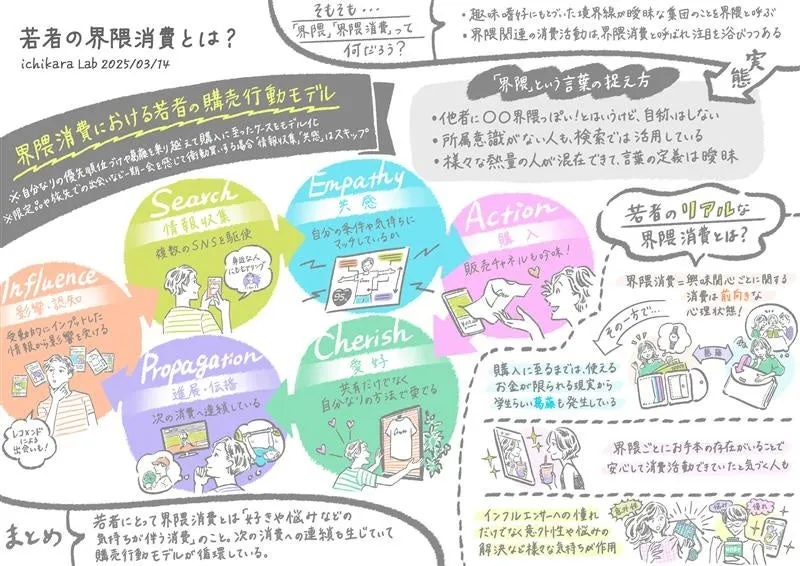
ichikara Lab, an initiative by Canon Marketing Japan, has recently unveiled its findings on youth consumption behaviors in the form of the Wakamono Study report. This particular project aims to bridge the gap between young individuals and the future, engaging in discussions that unveil new insights into how trends work in today's rapidly changing world. The latest report specifically addresses the phenomenon of 'Kaiwai consumption,' highlighting the impact it has on the purchasing behaviors of younger generations, particularly as it relates to Generation Z.
Understanding Kaiwai Consumption
The term 'Kaiwai' refers to loosely-defined communities formed around shared hobbies or interests. These communities play a crucial role in influencing the purchasing decisions of their members. During the Wakamono study, researchers tapped into insights from current university students to understand their buying trends influenced by these community affiliations. Often, a sense of belonging to a Kaiwai can directly correlate with one’s consumer behavior, especially in young people. As the report points out, to truly understand effective BtoC marketing strategies, brands must look beyond mere demographics, identifying interests and preferences that shape consumer identity.
The report outlines the observations gathered during discussions with students, one of which was a university student who shared an enlightening narrative about purchasing a vintage t-shirt that mirrored one worn by a favorite movie character. The moment of decision to buy, despite the cost, illuminates how entrenched emotions and belonging can stir behavior in Kaiwai contexts.
Innovative Consumption Models for Youth
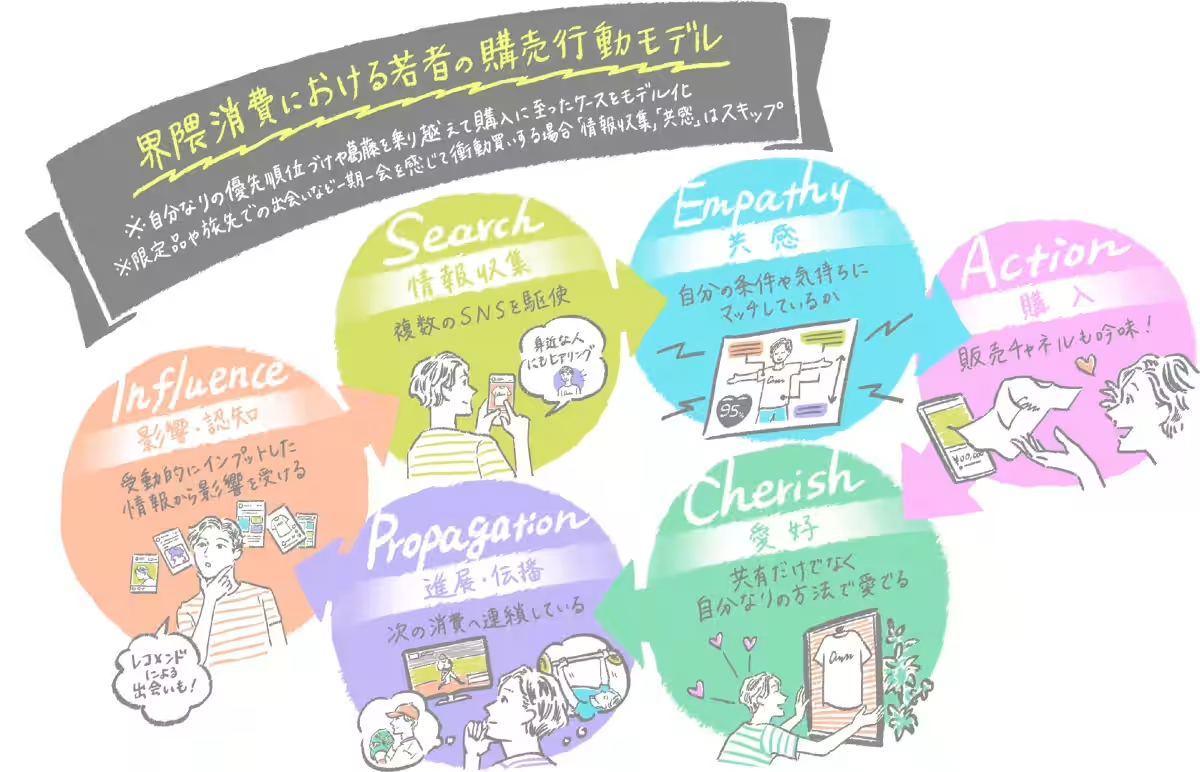
Taking the survey data into account, ichikara Lab introduces a new purchasing behavior model termed 'ISEACP,' which represents a cycle comprised of six stages: Influence, Search, Empathy, Action, Cherish, and Propagation.
1. Influence: The initial stage where potential consumers encounter products through social media or recommendations, leading to interest. Influencers play a vital role in generating this awareness.
2. Search: In this phase, consumers actively seek more information about items they find appealing, often engaging in discussions with knowledgeable peers or seeking insights from influencers.
3. Empathy: At this point, the consumer evaluates whether the product aligns with their preferences or needs, drawing on social input and personal criteria.
4. Action: When the decision is made, consumers assess various purchasing channels for the best deal.
5. Cherish: Post-purchase, satisfaction leads to pride in the acquisition, often shared on social media or displayed prominently in their lives.
6. Propagation: Finally, a sense of community can lead to further purchases, as consumers feel prompted by friends or associations to continually engage with the current interests.
The Sentiments of Young Consumers
The study delves into the nuanced emotional landscapes of young consumers undergoing what was referred to as 'Kaiwai consumption.' Notably, it was discovered that purchases often accompany feelings of admiration or aspiration, leading to a more welcoming attitude towards spending. However, respondents also expressed their hesitance, citing fixed budgets and conflicting priorities, especially when balancing social interactions and financial limitations.
Despite these constraints, the data suggests a pattern where buying leads to additional consumption, a sign of a more optimistic outlook on youth engagement in market activities than conventionally perceived. Today's young consumers exhibit a tendency to perform extensive research before making a purchase, often culminating in impulsive buys once trust in a product or community is established.
Bridging Generational Gaps through Modern Consumption
Today's consumer environment, heavily influenced by social media, has transformed how young people interact with brands and products. The availability of vast amounts of information combined with relatable influencer content fosters an enthusiastic, albeit cautious, consumer mindset. Students initially skeptical about engaging in 'Kaiwai consumption' realized during discussions that a substantial portion of their spending patterns was indeed tied to it, revealing the intricate ways communities affect purchasing power and identity.
In summary, ichikara Lab’s findings pose an intriguing paradigm meant to redefine how brands engage with younger demographics. Understanding the 'Kaiwai consumption' model isn't merely about promoting products; it’s about engaging with integral community identities that influence purchasing, social status, and lifestyle in today's youth culture.

Topics Consumer Products & Retail)





【About Using Articles】
You can freely use the title and article content by linking to the page where the article is posted.
※ Images cannot be used.
【About Links】
Links are free to use.