



A New Era in Pest Control: Enhancing Efficacy with Ozone
Pioneering Pest Control with Ozone
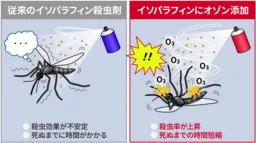
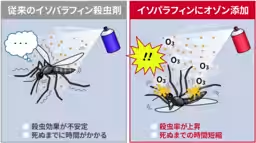
In a significant advancement in pest management, researchers from the National Institute of Advanced Industrial Science and Technology, led by Yoshitomo Kikuchi, have discovered that combining ozone with isoparaffin significantly enhances its insecticidal properties. This discovery promises to offer an environmentally friendly alternative to the traditional use of chemical pesticides, which pose various risks not only to pests but also to human health and the ecosystem.
The Need for Innovative Solutions
The reliance on chemical pesticides has been under scrutiny due to their immediate effectiveness against targeted pests and the adverse effects they can have on non-target organisms. Continuous use of these chemicals leads to increased resistance among pest populations, emphasizing the need for alternative methods that minimize ecological impact while maintaining effectiveness. Physical insecticides, such as those that suffocate insects by blocking their breathing spiracles, have been used alongside chemical options, but their lower efficacy and slower action rates have limited their widespread adoption.
The research team's innovative approach utilizes ozone, known for its common uses in disinfection, combined with isoparaffin, a substance recognized for its high safety profile for humans. Isoparaffin has been historically employed for its ability to obstruct insect spiracles, but its use dwindled with the rise of chemical pesticides due to concerns over its lower efficacy. However, this new study sheds light on the potential of ozone to enhance isoparaffin’s action, making it a promising candidate for effective pest management solutions.
Key Findings of the Research
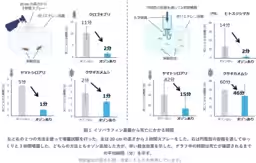
Through extensive experimentation, the researchers noted an impressive increase in the insecticidal effectiveness of isoparaffin when ozone was added. Spraying experiments targeting common pests like the German cockroach, Formosan subterranean termite, Asian tiger mosquito, and brown marmorated stink bug illustrated that adding ozone could enhance the mortality rate of these pests dramatically compared to using isoparaffin alone. For example, the mortality rate for the termite soared from 60% to 100%, while that for the stink bug increased from 80% to 100%. Even in instances where ozone was present, the time it took for pests to succumb to suffocation was reduced significantly—up to seven times faster for additional ozone-treated isoparaffin compared to its standalone counterpart.
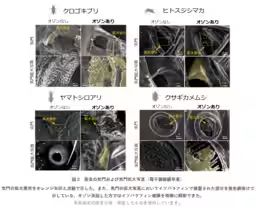
The research involved using scanning electron microscopy (SEM) to observe the spiracles of these insects, revealing that the presence of ozone increased the coverage of isoparaffin around and inside the spiracles, enhancing the efficacy of the suffocation process. The findings suggest that the interaction between ozone and isoparaffin is a key factor in improving insecticidal activity, paving the way for its application in public health and agricultural pest management without the environmental drawbacks of traditional chemicals.
Towards Sustainable Pest Control
The pressing challenge remains to implement this developed solution for pest control effectively. As the world seeks sustainable agricultural practices and safer pest management solutions, the combined use of isoparaffin and ozone has the potential to target significant pests, including mosquitoes and cockroaches, as well as agricultural pests like stink bugs. Ozone and isoparaffin, both safe for humans, position this development as a forward-thinking strategy in pest control that aligns with global sustainability goals.
The details of this groundbreaking research will be published on October 28, 2025, in Scientific Reports, contributing further knowledge to the field of pest management and encouraging ongoing innovation in creating eco-friendly pest control methods.
Conclusion
As pest resistance to traditional insecticides continues to rise, this research underscores the importance of finding innovative, low-environmental-impact solutions for pest control. By harnessing ozone's unique properties, researchers are forging a path toward more sustainable and effective ways to manage pests, promising to minimize ecological footprints while addressing public health concerns.
For more information, please visit the official press release here.
Topics Other)
【About Using Articles】
You can freely use the title and article content by linking to the page where the article is posted.
※ Images cannot be used.
【About Links】
Links are free to use.