




Pioneering Innovative Cell Lines for Sustainable Eel Production: Saving the Japanese Eel?
Pioneering Cell Lines for Japanese Eel Production
In a groundbreaking achievement, a collaborative research team from the Tokyo Metropolitan Industrial Technology Research Institute (TMI) and Kitasato University has succeeded in establishing cell lines capable of continuous production of fat derived from the Japanese eel (Anguilla japonica). This revolutionary advancement holds significant implications for both culinary tradition and species conservation efforts, as the Japanese eel faces the threat of extinction due to declining populations and overfishing.
Research Highlights
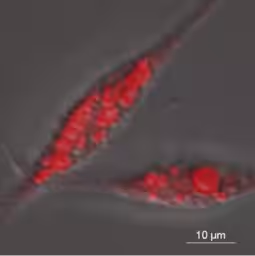
- - Creation of Fat Precursor Cell Lines: The research group has successfully established three types of spontaneously immortalized cell lines (JE-KRT224, JE-EK9, JE-F1140) derived from the muscle tissue of the endangered Japanese eel, capable of sustained cultivation.
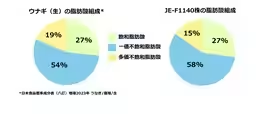
- - Fat Profile Similarity: Analyses confirm that the fat produced by these cells closely mirrors that of commercially available farmed eels. This similarity fosters potential applications in developing authentic cell-cultured eel meat.
- - Future Applications: The combination of these newly established cell lines with existing muscle cell lines opens up new avenues for creating cell-based eel meat that retains the unique taste and texture associated with traditional eel dishes.
Background of the Research
Cellular agriculture represents a revolutionary approach to food production, utilizing cells obtained from animals or fish to develop meat alternatives while reducing environmental impact and improving animal welfare. Although significant advancements have been made in culturing cells from terrestrial animals like cows and pigs, the progress in fish cell line development has been disappointingly sparse.
In Japan, the Japanese eel is a high-value fish deeply embedded in culinary culture, but its population decline has led to its designation as an endangered species. The primary supply method involves capturing wild eel larvae for aquaculture, which poses sustainability challenges and price fluctuations due to dwindling resources. Hence, the development of


Topics Consumer Products & Retail)
【About Using Articles】
You can freely use the title and article content by linking to the page where the article is posted.
※ Images cannot be used.
【About Links】
Links are free to use.