



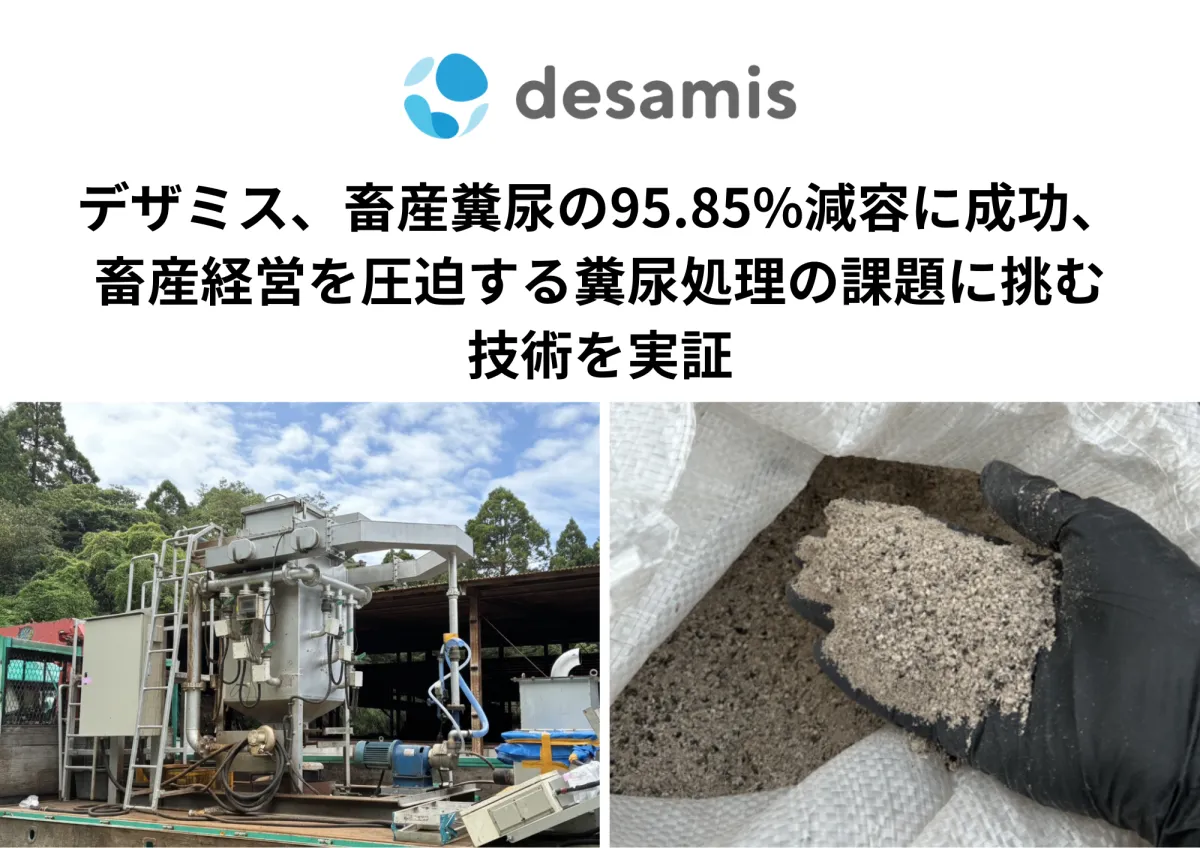
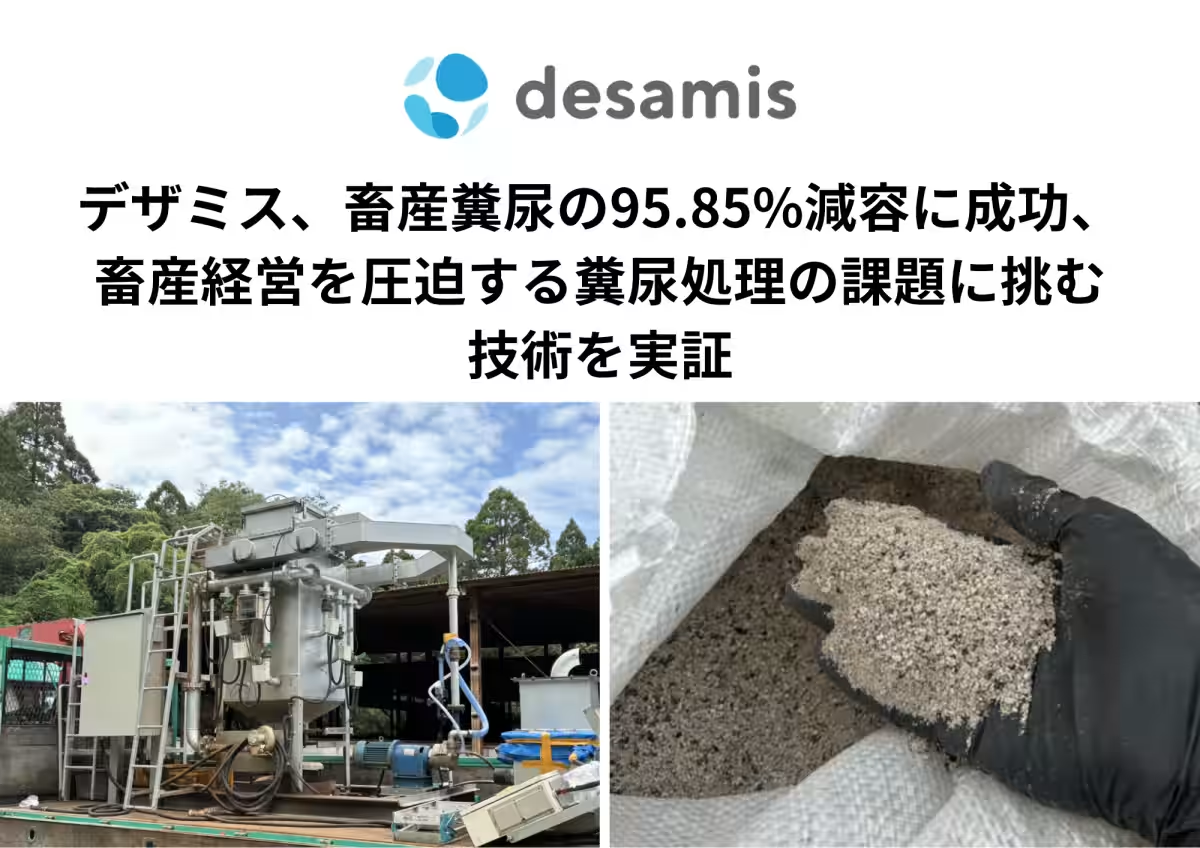
Dezamis Achieves 95.85% Reduction in Livestock Manure Volume to Tackle Farming Challenges
Dezamis Tackles Livestock Waste Management Challenges
Dezamis Inc., headquartered in Koto, Tokyo, led by CEO Koji Seike, made significant strides in livestock waste management by successfully reducing manure volume by an astonishing 95.85% through their Oxidative Decomposition Device (OHD).
Background on Waste Management in Livestock Farming
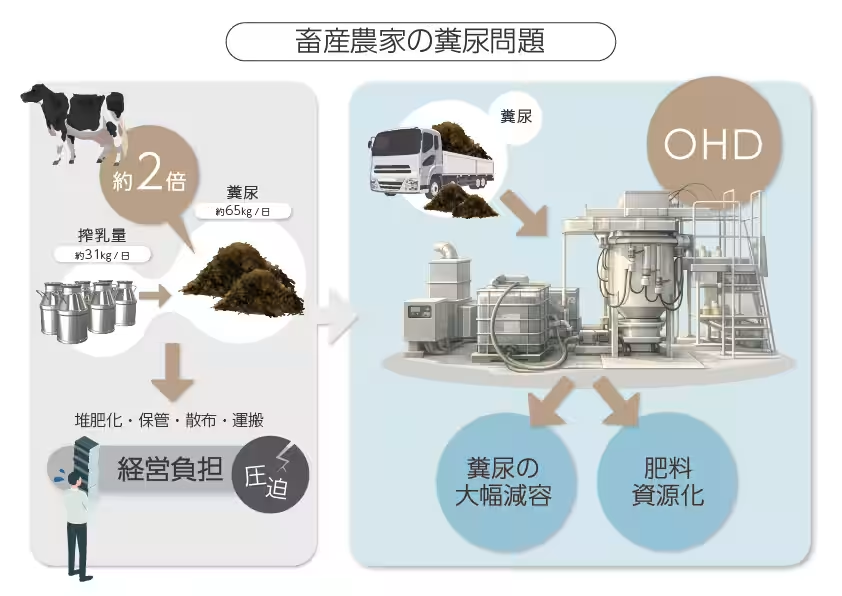
The daily management of livestock waste presents a serious challenge for farmers due to the sheer volume produced. For instance, a single dairy cow generates about 65 kg of manure each day—twice its daily milk yield. The processes of composting, storage, and transportation not only impose heavy burdens on land and resources but also require legal compliance, which increases operational costs for farmers.
This recent experiment conducted in Kagoshima from October to December 2025 demonstrated how the OHD can potentially alleviate these burdens. By achieving high compression rates, arrangements for waste storage and transport could be significantly reduced, leading to cost savings and decreased labor.
Utilizing Livestock Byproducts for Improved Efficiency
The successful OHD tests did more than just reduce waste; they also highlighted the potential for the resultant porous ceramic powder to be converted into fertilizers. Analysis showed the presence of phosphorus (14.54%) and potassium (10.82%), crucial components of fertilizer, suggesting a dual benefit not only in waste reduction but also in supporting agricultural sustainability.
Japan heavily relies on imported fertilizers containing nutrients like phosphorus and potassium. By recycling these elements from livestock excrement domestically, Japan can enhance its food security and stabilize its self-sufficiency.
Currently, livestock farming in Japan produces nearly 150 million kilograms of waste daily, with a significant portion coming from cattle. Globally, the number of cattle approximates 1.5 billion, underscoring that manure management is a widespread issue across nations, not just in Japan. This innovative approach could thus contribute significantly to both environmental management and operational sustainability in global livestock farming.
Dezamis's Vision for Sustainable Agriculture
This breakthrough in manure processing technology is poised to transform the livestock farming industry. Dezamis aims to fully commercialize the OHD by 2026, expanding the benefits observed in Japan's farming practices to the international market. Their development efforts align with global pushes toward reducing environmental impacts while promoting resource recycling in agriculture.
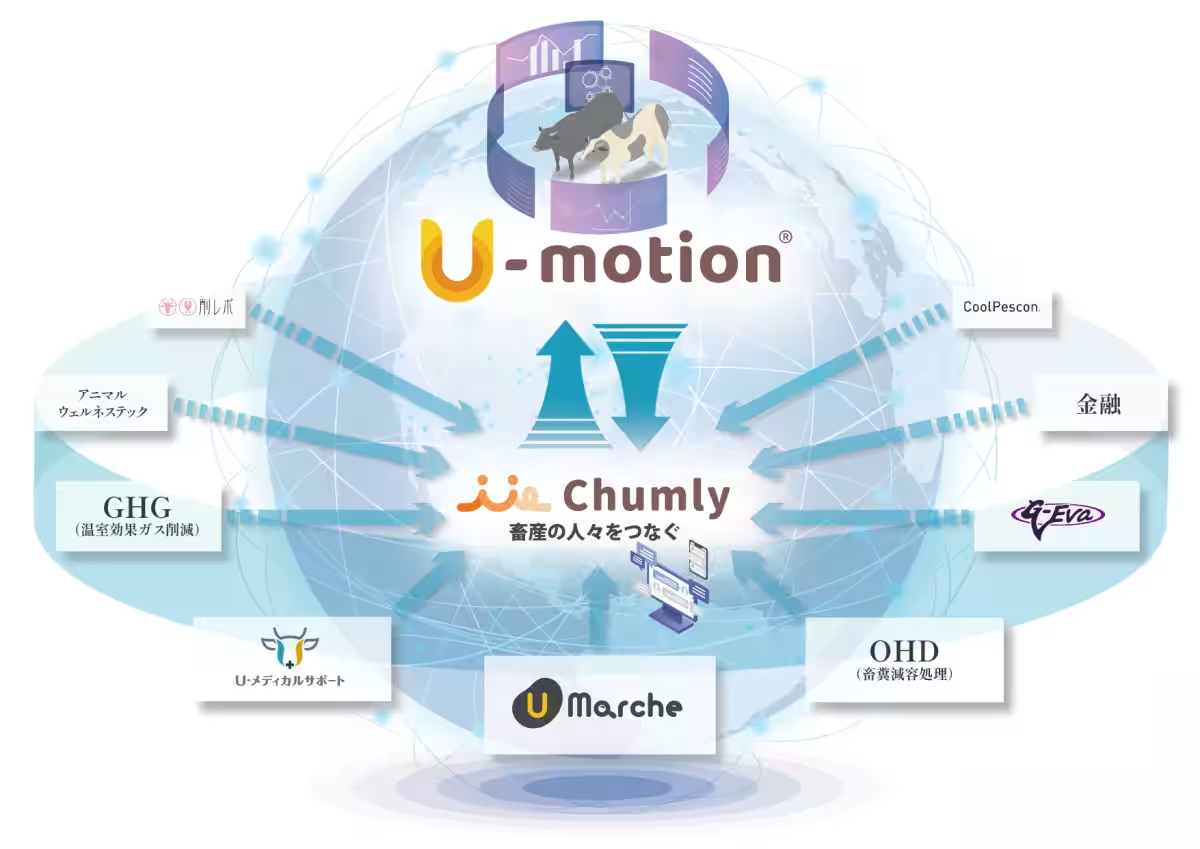
Dezamis is committed to becoming a leader in agricultural technology. Since 2020, the company has sought to bridge data usage with practical farm management through the U-motion Platform, integrating data across various operational areas—like livestock management, veterinary services, and procurement—into a cohesive support system. They now combine this data strategy with innovative hardware solutions, addressing structural challenges related to waste processing and environmental impact.
Conclusion
With their advanced technologies, Dezamis aims to reinforce their position as a partner for farmers, utilizing AI and data to enhance business decision-making and derive further value from precision farming initiatives. Their ongoing commitment to enhancing agricultural efficiency partners closely with essential goals of sustainability, promising a brighter future for farming and food security in Japan and beyond.

Topics Consumer Products & Retail)
【About Using Articles】
You can freely use the title and article content by linking to the page where the article is posted.
※ Images cannot be used.
【About Links】
Links are free to use.