



How Economic Fluctuations Shape Gig Work Dynamics: Insights from Bank Data
Understanding the Impact of Economic Changes on Gig Work
The landscape of employment has been dramatically altered due to economic fluctuations, particularly during the pandemic. A recent study by Waseda University, led by professors Sachiko Kuroda and Koichiro Onishi, has revealed critical insights into who engages in gig work, focusing on parameters like bank account data to identify trends influenced by economic variance. The researchers utilized anonymized banking data from Mizuho Bank to measure how personal attributes and financial circumstances have shaped the gig economy's workforce.
Insights from the Research
The study highlights the demographic composition of gig workers, mainly food delivery personnel, who are primarily young men lacking immediate financial liquidity. It was found that over 70% of those who entered gig work had less than 100,000 yen in their bank balances before the pandemic. This indicates that gig work serves as a short-term income supplement, compensating for temporary financial constraints.
Interestingly, as the economic downturn deepened during the COVID-19 pandemic, new segments of the population, including women and older adults with slightly better financial stability, began participating in gig work, showcasing a shift in the worker demographic.
The Role of Gig Work During Crises
The research underscores gig work's role as a buffer in times of financial instability. For many, these short-term jobs can mean the difference between financial security and hardship. In the early stages of establishing their gig work, a significant number of individuals experienced a steady decline in their savings, which correlates directly with the trends in gig employment. Notably, the study revealed that many initially worked for short durations, with a dropout rate of 30-40% within the first month. This suggests that while gig work provides emergency income, it is not a long-term solution for most.
Moreover, the pandemic created a more diverse gig workforce, expanding participation into demographics previously underrepresented in gig roles. The findings reveal not just who is working but also the economic pushes that compel individuals toward gig employment during crisis periods.
Methodology and Findings
Using the anonymized banking data spanning from 2016 to 2021, the research team effectively mapped individuals' financial status before and after they began gig work. They identified gig workers through deposits from gig platforms, assessing their financial behavior over time. The results illuminated a concerning trend: many gig workers, particularly in food delivery, had displayed declines in savings for months leading up to their involvement in gig work.
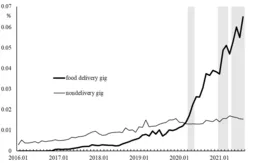
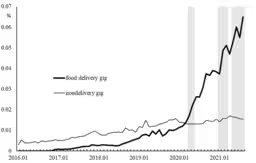
The gig economy in Japan—particularly in food delivery—has seen exponential growth, contrasting earlier studies reliant on surveys and tax data, which could not convincingly correlate economic shifts with employment patterns. By leveraging bank account trends, this study provides a more dynamic understanding of how external economic conditions directly impact labor supply decisions.
Societal Implications of the Research
The implications of these findings extend beyond academia. The study not only provides insights into individual financial behaviors but also highlights the need for more comprehensive policies regarding labor and social insurance systems, especially for those in precarious employment situations. As gig work becomes increasingly recognized as a viable employment strategy, it raises questions about social support structures and how they are adapting to changing work environments.
Furthermore, the research establishes a methodology that can aid in the understanding of economic vulnerability and employment behavior in fluctuating economic conditions. The observations are expected to inform future discussions about labor supply strategies, pension schemes, and broader employment policies.
Future Directions
While the study focused on food delivery services, the researchers recognize the pressing need for further exploration into other areas of gig work such as caregiving and education. The gaps in older adults’ participation, particularly in bridging the labor shortage face in many sectors, also offer a rich avenue for exploration.
The research notably suggests that there is potential for gig work to serve as a flexible employment option for older adults who wish to work at their own pace, presenting an alternative employment solution in a rapidly aging society. Facilitating such options could enrich the labor market while simultaneously providing older adults with fulfilling employment opportunities.
Researcher Reflections
Professors Kuroda and Onishi emphasize the need to visualize how emerging work practices like gig employment can be integrated into our society as viable options that address income needs during economically challenging times. They aim to assist policymakers in rethinking social service frameworks to accommodate the needs of flexible work arrangements, ultimately fostering a more inclusive economy.
In summary, this groundbreaking study sheds light on the intersecting relationship between economic variables and gig work, providing valuable insights that will undoubtedly influence labor and social policies in Japan and beyond.
Topics Business Technology)
【About Using Articles】
You can freely use the title and article content by linking to the page where the article is posted.
※ Images cannot be used.
【About Links】
Links are free to use.