



High Cocoa Chocolate Consumption Linked to Lower Depression in Older Adults in Nagoya
Study on High Cocoa Chocolate and Depression in Older Adults
Recent research has uncovered a fascinating relationship between high cocoa chocolate consumption and mental health among older adults in Nagoya, Japan. Conducted by Meiji Co., Ltd. and the National Center for Geriatrics and Gerontology, this study involved a cross-sectional survey of Japanese residents aged 70 and above, focusing on their chocolate eating habits and depression levels.
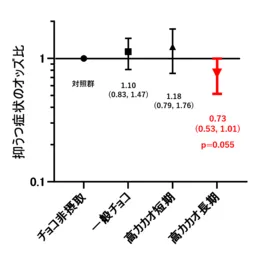
The findings were noteworthy: older adults who consumed high cocoa chocolate—that is, chocolate with a cocoa content of 70% or more—at least once or twice a week for over two years had significantly fewer depressive symptoms compared to those who rarely or never consumed chocolate. This correlation raises intriguing possibilities for using dietary habits as a way to enhance mental health in aging populations.
The Study in Detail
The research surveyed a total of 3,910 older adults from various neighborhoods in Nagoya, employing direct questionnaires along with functional capability assessments to ascertain how their chocolate consumption patterns intertwine with overall mental health. Eventually, 2,957 participants were included in the analysis, categorized into four distinct groups based on their chocolate consumption habits:
1. Those who rarely eat chocolate.
2. Individuals who consume regular chocolate but not high cocoa varieties.
3. Participants who eat high cocoa chocolate once or twice a week for less than two years.
4. Individuals who have consumed high cocoa chocolate once or twice a week for over two years.
Methodology
The study adopted multiple assessments, including the Geriatric Depression Scale (GDS-15), to monitor depression levels. Participants were analyzed while taking into account various influencing factors such as age, gender, lifestyle choices, pre-existing health conditions, and cognitive function.
Among the respondents, around 1,000 reported consuming high cocoa chocolate at least weekly. Of these, 727 individuals (approximately 24.6% of the surveyed group) maintained this habit for over two years. The low percentage of depressive symptoms, found predominantly in the long-term consumers of high cocoa chocolate, roughly ranged between 8.3% and 13.2% across all four groups.
Findings
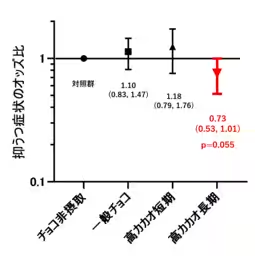
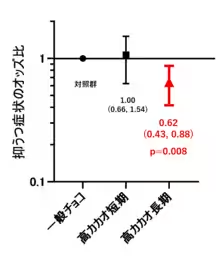
The results were compelling, revealing that the long-term high cocoa chocolate group had a decreased likelihood of reporting depressive symptoms. Detailed statistical analyses—including logistic regression—demonstrated that even after adjusting for various factors, this group exhibited fewer depressive symptoms compared to those who did not consume chocolate at all, with an odds ratio suggesting a 27% potential decrease in depression likelihood. Additional analyses further underlined that when compared with general chocolate consumers, long-term high cocoa chocolate consumers showed a marked reduction in depressive symptoms.
Implications for Mental Health
These findings present significant implications for promoting mental well-being among older adults in Japan's aging society. By exploring the role of high cocoa chocolate in dietary patterns and its possible effects on maintaining mental health, researchers aim to contribute to extending healthy life expectancy. As Cocoa components are rich in polyphenols, further research is warranted in this domain to substantiate these connections and potentially guide dietary recommendations for mental health enhancement among the elderly.
Conclusion
The study highlights the promising potential of dietary habits—specifically, the regular consumption of high cocoa chocolate—as a proxy to mitigate depressive symptoms in older adults. However, to affirm a causal relationship between chocolate intake and mental health outcomes, future longitudinal studies and intervention-based research are crucial. The intersection between nutrition and psychological well-being is rapidly becoming an important focal point in geriatrics, and such studies offer refreshing paths for enhancing quality of life among the aging population.
References
Nosaka, et al. Frontiers in Nutrition, 2026, https://doi.org/10.3389/fnut.2026.1924057
Topics Health)

【About Using Articles】
You can freely use the title and article content by linking to the page where the article is posted.
※ Images cannot be used.
【About Links】
Links are free to use.