



Revolutionizing Diol Synthesis: New Catalyst Process with Low Environmental Impact
A Breakthrough in Sustainable Diol Production
The National Institute of Advanced Industrial Science and Technology (AIST) has made significant strides in the development of a clean catalytic synthesis process for diols, which are crucial raw materials in cosmetics and pharmaceuticals. Led by Group Leader Yoshihiro Imai, the catalyst chemistry research division at AIST has achieved a method for producing useful diols with low environmental impact and high yield over extended periods.
Understanding Diols
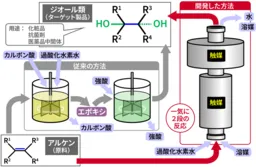
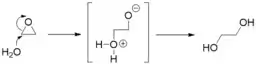
Diols are organic compounds featuring two hydroxyl (–OH) groups in their molecular structure. The diversity of diols depends on the number of carbon atoms; among them, some high-value diols are used as ingredients in cosmetics and as intermediates in pharmaceuticals. Traditionally, manufacturing methods for diols have been designed individually based on the specific type of diol produced. Unfortunately, many of these methods rely on raw materials that have a high environmental burden, and require a two-step process from alkene to epoxide and then to diol.
Innovative Two-Function Zeolite Catalyst
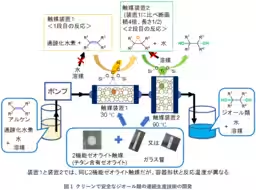
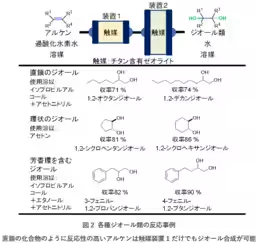
In this new development, AIST has optimized a continuous synthesis process using a dual-function zeolite catalyst that can conduct both epoxidation and hydration. By sending alkene substrates into the catalytic apparatus, the process allows for simultaneous epoxidation and hydration reactions. Remarkably, this process has demonstrated the ability to maintain yields over 90% for over a week, making it a significant advancement in the field of diol synthesis.
One of the standout features of this process is that it uses hydrogen peroxide at a concentration as low as 1% as a raw material, producing only water as a byproduct. This not only reduces the environmental load but also establishes a cleaner synthesis route compared to traditional methods that often utilize hazardous chemicals such as strong acids or carboxylic acids.
Broad Applications in Industry
The implications of this novel synthesis process are far-reaching. Due to its ability to minimize environmental impact while continuously producing various useful diols, it opens new doors for applications in the manufacturing of moisturizing cosmetics, antibacterial agents, pharmaceutical intermediates, and resin materials. The technology, scheduled for publication in the journal Advanced Synthesis & Catalysis on April 28, 2026, represents a leap forward in sustainable chemical manufacturing.
Background and Significance
The demand for diols continues to rise, especially for those with three or more carbon atoms, which play essential roles in high-value chemical products. Unlike well-established methods for producing basic chemicals like ethylene glycol (which is synthesized efficiently), the production methods for functional diols remain largely underdeveloped and highly individualized.
Traditional methods often fail to optimize sustainability, requiring cumbersome batch processes that are not suitable for continuous production. AIST's research aims to bridge this gap by establishing a continuous production process that effectively integrates the steps necessary for diol synthesis using environmentally friendly materials.
Research and Development Journey
For several years, AIST has focused on establishing continuous, high-selective production processes for functional chemicals. Building on previous advancements, researchers combined the dual-function zeolite catalyst with a flow reactor system—paving the way for efficient two-step reactions in one continuous operation.
The research utilized titanium-containing zeolite catalysts, capable of selectively conducting epoxidation and hydration without the use of hazardous carboxylic acids. Designed to withstand long-term processing, this catalyst system allows for maintaining high yield rates, significantly reducing the risks associated with explosive materials and hazardous waste disposal.
Dynamic nuclear polarization-nuclear magnetic resonance (DNP-NMR) studies revealed that the catalysts could experience surface coverage by epoxides over longer reaction times, affecting yield. However, by optimizing solvent properties and adjusting reaction conditions, the researchers successfully developed a robust method for maintaining high productivity in diol synthesis.
Future Directions
Looking forward, AIST plans to enhance the practicality of this new continuous production technology for functional chemicals. By improving the dispersion of the developed catalysts within the reactor system and minimizing pressure losses, they aim to make the catalyst systems even more user-friendly and stable in operation.
In conclusion, this innovative catalyst-based process serves as a model for sustainable diol synthesis, providing an efficient way to fulfill the growing demands of the chemical industry while addressing environmental concerns. As regulations regarding environmental impact become more stringent, this approach will likely emerge as a frontrunner in the market.
Topics Consumer Products & Retail)






【About Using Articles】
You can freely use the title and article content by linking to the page where the article is posted.
※ Images cannot be used.
【About Links】
Links are free to use.