



2026 Industry Summit on Safety in Photovoltaic Systems and Energy Storage: A New Path Forward
A Groundbreaking Summit for Photovoltaic Safety
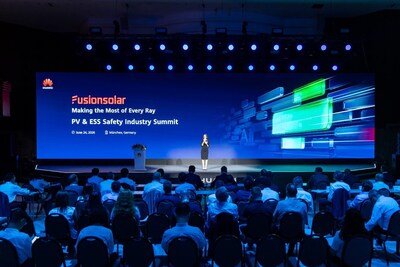
On June 24, 2026, during Intersolar Europe in Munich, Huawei Digital Power, alongside global partners, successfully organized the first ever "2026 Industry Summit on Safety in Photovoltaic Systems and Energy Storage (PV + ESS)." This summit focused on critical security risks and the lack of insurance coverage faced during the large-scale deployment of photovoltaic systems and energy storage, all within the context of the ongoing global energy transition.
The event brought together industry experts, association leaders, and insurance representatives to engage in deep dialogue about safety standards and emergency response strategies in energy storage systems. The participants collectively outlined a new pathway towards ensuring safe and reliable development in this vital sector.
Prioritizing Safety in Energy Storage
Xia Hesheng, Huawei Digital Power's Vice President, emphasized that ensuring the safety of PV + ESS systems is not merely an option but a necessity as the world adapts to new energy paradigms. He explained that safety encompasses an integrated approach involving multiple disciplines including electrochemistry, thermal management, power electronics, digital technology, and artificial intelligence. Huawei has committed to prioritizing quality by investing in technological innovations that enhance the safety of PV + ESS and ensure the comprehensive integrity of the value chain.
Addressing Global Safety Challenges
Gerrit Lührung, head of Infrastructure Systems at the Federal Association of Energy Storage Systems in Germany (BVES), remarked on the evolving role of energy storage; transitioning from just commercial arbitration tools to becoming fundamental assets within the energy system. Germany's total battery energy storage system capacity currently stands at 19 GW, driven by public utilities, commercial, and industrial sectors. As the industry moves forward, it must overcome regulatory hurdles and adapt to emerging safety guidelines while maximizing system value.
Tom Hessels, an energy safety and transport advisor with the Dutch Institute for Security and Public Safety (NIPV), raised concerns about rising incidents of battery fires, citing a significant issue stemming from the inadequate flow of information regarding these risks. He stressed the importance of making UL 9540A testing data available publicly and establishing 24/7 manufacturer assistance channels to bridge the information gap between firefighters and manufacturers.
Further insights from Mikel Arrese-Igor, a senior energy storage engineer at DNV, revealed that around 70% of issues within battery energy storage systems arise at the systemic level. Large-scale testing, such as those performed with Huawei's LUNA2000 system, validates safety philosophies and design approaches. The industry expects to elevate testing standards to the installation level to address cascading fire scenarios involving surrounding environments beyond just the batteries.
Evolving Safety Standards
Bill Reaugh from the German Electrical and Electronic Manufacturers Association (VDE) pointed out that transforming energy systems brings forth new risks, necessitating an evolution in safety practices from component-level to an ecosystem-wide approach. Safety considerations must encompass the entire lifecycle and a closed-loop system covering design, manufacturing, and operational processes.
Zhu Jun, Huawei Digital Power's Utility GFM ESS Product Director, outlined four critical challenges currently facing the industry: thermal runaway leakage, high voltage insulation failures, grid disturbances, and insufficient digitalization. He underscored the need for a comprehensive lifecycle quantification safety assessment framework to elevate risk profiles from "Zone B risk mitigation" to an "acceptable Zone C" level. Subsequently, Huawei has introduced a robust defense network featuring "passive protection + proactive alert," utilizing high-temperature resistant insulation and positive pressure smoke extraction to avert thermal runaway propagation during extreme scenarios.
Alastair Nicklin, Senior Director at Willis Towers Watson (WTW), advocated for the insurance industry to embrace a "design as risk control" paradigm. He highlighted the necessity for quantifying "risk probability × loss severity" to construct a three-dimensional closed-loop defense mechanism addressing physical, financial, and environmental dimensions.
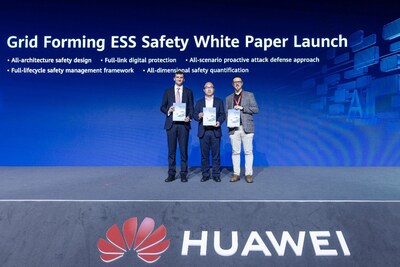
During the summit, the Grid-Forming ESS Safety White Paper was launched, focusing on quantitative assessment frameworks, testing systems against attacks, and pathways for digitalization. The paper elaborated on the logic of "promoting defense through offense, data-driven approaches, and closed-loop iterations," providing a strategic direction for R&D, regulation, and construction while propelling the industry towards a unified security paradigm.
Topics Energy)
【About Using Articles】
You can freely use the title and article content by linking to the page where the article is posted.
※ Images cannot be used.
【About Links】
Links are free to use.