




The Deadly Effects of Caffeine on Flour Beetles: Insights from Okayama University Research
Caffeine's Impact on Flour Beetles: A Promising Natural Insecticide
In recent years, the need for effective pest control methods that can minimize environmental impact has become increasingly pressing. Researchers from Okayama University, including Shine Shane Naing—a PhD student—and Professor Takahisa Miyatake, have made significant strides in this area. They focused their studies on the red flour beetle (Tribolium castaneum), a common pest that damages stored grains, investigating the effects of caffeine on this insect's life history traits.
Research Methodology
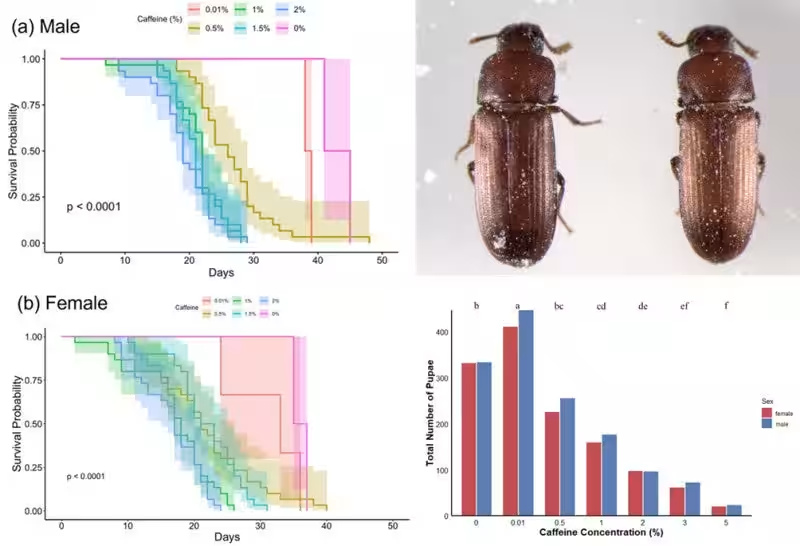
The team conducted rigorous experiments exposing both larvae and adult flour beetles to varying concentrations of caffeine mixed with sugar water. Their research aimed at measuring key parameters such as lifespan, developmental speed, pupation rates, body size, and feeding amounts.
The outcomes were striking: exposure to high concentrations of caffeine (over 1%) resulted in a significant reduction in lifespan for both male and female beetles, delayed development, decreased pupation rates, and smaller body sizes. Interestingly, while low concentrations (0.01%) encouraged an increase in the number of pupae, they also led to a reduction in the quality of the offspring, highlighting the negative impact of caffeine on the beetle's reproductive success.
Implications of the Findings
These findings suggest that caffeine, a naturally occurring compound, holds potential as an effective insecticidal agent against the red flour beetle. The research implies that utilizing caffeine in pest management could serve as a sustainable alternative to synthetic insecticides, targeting harmful pests without the extensive ecological footprint associated with traditional chemical methods.
Further, this study sheds light on the broader implications of caffeine consumption. While excessive caffeine intake is known to be harmful to humans, this research reveals that insects are similarly susceptible, presenting an opportunity to investigate the potential uses of caffeine in pest control strategies.
Future Directions
The research has opened up new avenues for studying the effects of caffeine on other pest species, particularly invasive ant species that have recently entered Japan. Professor Miyatake speculates that combining caffeine with sugar could effectively deter these pests, ultimately contributing to a more holistic approach to pest management.
This pivotal research was published online in the journal Applied Entomology and Zoology on May 12, 2026, and was supported through grants from the Japan International Cooperation Agency (JICA) and the Ministry of Education, Culture, Sports, Science, and Technology (MEXT).
Conclusion
Okayama University’s emerging research illustrates not just the insecticidal potential of caffeine but also promotes the necessity of continued exploration into natural pest management strategies. By leveraging natural compounds, we may pave the way for environmentally safe alternatives that enhance our agricultural practices while safeguarding our ecosystems.
References
- - Shine Shane Naing, Teruhisa Matsuura, Takahisa Miyatake. "Effect of caffeine on life-history traits on the red flour beetle, Tribolium castaneum (Coleoptera: Tenebrionidae)". Applied Entomology and Zoology, Springer. Read the article here.
- - Okayama University Press Release. Learn more about the research.







Topics Other)
【About Using Articles】
You can freely use the title and article content by linking to the page where the article is posted.
※ Images cannot be used.
【About Links】
Links are free to use.