



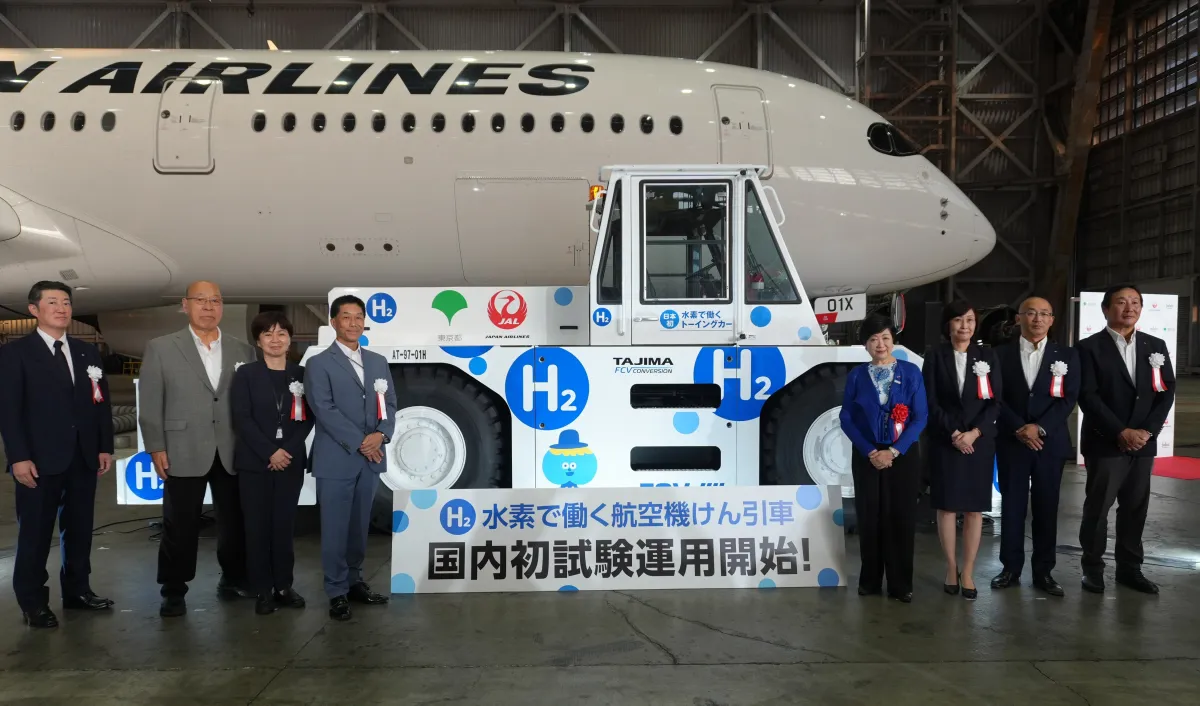
Japan's First Hydrogen-Powered Aircraft Towing Vehicle Begins Testing Operations
Japan's First Hydrogen-Powered Aircraft Towing Vehicle
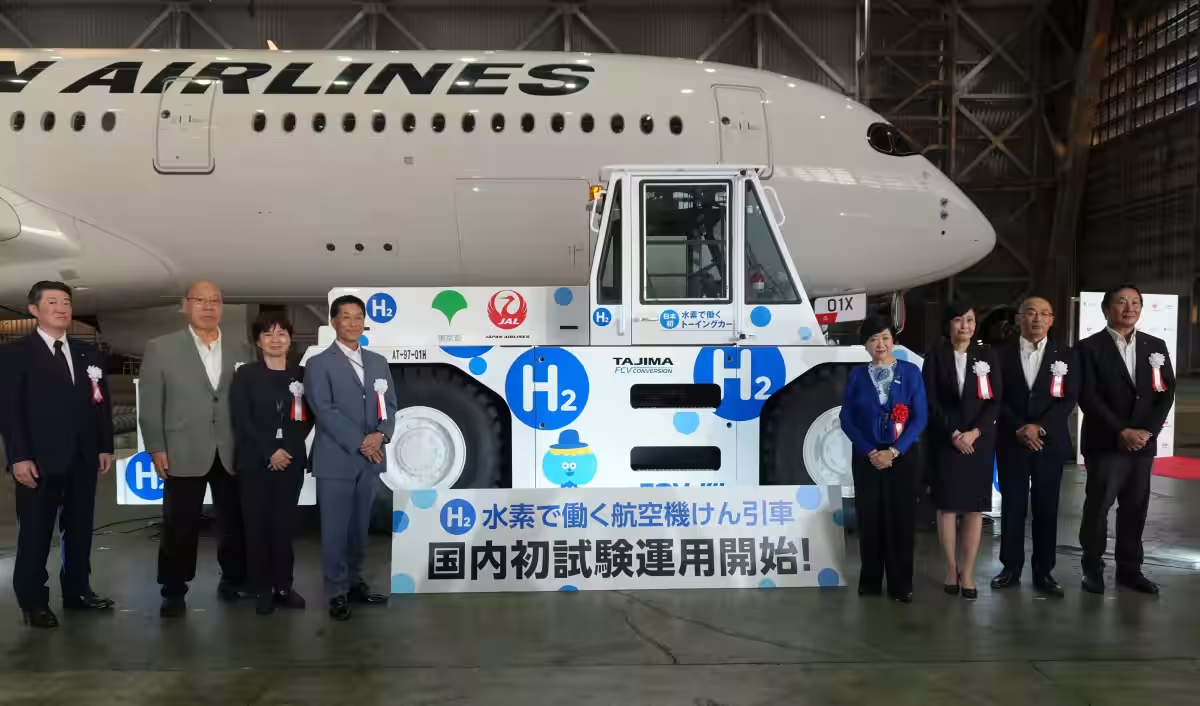
On August 29, 2025, Japan Airlines (JAL), JALUX, and JAL Airtech officially commenced the test operation of the nation's first aircraft towing vehicle powered by hydrogen. The unveiling event, which took place on August 28, showcased both local and corporate leaders optimistic about this significant milestone aimed at promoting sustainable practices in aviation.
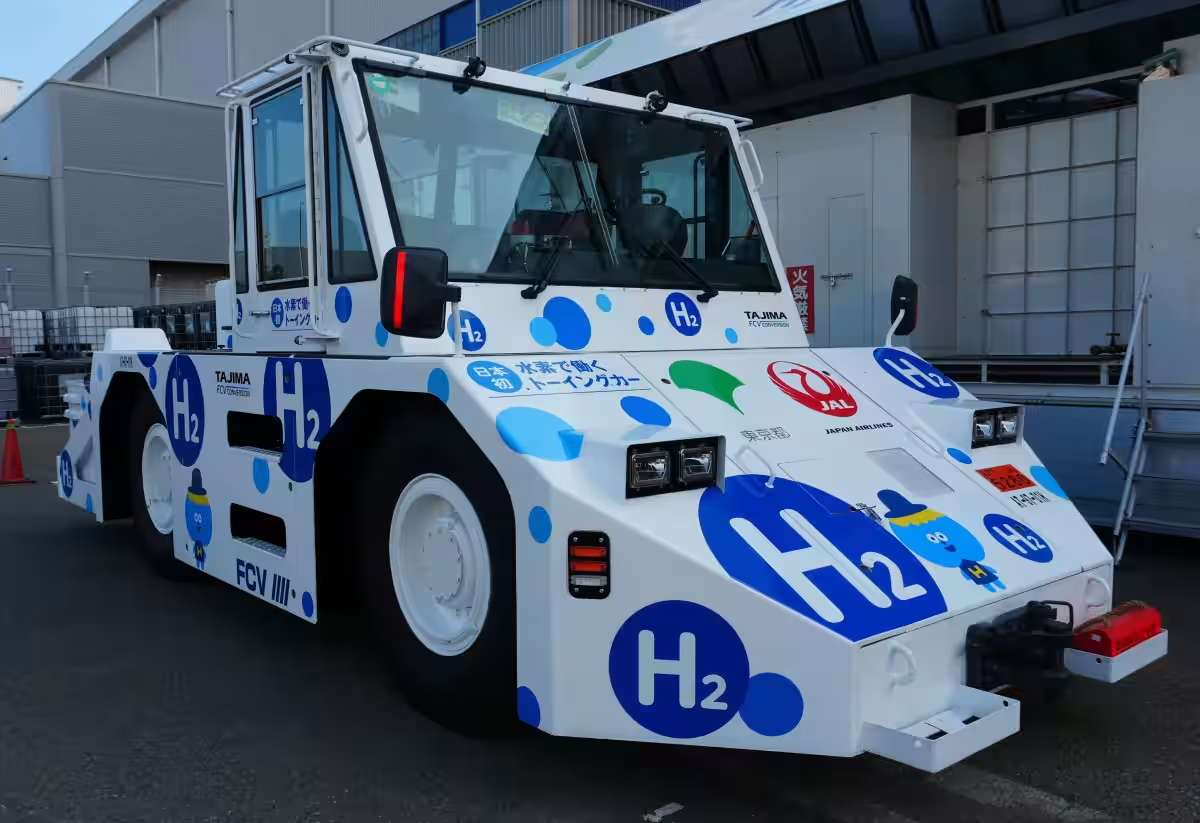
This initiative is part of Tokyo's 'Early Implementation Support Project for Fuel Cell Mobility at Airports', which has been jointly advanced by a consortium of four organizations since last year: JAL, JALUX, JAL Airtech, and Tajima Motor Corporation. The project focuses on the development and commercialization of fuel-cell ground support equipment vehicles (FCGSE) that do not emit CO2, while also stimulating hydrogen demand in airport coastal areas.
The aircraft towing vehicle, traditionally powered by diesel, is being converted to a hydrogen fuel cell model, marking a pioneering step in Japan. This test will allow JAL to evaluate both the operational effectiveness of the vehicle and its environmental benefits. JALUX will lead the project, with Tajima Motor managing the vehicle's development and conversion, while JAL Airtech will handle the maintenance and hydrogen refueling aspects. The test period is set from August to December 2025.
Comments from Key Figures
Governance and support from local government remain crucial to the project's success. Tokyo Governor Yuriko Koike remarked that the introduction of hydrogen fuel cell aircraft towing vehicles is a groundbreaking endeavor that reflects Japan’s commitment to using hydrogen energy. She believes this operation will send a strong message to the world about Tokyo's dedication to decarbonization.
Toshiaki Kawanishi, President of JALUX, expressed confidence that the insights gained during the testing phase will not only enhance airport decarbonization efforts but also contribute to creating a sustainable society. Similarly, Mitsuko Tori, President of Japan Airlines, emphasized the importance of addressing environmental issues within the aviation industry. She stated that JAL aims to achieve net-zero CO2 emissions by 2050.
Details on the Towing Vehicle
The aircraft towing vehicle plays a crucial role in airport ground operations, particularly during the 'pushback' process, where it moves the aircraft away from the terminal to a position from which it can take off independently. In this project, a 27-year-old towing vehicle will be retrofitted into a hydrogen fuel cell variant, and its performance will be tested at Haneda Airport, which serves as a critical hub for Japan's aviation.
The new hydrogen system will accommodate various aircraft sizes, focusing on regional and smaller planes. It is designed to refill approximately 10 kg of hydrogen within 20 minutes at a pressure of 35 MPa, allowing for operations over distances of around 70 km.
Implementation Structure
The coordination of this ambitious project involves multiple entities: JALUX is the primary contractor, supported by JAL (test operations), JAL Airtech (maintenance and refueling), and Tajima Motor (towing vehicle conversion). The collaborative efforts of these organizations aim to make significant strides towards achieving carbon neutrality in aviation by 2050.
As the global push for sustainable practices intensifies, JAL Group remains steadfast in its commitment to transitioning towards environmentally friendly energy solutions. This initiative not only symbolizes a forward-thinking approach to aviation but also underscores the significant role that technology, collaboration, and determination play in addressing climate change within the industry.
With the trial run of the hydrogen aircraft towing vehicle, Japan Airlines and its partners pave the way for future advancements in hydrogen vehicle development and the broader commercialization of eco-friendly technologies in aviation.

Topics Other)
【About Using Articles】
You can freely use the title and article content by linking to the page where the article is posted.
※ Images cannot be used.
【About Links】
Links are free to use.