



Analyzing Rental Trends in the Tokyo Metropolitan Area: Shifting Deposit and Key Money Dynamics
Exploring the Changing Landscape of Tokyo's Rental Market
In light of the rising cost of living and rent in the Tokyo metropolitan area, LIFULL, a company dedicated to addressing social issues through its business practices, conducted a crucial survey to analyze the recent trends regarding deposits (shiki-kin) and key money (rei-kin) associated with renting properties. This investigation aims to assist individuals looking to minimize their initial rental costs, providing valuable insights into the evolving rental landscape as we approach 2025.
The Importance of Initial Costs
As prices continue to soar across various sectors, understanding the implications of initial rental costs has never been more vital. Deposits and key money often represent significant financial burdens for renters. This recent study highlights the growing trend of properties offering zero deposits or key money, showcasing a shift in the rental marketing strategies amid rising expenses, having been analyzed alongside previous studies conducted in early 2024.
According to the latest findings, the share of properties with zero deposits has increased significantly over the last two years. The investigation focused primarily on the metropolitan areas of Tokyo, Kanagawa, Saitama, and Chiba, consolidating a broad range of rental data to provide an accurate picture of the current climate.
Key Findings
Understanding Deposits and Key Money
- - Deposit (Shiki-kin): Collected at the beginning of a rental agreement as a form of security against unpaid rent or damages. Typically refunded at the end of the lease period if all payments have been met.
- - Key Money (Rei-kin): A monetary gift to the landlord as a token of gratitude for allowing one to rent the property. Unlike the deposit, this fee is generally non-refundable.
Trends in Deposit Requirements
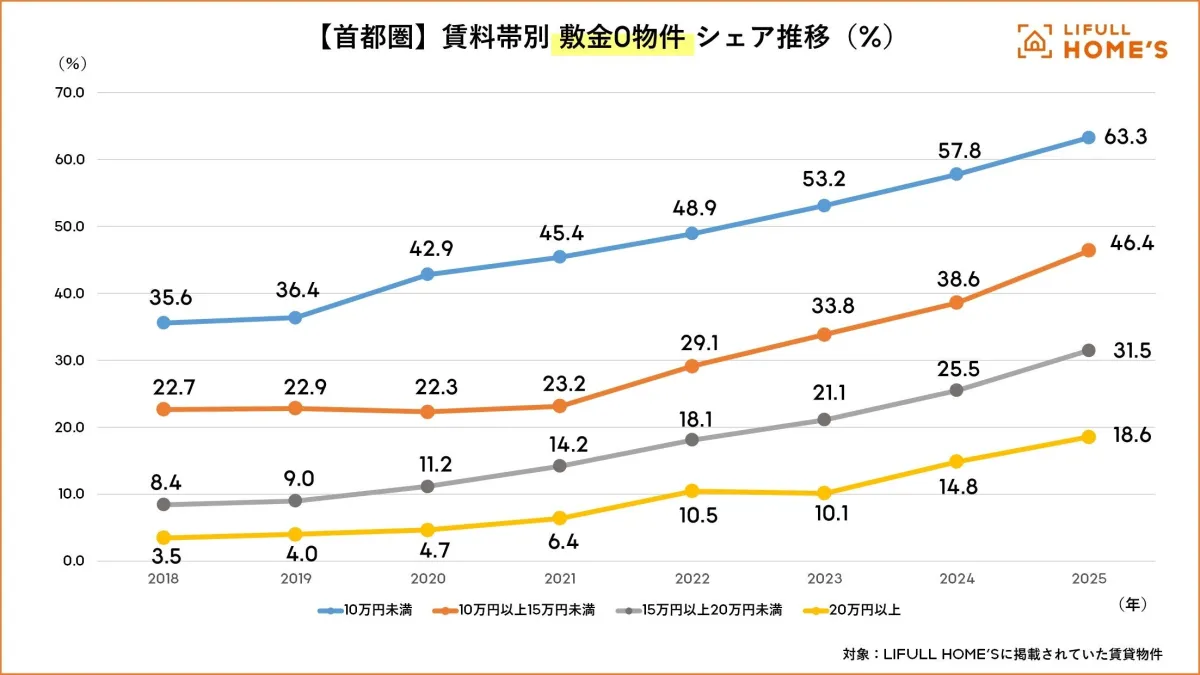
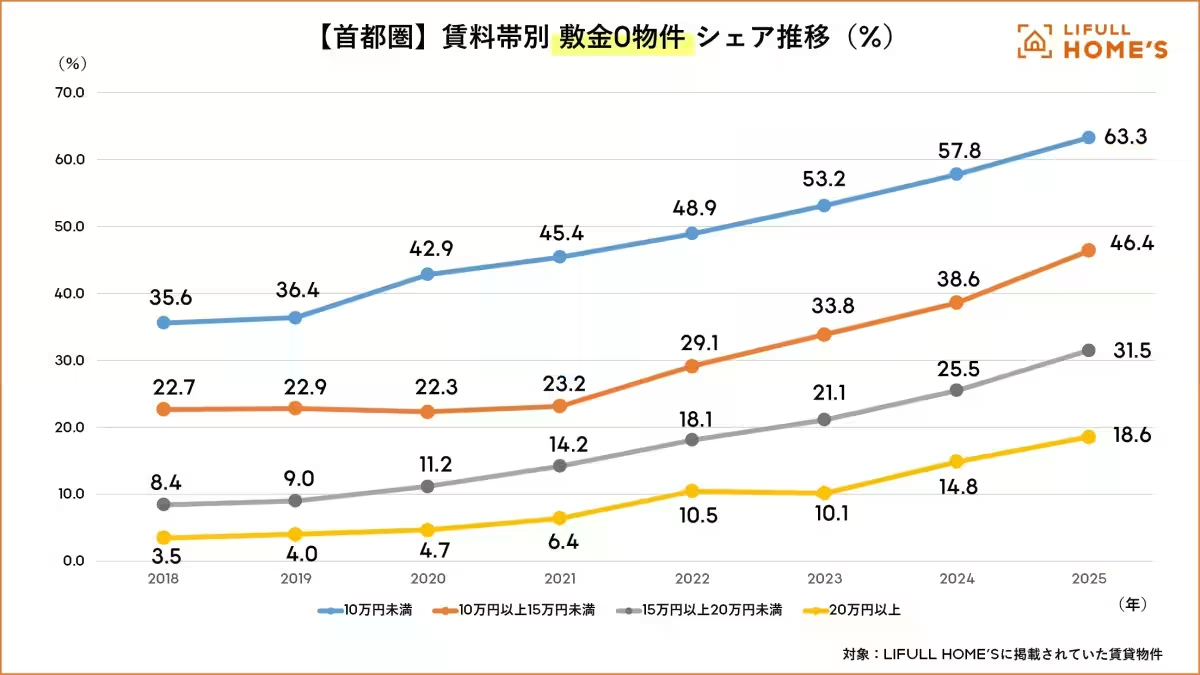
A significant shift has been observed in the proportion of properties requiring no deposit. Recent statistics reveal that:
- - The percentage of zero deposit rentals has grown across all rental brackets. Notably, properties priced between ¥100,000 and ¥150,000 have seen a remarkable increase of 12.6 percentage points over two years.
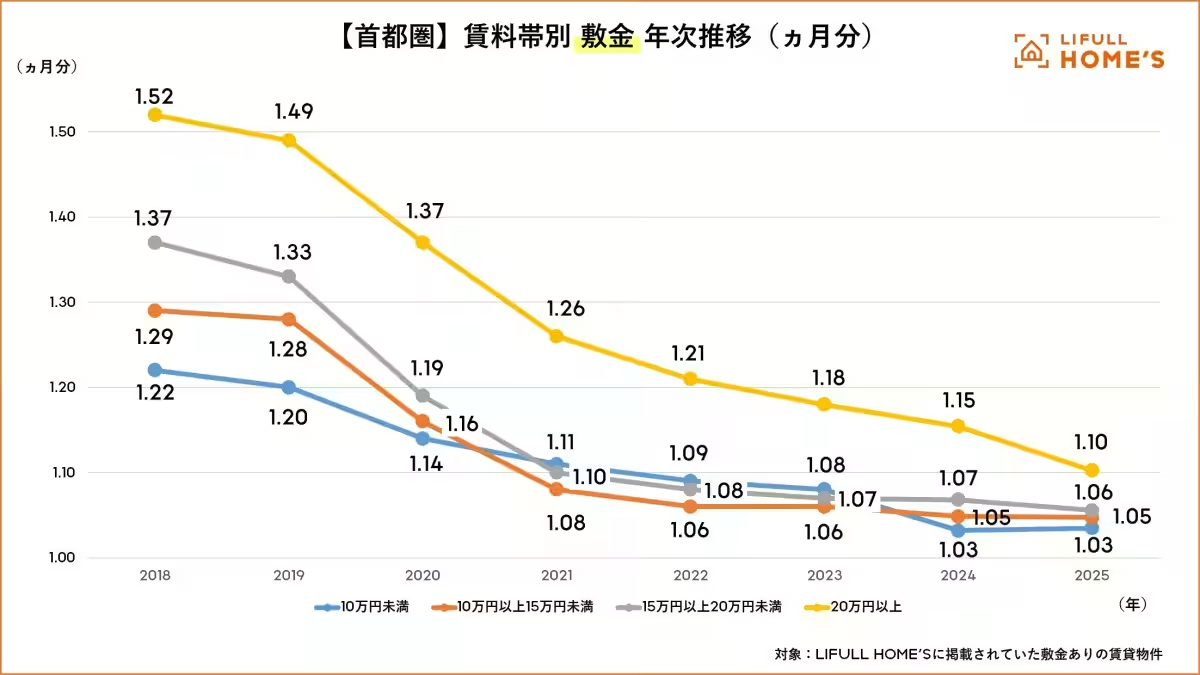
- - Average deposits are trending downward, with a narrow range of 1.03 to 1.10 months' worth of rent, showing a discernible decrease specifically for high-rent apartments, whose average deposit has dropped from 1.18 to 1.10 months.
Trends in Key Money
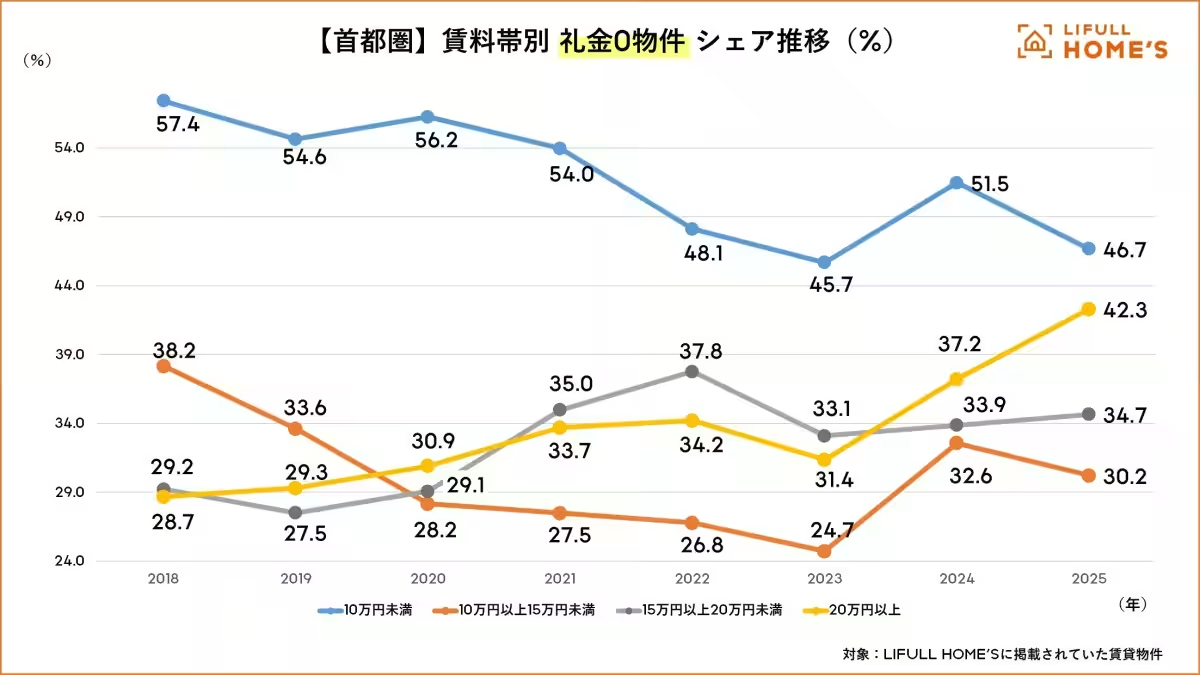
The aspect of key money has not experienced the same uniform increase as deposits. Key money observations include:
- - For properties priced over ¥200,000, the share of rentals requiring no key money has surged to nearly 40%. In contrast, for the ¥100,000 to ¥150,000 bracket, the percentage has stagnated at around 30%.
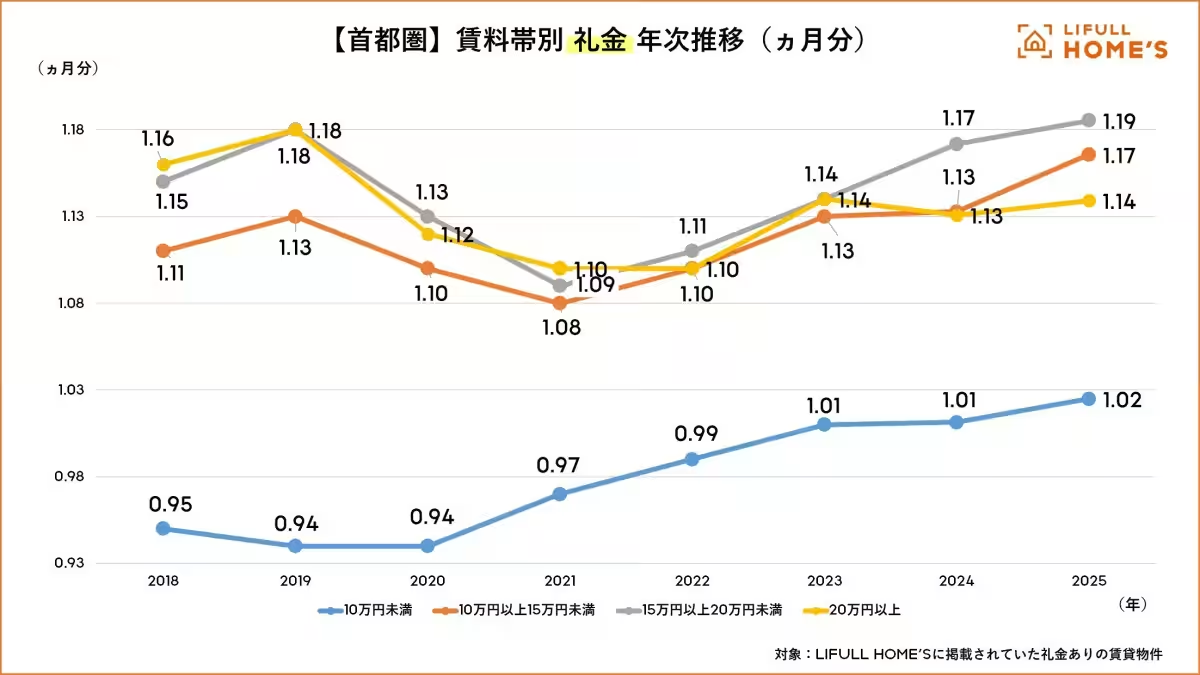
- - The average key money across all rental price bands has seen a slight uptick, particularly in the middle price ranges.
Societal Implications
Chief Analyst Toshirou Nakayama at LIFULL HOME'S underscores not just the statistical trends but the social background that has led to these changes. He notes that the traditional practice of deposits and key money harks back to historical practices in Japan, which no longer align with contemporary needs and realities. With rising rental costs, landlords have started to recognize that zero deposit and zero key money properties may be crucial for attracting tenants.
Moving Forward: New Rental Innovations
Amid these changes, innovative rental solutions have begun to emerge, including subscription rental services where amenities such as utilities and cleaning are packaged within the rental fee. Concepts like “social apartments” emphasizing tenant interactions and shared living spaces are gaining traction. The time is ripe for landlords to adapt, not only by refining the deposit and key money structures but also by enhancing the overall quality and energy efficiency of their properties, even amidst rising costs.
The research this year has uncovered crucial trends in leveraging zero deposit and zero key money options as valuable marketing tools for rental properties. As the landscape continues to evolve rapidly, it is essential for relevant stakeholders to review traditional practices in favor of approaches that accommodate modern tenant expectations.
Survey Overview
- - Area of Focus: Tokyo, Kanagawa, Saitama, Chiba
- - Property Types Analyzed: Residential rental properties listed on LIFULL HOME'S
- - Timeframe: January 2018 to October 2025
LIFULL HOME'S strives to resonate with the needs of individuals seeking accommodation that aligns with their aspirations. More insights can be found at LIFULL HOME'S.
Topics Consumer Products & Retail)
【About Using Articles】
You can freely use the title and article content by linking to the page where the article is posted.
※ Images cannot be used.
【About Links】
Links are free to use.