



Breakthrough in Mitochondrial Transplantation Therapy Paves Way for Next-Gen Medical Treatments
Unraveling Mitochondrial Uptake Mechanisms in Cells
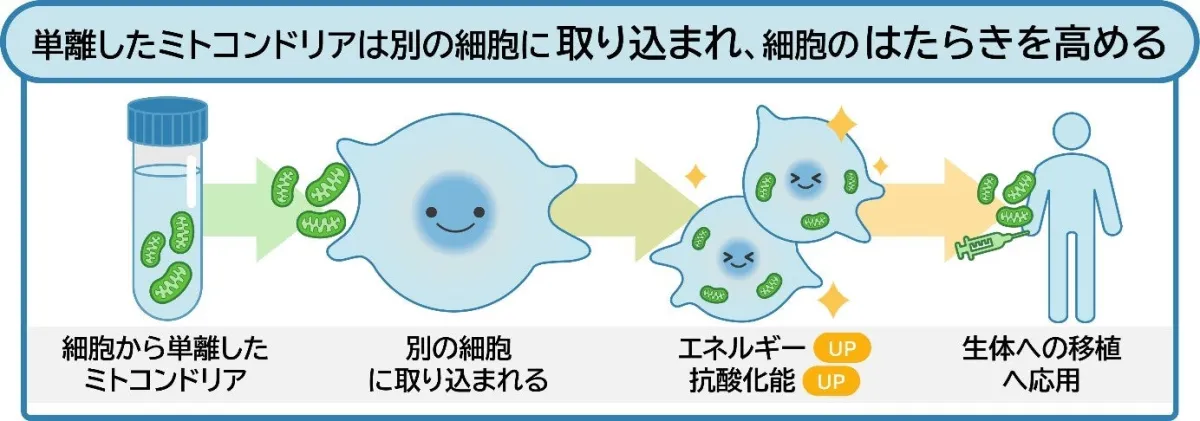
Recent advancements in mitochondrial transplantation therapy have been made by a research team at Tokyo University of Science, led by Associate Professor Kosuke Kusamori. This study meticulously outlined the quantitative and mechanical processes by which mitochondria are actively taken up by cells, contributing significantly to the development of next-generation medical treatments that could restore cellular energy function directly.
The Significance of Mitochondria in Cellular Function
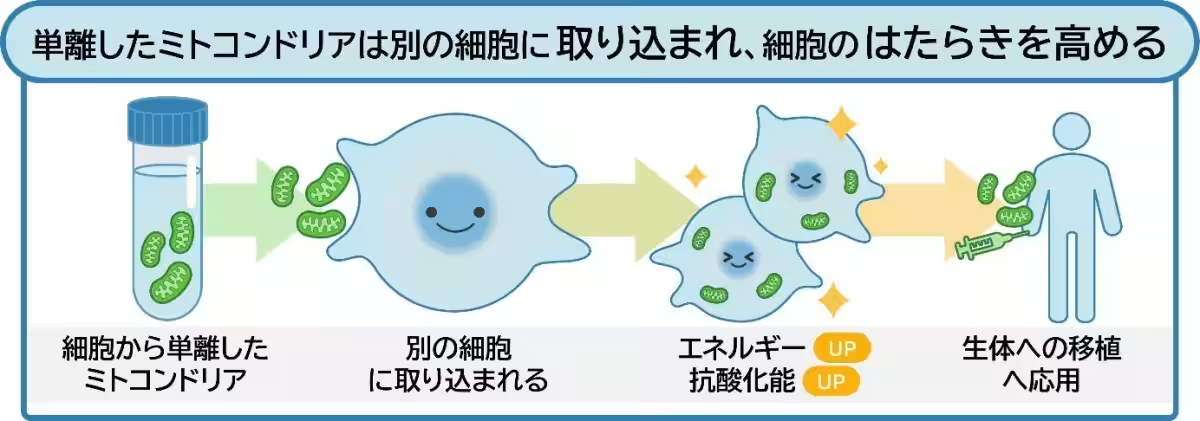
Mitochondria serve as the powerhouses of cells, crucial for energy production and other vital functions. When these organelles become dysfunctional, it can lead to a multitude of diseases. Mitochondrial transplantation therapy is an innovative approach that involves administering isolated mitochondria to enhance cellular function, particularly for diseases that have previously posed challenges in treatment. However, until now, the exact mechanisms through which mitochondria infiltrate and sustain their function within cells have remained elusive.
The research group, comprising Kosuke Kusamori, graduate student Miyabi Goto, Professor Makiya Nishikawa, Assistant Professor Shoko Itakura, and PhD candidate Mai Kanai, successfully isolated functional mitochondria from mesenchymal stromal cells (MSCs) and investigated their properties and impact on recipient cells.
A Groundbreaking Discovery
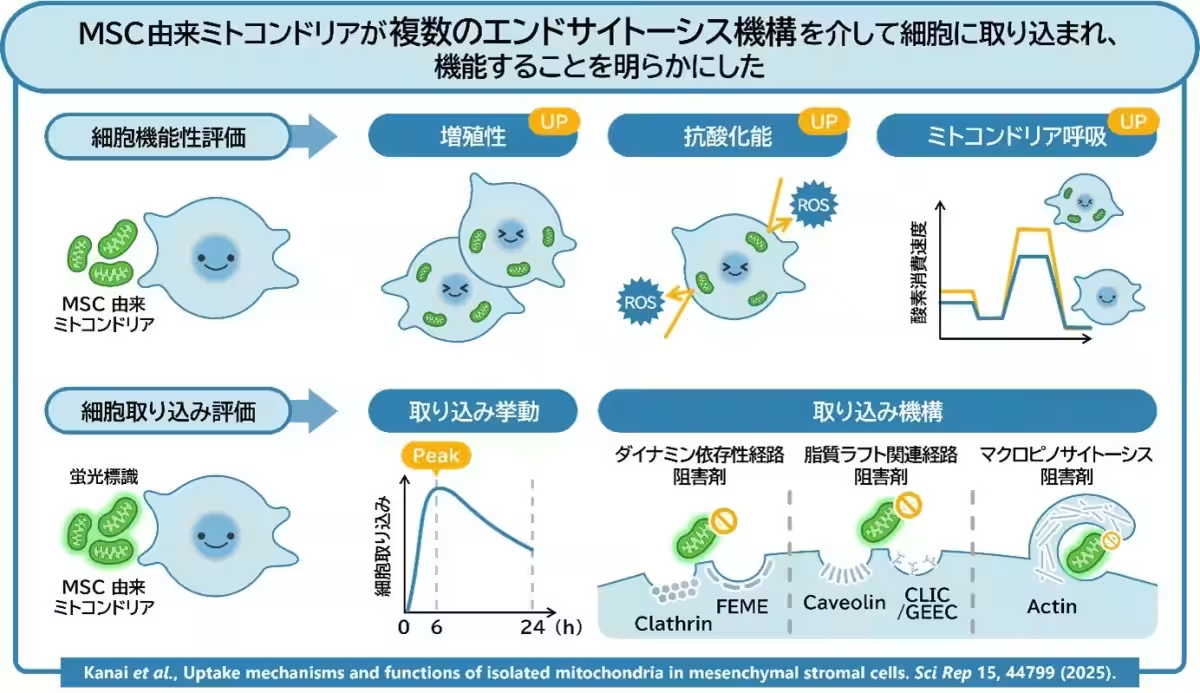
Their findings revealed that when mitochondria were added to MSCs, not only did the rate of cell proliferation increase, but the cells also exhibited enhanced survival rates under stress and improved energy production capabilities. The researchers employed fluorescence imaging techniques to visualize the process of mitochondrial uptake, discovering that mitochondria were taken in by cells within six hours. Further analysis indicated that the primary pathway for mitochondrial uptake is energy-dependent, particularly involving endocytosis.
The study’s results establish a crucial foundation for understanding how cellular functions can be directly supplemented through mitochondrial transplantation therapy. The discovery was recently published on December 29, 2025, in the prestigious international journal Scientific Reports.
Research Background: The Importance of Mitochondrial Functionality
Mitochondria are not merely responsible for ATP production; they also regulate reactive oxygen species and facilitate lipid metabolism. Their dysfunction is linked to a variety of diseases, including neurodegenerative conditions, ischemia-reperfusion injury, and metabolic disorders. In recent years, the emerging field of mitochondrial transplantation therapy has gained considerable attention due to its potential application in preclinical models of heart attacks, liver failure, and neurological diseases, where beneficial effects have been reported.
Despite these promising prospects, the cellular mechanisms by which these treatments exert their effects had remained poorly defined. The ability to demonstrate that mitochondria can be effectively and actively incorporated into cells represents a significant milestone in this area of research.
Detailed Findings
The research group began their work by isolating mitochondria from a murine MSC line. Using Dynamic Light Scattering (DLS) analysis, they confirmed that the isolated mitochondria had an average diameter of about 1000 nm and a zeta potential of 16 mV. Additionally, measurements of ATP levels indicated that these mitochondria maintained their metabolic activity.
Subsequent experiments showed a concentration-dependent enhancement in cell proliferation when the isolated mitochondria were added to MSCs. In models simulating hepatic cellular injury, protective effects were observed. Notably, measurements of oxygen consumption rates showed that the addition of mitochondria led to increases in basal respiration, ATP production rates, and maximal respiratory capacity in a concentration-dependent manner.
Additionally, by labeling mitochondria with fluorescent markers and observing their incorporation into MSCs, the researchers noted that accumulation began at 0.5 hours, peaking at around six hours. Flow cytometry further corroborated these findings, demonstrating a time-dependent increase in fluorescent intensity, which reached its zenith at the six-hour mark.
To elucidate the uptake mechanisms, they utilized low-temperature cultures and endocytosis inhibitors. Culturing at 4°C significantly diminished uptake when compared to the standard 37°C conditions, confirming that the process is indeed energy-dependent. Treatments with various endocytosis inhibitors revealed a notable reduction in mitochondrial uptake, highlighting the diverse endocytic pathways involved.
Implications and Future Directions
The implications of this research are profound; it not only confirms that isolated mitochondria can be actively taken up by MSCs but also that these organelles can retain their functionality within the cellular environment. According to Associate Professor Kusamori, “Our interest in utilizing mitochondria for disease treatment has led us to embark on this journey in scientific exploration. The development of mitochondrial therapy as a new medical frontier could provide a safer and more sustainable treatment option for various diseases related to mitochondrial dysfunction, including heart attacks, strokes, liver diseases, and neurodegenerative disorders.”
This innovation showcases a significant leap towards the potential application of mitochondrial transplantation therapy in clinical settings, which could offer new hope for patients facing challenging health conditions.
In conclusion, the research, funded by the Japan Society for the Promotion of Science (JSPS) and other institutions, has provided a robust scientific foundation that could ultimately lead to revolutionary treatment options in mitochondrial therapy. Understanding the intricate balance of mitochondrial function could pave the way for effective solutions to some of the most complex health challenges of our time.
Topics Health)
【About Using Articles】
You can freely use the title and article content by linking to the page where the article is posted.
※ Images cannot be used.
【About Links】
Links are free to use.