



Hitachi Enhances JP1 Cloud Service with New Observability Features
Hitachi Enhances JP1 Cloud Service with New Observability Features
Hitachi has recently announced an important upgrade to its system operations management service, the JP1 Cloud Service. Starting July 31, the company will offer the new service called JP1 Cloud Service/Observability. This service aims to provide real-time monitoring of applications, allowing operational managers to quickly identify issues and make informed decisions by leveraging AI analysis. The service is built upon IBM’s Instana, known for its full-stack observability capabilities.
Achieving Better Real-Time Visibility
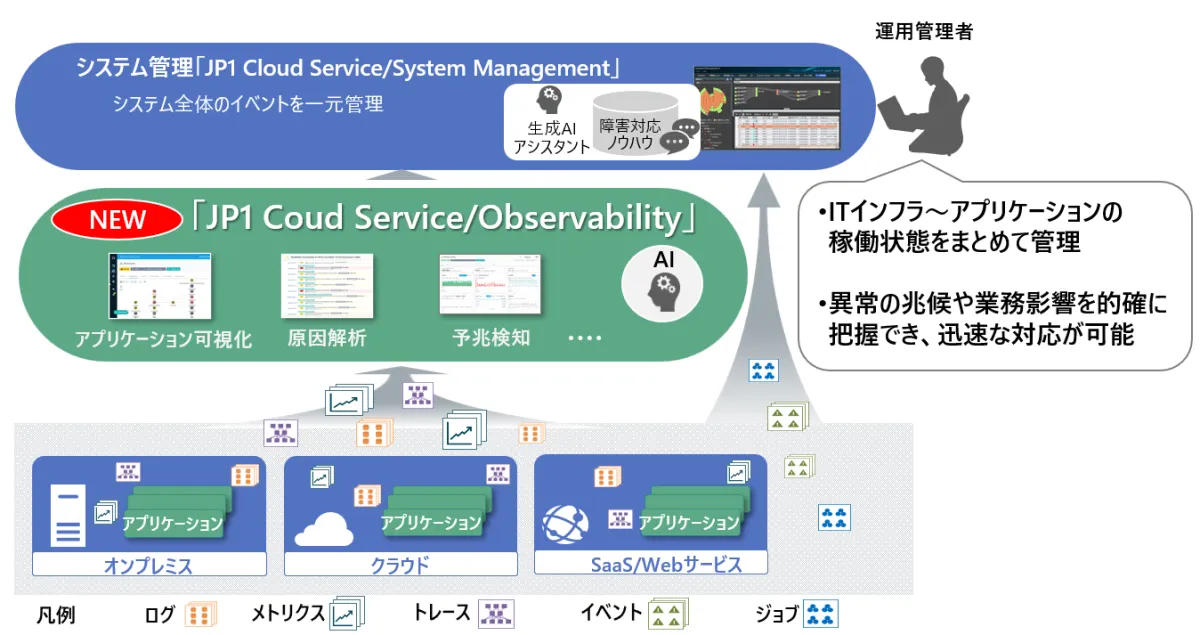
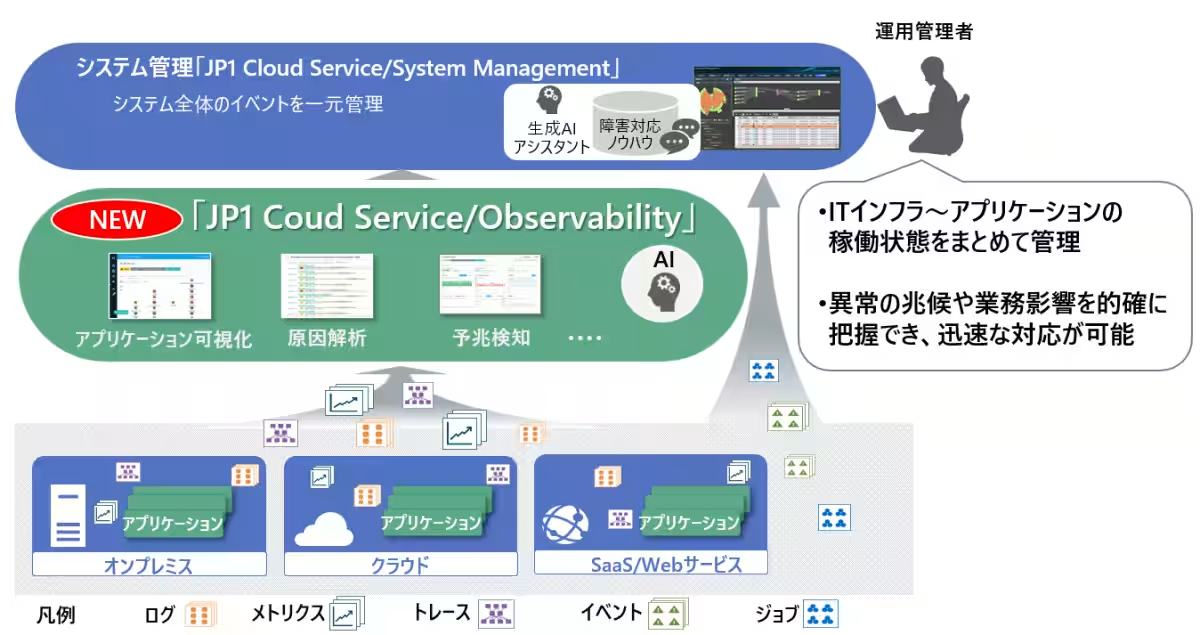
The addition of the new observability service will complement the existing technology in the JP1 Cloud Service. Previously, the focus was predominantly on visualizing IT infrastructure. With the launch of this new service, organizations can now correlate application behavior with infrastructure, delivering comprehensive insights into the health of their services. Consequently, operational managers are equipped to quickly identify the root causes of service anomalies, understand the scope of their impact, and address issues promptly. The goal is to minimize resolution time and to reduce unexpected downtime, thereby enhancing business continuity.
As organizations increasingly shift to digital solutions, IT systems become more complex and fragmented. The integration of cloud technologies, on-premises solutions, containers, and microservices creates a challenging environment to manage. This complexity necessitates rapid troubleshooting and a clear understanding of how faults affect business processes. The JP1 Cloud Service/Observability addresses these challenges, allowing teams to grasp the status, relationships, and interdependencies of various components from IT infrastructure to applications effectively.
Key Features of JP1 Cloud Service/Observability
The new service offers several impressive features:
1. Real-Time Monitoring and Automated Issue Identification: The observability service collects various monitoring data including metrics, events, logs, and traces, which are visually represented in real-time. By relating these data points, the AI can automatically highlight potential causes of disruptions in chronological order. Furthermore, it can visualize dependencies between applications and services developed in diverse languages and frameworks such as Java, Node.js, PHP, Python, Ruby, Go, and .NET. This feature significantly reduces the time taken for operational managers to identify faults and investigate their ramifications.
2. Early Detection of Anomalies: The observability service excels in monitoring key performance indicators such as processing rates and error occurrences. This high-fidelity data collection enables earlier detection of performance degradation or anomalies, even catching coding errors that could lead to service interruptions. Operational managers can therefore be alerted to problems well before they escalate, allowing them to take preventative measures to mitigate potential disruptions.
3. Comprehensive Visualization of Business Services: By integrating this new service with the existing JP1 Cloud Service/System Management, organizations can attain a unified view of their entire operational environment. This integration allows for streamlined decision-making and aids in the immediate response to incidents. Moreover, by utilizing AI-assisted operational tools, initial responses to disruptions can be accelerated according to established operational protocols. This feature not only consolidates operational efforts but also allows for the accumulation of knowledge and further efficiencies through automation.
Future Directions for JP1 Cloud Service
Looking ahead, Hitachi intends to enhance the capabilities of JP1 Cloud Service further through the inclusion of the JP1 Cloud Service/Observability. The firm will employ insights gained from technologies like Hitachi Application Reliability Centers (HARC) to accelerate the modernization of complex systems. Focus areas will include leveraging operational data for better automation, enhancing governance, and security protocols, and improving overall system reliability. By continually refining these services, Hitachi aims to support ongoing operational improvements for its clients and contribute to the development of resilient systems for social infrastructure.
Pricing and Availability
Pricing for the new service is based on a per-virtual-server licensing model, requiring annual contracts for a minimum of ten licenses without functional limitations.
Partner Comments
Aki Ikuno, Director of the Automation Platform Division at IBM Japan, commented on this enhancement, noting its significance in elevating enterprise-level system operations. By integrating IBM's AI-driven automatic analytics with Hitachi’s JP1, companies can better visualize the interrelations between their infrastructure, applications, and business services, ensuring business continuity in increasingly intricate IT environments. IBM looks forward to deepening its partnership with Hitachi to usher in a new era of IT operations.
Conclusion
Hitachi’s introduction of the JP1 Cloud Service/Observability is set to revolutionize how businesses can monitor, manage, and respond to their IT environments. By equipping operational managers with better tools to understand their systems, Hitachi is paving the way for improved operational resilience and business continuity going forward. For more information about JP1 Cloud Service and related offerings, you can visit their official websites.

Topics Business Technology)
【About Using Articles】
You can freely use the title and article content by linking to the page where the article is posted.
※ Images cannot be used.
【About Links】
Links are free to use.