



Stay Aware: The Hidden Dangers of Low Voltage Electric Shock Risks
Understanding the Dangers of Low Voltage Electric Shock
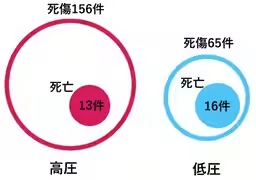
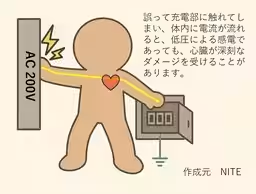
Electric shocks can occur even with low voltage, and recent studies reveal that these incidents may be more fatal compared to high voltage situations. The National Institute of Technology and Evaluation (NITE) has highlighted the need for vigilance in work environments using low voltage electrical equipment. An analysis conducted from 2020 to 2025 shows a startling trend: 16 fatalities occurred at low voltages against 13 at high voltages. It happens during electric work tasks, such as repairs, inspections, and construction, underscoring the universal risk regardless of voltage level.
Analysis of Electric Shock Incidents
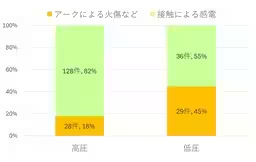
NITE’s data analysis differentiates between low and high voltage incidents. Between 2020 and 2025, there were 65 recorded injury cases related to low voltage, and while this is lower than the 156 cases related to high voltage, the number of deaths caused by low voltage—16—outweighs high voltage deaths. Specific voltage breakdown indicated that, of the low voltage deaths, 3 were at 100V, 12 at 200V, and 1 at 400V. These statistics illustrate that precautionary measures are necessary, even if the voltage appears insignificant.
Circumstances Leading to Electric Shock
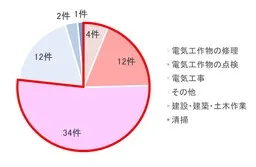
Furthermore, the tasks most frequently linked to incidents at low voltage included repairs, inspections, and electrical work—50 cases out of 65 total injury cases—while 15 incidents involved other types of work such as construction and civil engineering. This broad spectrum of activities requiring vigilance can lead to misunderstandings about where risks lie, reinforcing the need for a culture of safety regardless of the current location or task.
The Nature of Electric Shock Damages
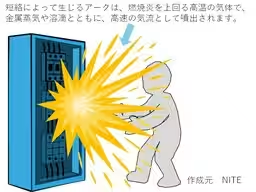
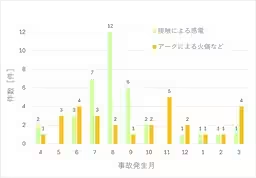
When classifying the nature of injuries from electric shocks, it can be divided into contact shocks and arc burns. The data indicates that arc burns from low voltage incidents are more prevalent compared to high voltage ones. Interestingly, all deaths related to low voltage in the past six years were due to contact electric shock. Moreover, while the count of injuries due to arc burns did not exhibit considerable monthly fluctuations, incidents of contact shocks peaked from July to September, particularly in August, which requires focus on preventive measures during high-risk periods.
Real-Life Examples of Electric Shock Incidents
Consider the following case studies:
- - August 2025: An electric shock led to cardiac arrest while a worker conducted unauthorized current measurement on a low voltage power panel, resulting tragically in death due to inadequate safety checks.
- - August 2024: A worker survived an electric shock caused by using ungrounded tools outdoors during rainy conditions, illustrating poor operational safety awareness.
- - October 2023: An electric worker was injured due to improper use of protective equipment and lack of routine electrical checks, leading to a severe injury.
Through these incidents, we observe a common thread: inadequate precautionary measures and safety protocols can lead to severe consequences.
Crucial Safety Protocols
Management and workers need to emphasize clear safety protocols to prevent electric shocks:
- - Avoid live-wire work: Whenever possible, ensure all tasks are done with the power turned off.
- - Adapt to environmental conditions: Take proactive measures during hot and humid days when electric shocks are more likely to occur due to sweat increasing conductivity.
- - Communicate risks: Always inform team members of potential electric hazards during operations.
- - Provide AED access: Quick access to automated external defibrillators can save lives in the event of electric shock.
Workers should also ensure vigilance:
- - Check for current: Always use testing equipment to ensure circuits are indeed powered off before commencing work.
- - Document near-misses: Report incidents or close calls immediately to promote a strong safety culture.
- - Wear protective gear: Employ rubber gloves and protective clothing to mitigate risks of shock and burns.
As demonstrated, understanding low voltage interactions and maintaining a culture of safety are not just best practices but crucial elements in safeguarding lives. Electric shocks, regardless of voltage, possess significant potential for harm—awareness and precaution are essential in any electrical work framework.
Topics Consumer Products & Retail)




【About Using Articles】
You can freely use the title and article content by linking to the page where the article is posted.
※ Images cannot be used.
【About Links】
Links are free to use.